
Additional Research and Content: https://adenningtonsocialmedia.tumblr.com/
A reflection of the module taken during my second semester at the University of Winchester: Social Media Design and Strategy. I was intent on challenging myself in taking this module; creating a fresh social media presence for an emerging brand, one that would benefit from my creative skills. To succeed, I prepared myself for the innovative learning and approaches one must take when managing a presence online, such as careful use of tags, audience and content postage, in order for a brand to evolve and in the process traffic consumers to the service’s website. The Brand was called:
“EXCAVATE”

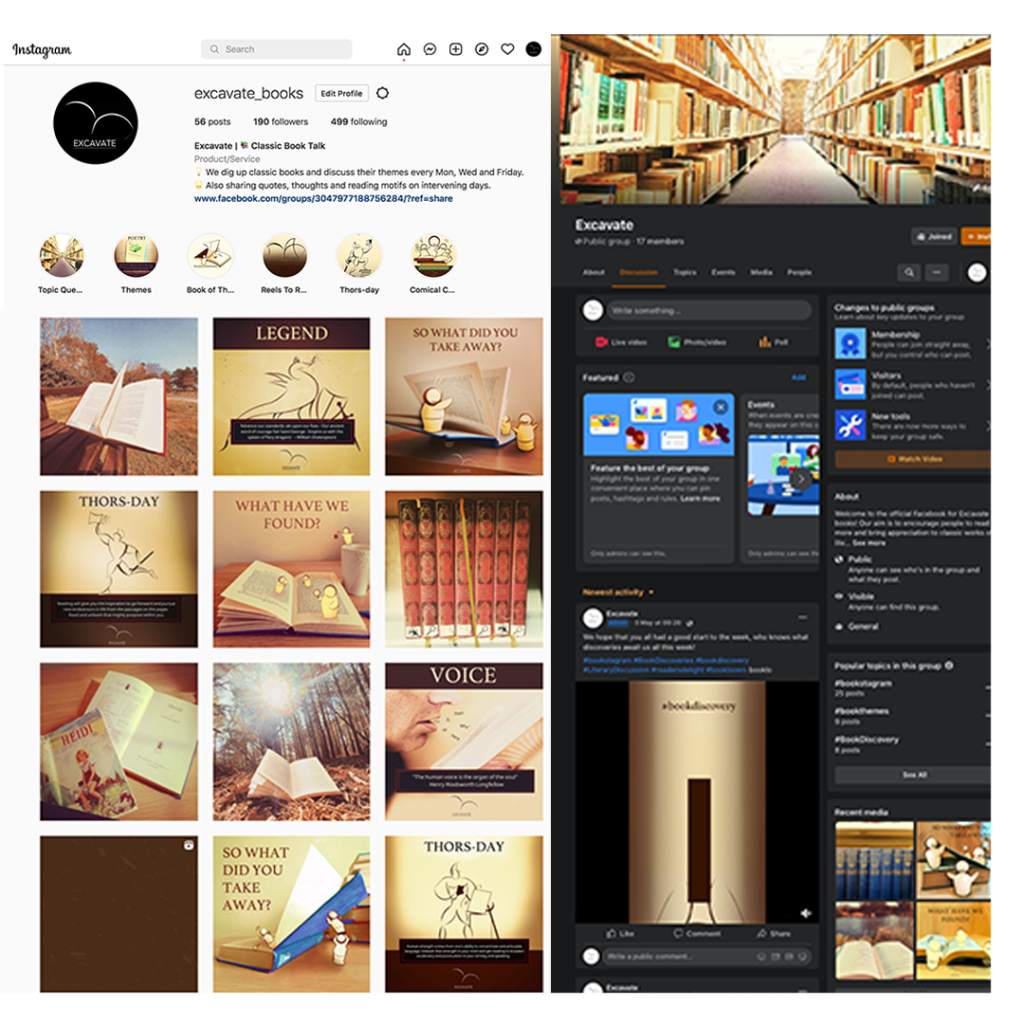
These social media icons below will take you to the current progress of Excavate’s presence on Instagram and Facebook.
Narrative Word Count: 5483
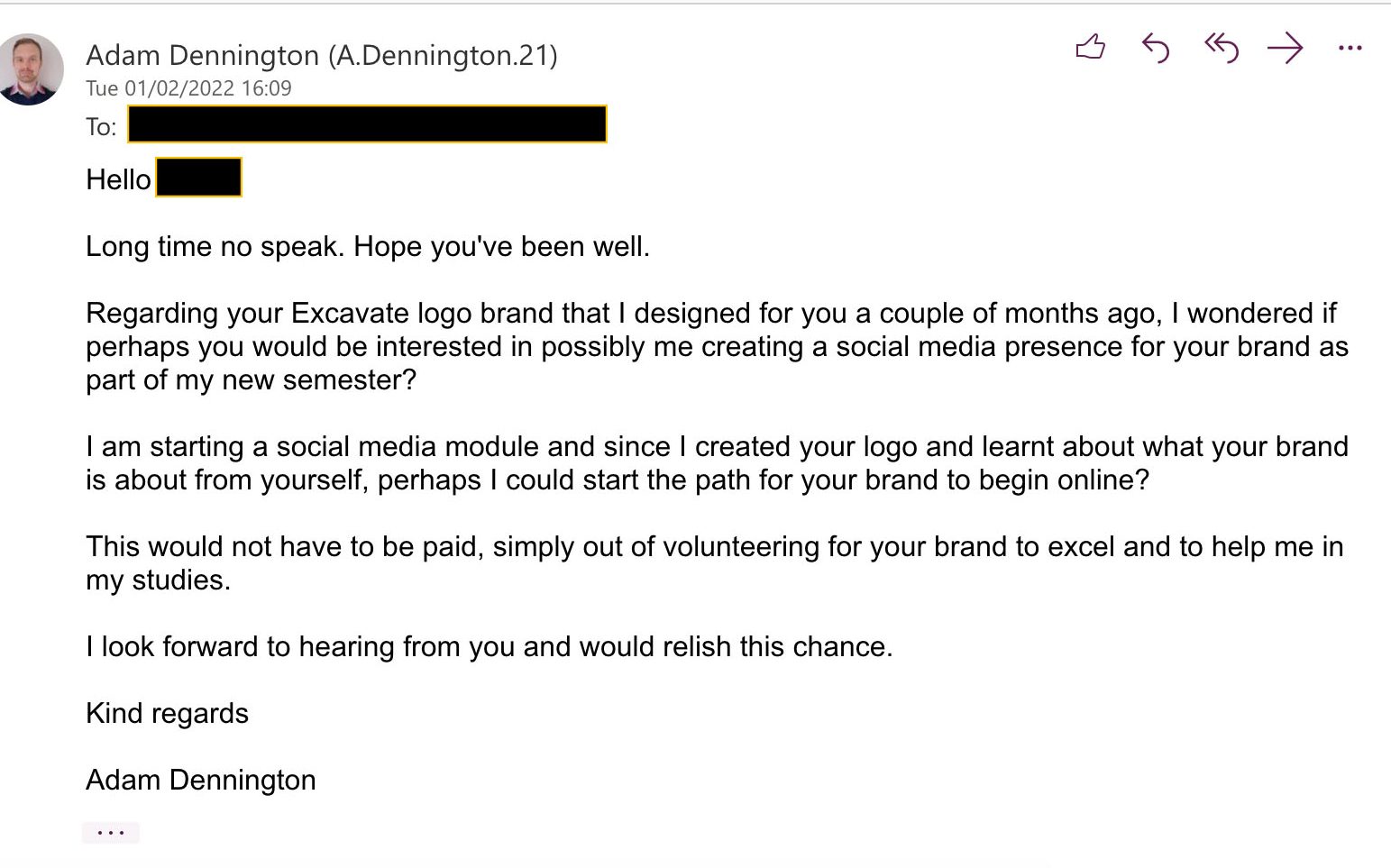
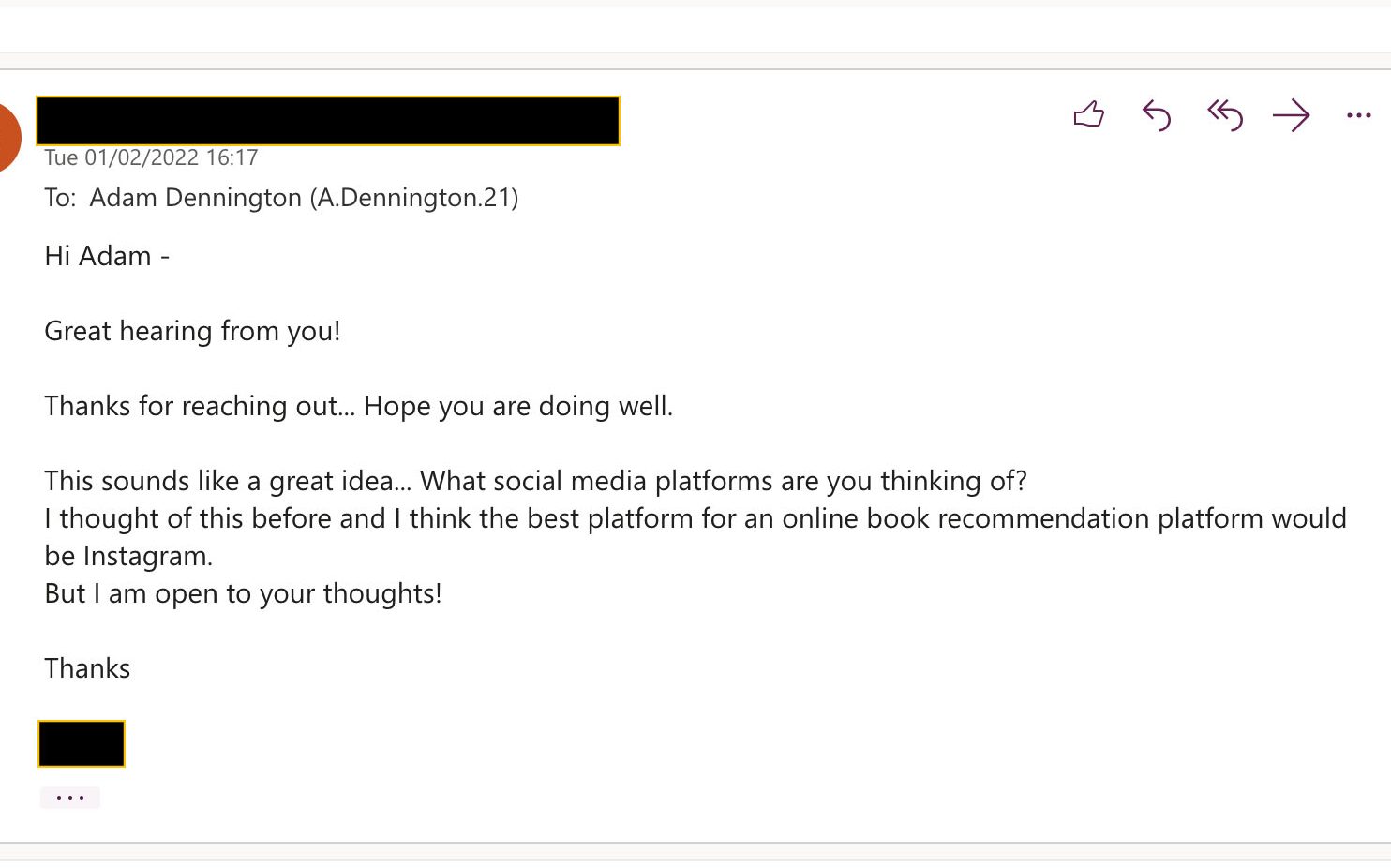
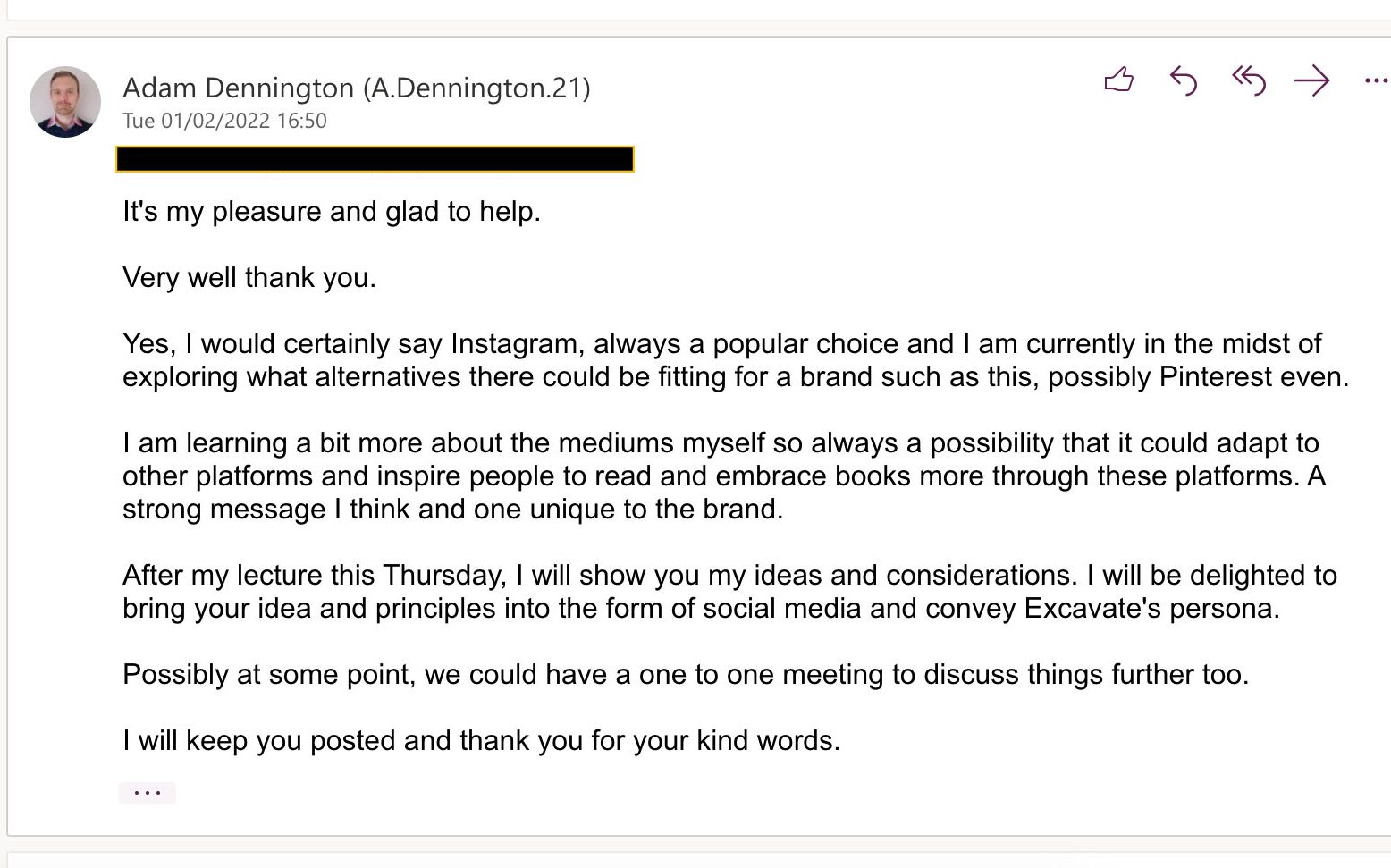
I negotiated the opportunity to create a social media campaign for a client I had worked with in October 2021; designing a logo for a website they were looking to build. It focused on bringing discussion to classic literature and the client was intent of creating a more engaging and warmer approach than Amazon Goodreads. I arranged a meeting with the client; aside from their competitive motivation, I asked what the overall goal of the brand was for the benefit of social media marketing. They wanted to bring more appreciation to books among young people, particularly of academic nature, in which the books can cover certain themes that still resonate and are apparent in our world of current affairs.

Goals and Aims
Regarding themes, examples included: acceptance, inclusion, unity, exclusion, development and growth, all of which can be found amongst books of the past and should therefore be given attention they deserve. I liked the idea and realised we are still talking about such subjects to this day, thus making it relevant.
My client intends for Excavate to become a small brand, with a following in the single thousand figures on social media, within a year. Although their intended website was not yet in the stages of operation, the client provided me direction of how they wanted the brand to resemble the vein of Russian website, Polka. The site only uses Twitter and has not yet built an Instagram presence for itself. I knew this would prove to be an advantage gap from which Excavate could benefit. Our strategy was to evolve the concept of Polka’s aim by making it more casual and widen its appeal by having it focus on titles of diverse cultures.
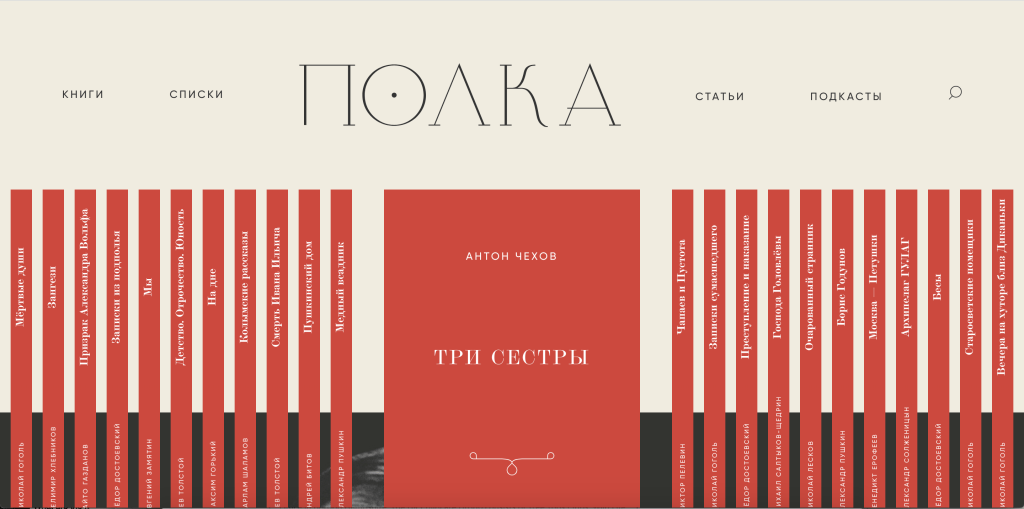
Available at https://polka.academy/ (Accessed on 6th February 2022)
I added the point that by pursuing this approach we would change the average book enthusiast’s view of older titles in the long run, specifically making them more than just an element of ‘school learning’ (Greenberg, 2018, online), since the client wanted to focus on titles of Greek Mythology and American literature too.
The brand’s name summarises perfectly how the we can bring a sense of ‘discovery’ to the strategy; followers will be presented vintage books as something of a ‘rarity’. This angle works into the brand’s ‘hook’, since content of mystery and rarity can be appealing in consumer engagement (Shields, 2021, online).
However, our ultimate goal is to widen people’s view of classic titles and push for further reading, even influence them to seek out such editions and talk about them in groups. Showcasing books in accordance with current affairs would increase the likelihood that they would resonate and be identified more clearer. Forbes that mentioned how this approach can benefit marketing content and engage consumers more actively on a platform, since there is always the risk that attention span can decrease when brand content fails to show awareness of present events. The source notes that this method is known as “online authenticity” (Figure 4).
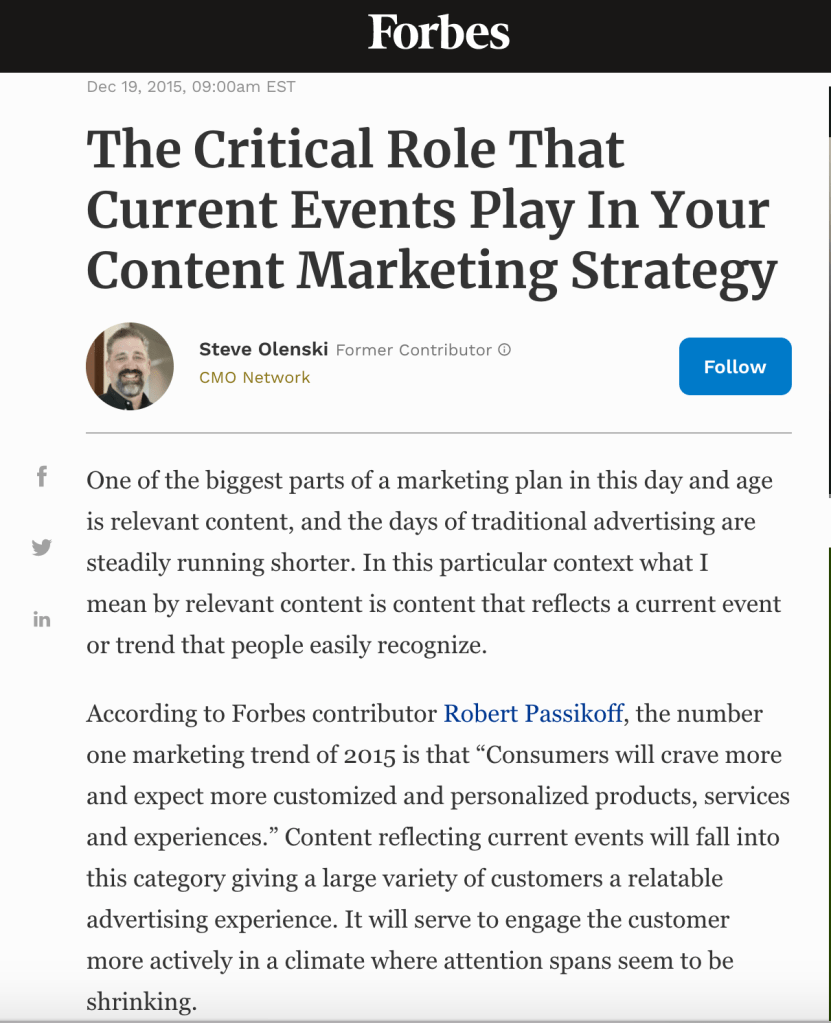
Available at: https://www.forbes.com/sites/steveolenski/2015/12/19/the-critical-role-that-current-events-play-in-your-content-marketing-strategy/?sh=ac0a4a42607b (Accessed 13th February 2022)
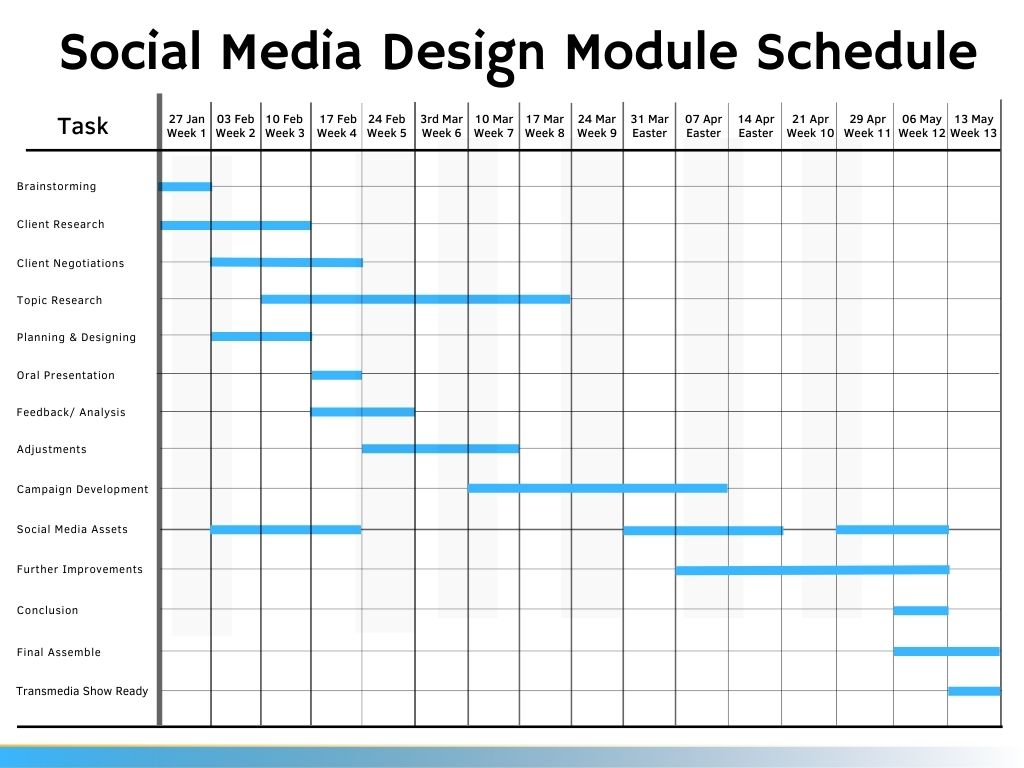
I created a Gantt chart in the early semester to initialise how I would prioritise my aims for the weeks ahead. It was my intention to use the majority of the following six weeks to focus on how I would plan the content and identify the trends and metrics to follow, based on competitor research.
Platforms and Persona
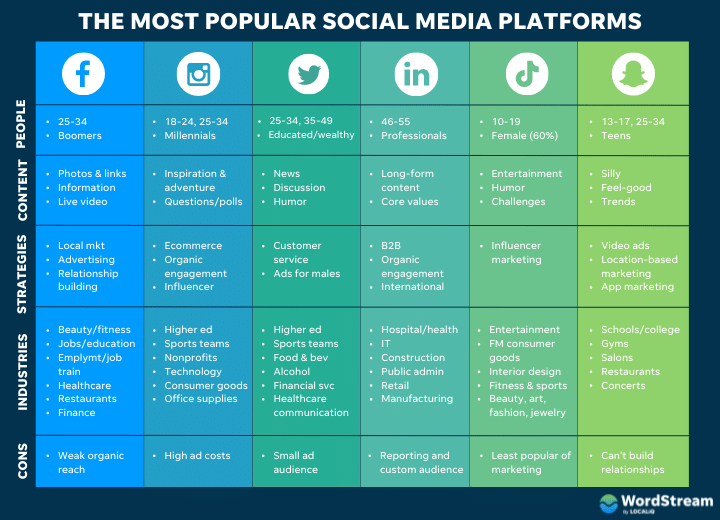
I noticed how the more contemporary and rising option of Tiktok was aimed at the young audience range of 10 – 19-year-olds, which was far too young for the Excavate’s consumer base. In addition, Tiktok is music-focused and excels from very brief video and sound bites, which are a far-cry from our intent. Excavate is intent on reminding people to take life with ease and embrace the comforting of reading.
(Accessed 10th February 2022)
While more linear and in line with a ‘mature’ reputation, Twitter and Linkedin were on the other extreme of the social spectrum. These platforms could lead to Excavate falling victim to the ‘square’ persona that I was intent on the brand avoiding. Therefore, it came down to Instagram and Facebook as the candidates; they each had the ideal balance of catering to the millennial generation of consumers, aged from their mid-20s to mid-40s, of whom my client and myself had figured as our target audience, being the correct age of a ‘young-maturity’ to embrace the relaxed persona and appreciative of books.
I set about utilising the social media to establish an identity for the brand and build a following for it, which could then lead to supporting the website when it is completed in the long term.

(Accessed 10th February 2022)
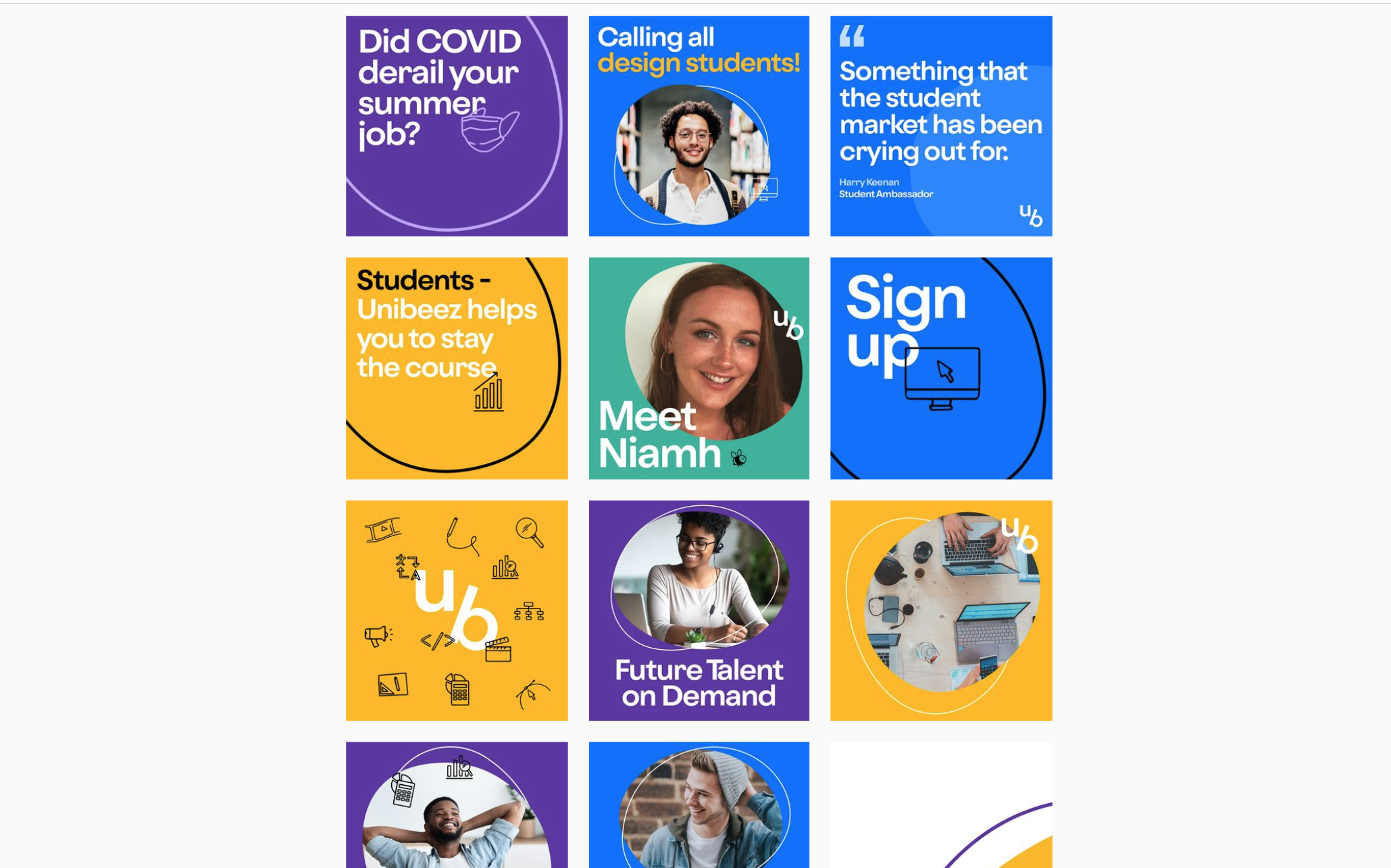
I took influence from a brand called Unibeez and set about comparing the strategy for my client’s brand to this app’s narrative (Figure 7). It made effective use of Instagram and Twitter marketing to build momentum prior to the launching of it’s actual service, which occurred the following year. The content utilised iconic colour design, extensive keywords and questions that resonated with their target audience, specifically of aspiring university graduates, to build the brand’s popularity in the run-up to the service. I went as far as suggesting to my client of possibly showcasing promotional content in the build-up to the Excavate website. However, the client was intent on keeping the content subdued at this stage and seeing it talk about the brand’s discussion-based goal.
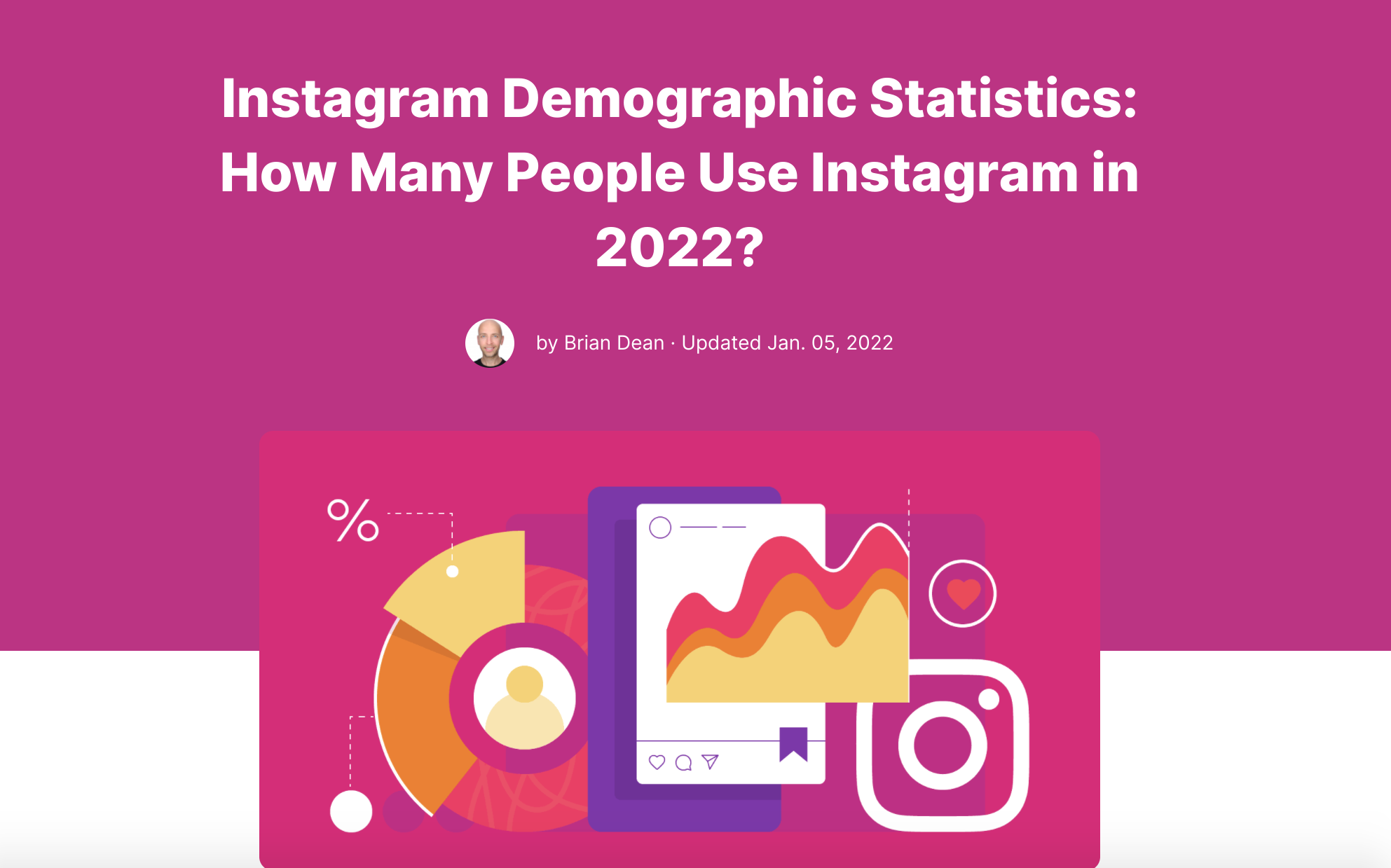
My client wanted to appeal to a balanced share of both genders and Instagram has a modesty of the two since the start of 2022; 51.4% being female and 48.6% of male users globally (Figure 8).
Regarding the second platform, while Facebook was a possible contender, I considered using Pinterest since it is a popular choice for book sharers on social media and an analysis by the Hootsuite (Figure 9) found that it has growth of 444 million monthly users, a figure that grew from around 200 million three years ago, plus users are likely to consider using a brand’s service and pin it around upon reading an effective Pinterest profile, thus generating ad potential.
(Accessed 11th February 2022)
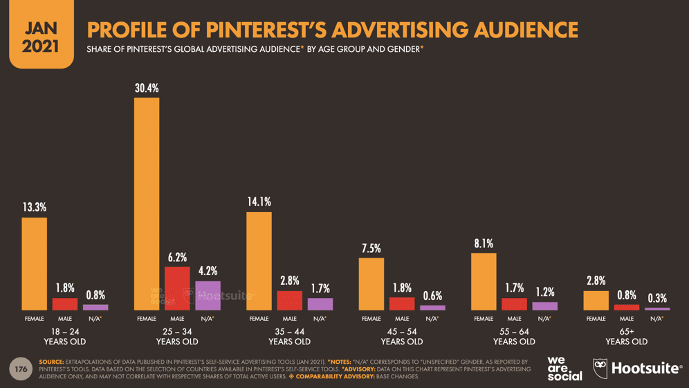
I soon realised that Pinterest would be irrelevant considering how the aforementioned source talked about it being a website trafficker compared to an identity builder. Following a discussion in one my lectures, summarising how my brand would appear as a person, it became obvious to me that it was a non-binary gender, since it was about bringing people of both sexes together, accepting one another and sharing appreciation. I realised that indeed Pinterest carried a dominant lead in the female demographic, the scale balance of which seemed to put these consumers at a far extreme to male share (Figure 10).
Available at https://blog.hootsuite.com/pinterest-statistics-for-business/
As platform with a daily intake of 500 million users as well as holding the distinction of the most downloaded application on a device, there was ground to consider Instagram as a worthy choice. Instagram would help Excavate generate a diverse following through the use of Hashtags, but I took note of how they must be used wisely in order to be efficient in the platforms Search Engine Optimization (SEO). This said term is responsible for directing consumers to the content and thus delivering the support for the brand to continue and improve, as well as ranking accounts in the search of certain tags. If the effective and frequent tag can build in quantity over time through one’s search, chances are the follower’s attention can grow.
Available at: https://swotandpestleanalysis.com/swot-analysis-of-instagram/ (Accessed 12th February 2022)
Despite Excavate’s subject matter, the aspect of photography from a device would lift it from the threat of being perceived as a past ‘relic’. Photo blogging can benefit the brand and bring a healthy juxtaposition to the modern and vintage eras, as well as a reminder for those ‘on the go’ that they can always ‘step back’ from the modern focus into a simpler period of reading. The addition of photo filters that the platform provides will also sharpen the atmosphere and visual appeal of what the brand will convey in tone and attitude.
As far areas to be aware of, which could ‘break’ or compromise the brand intent, the Instagram SWOT analysis (Figure 11) made it clear to me how large and established company accounts, with successful campaigns of paid promotion, have increased the challenge for those non-profit or smaller-based brands to stand out.
A Brafton article (Figure 12) mentions that despite social media being a popular method for trafficking consumers to a website and sharing news, many visit accounts to be entertained, as social media has changed the intake of how we receive information in a less formal manner. Although Excavate is calm in persona and not suitable for extreme platforms such as Tiktok, I considered the possibility of creating reels where subtle character content could be used to entertain, educate or inform people concerning the importance of reading.
This would generate more positive reputation for the brand, as well as resonate with other types of consumers, such as those who actively look for accounts that expand on their world views.
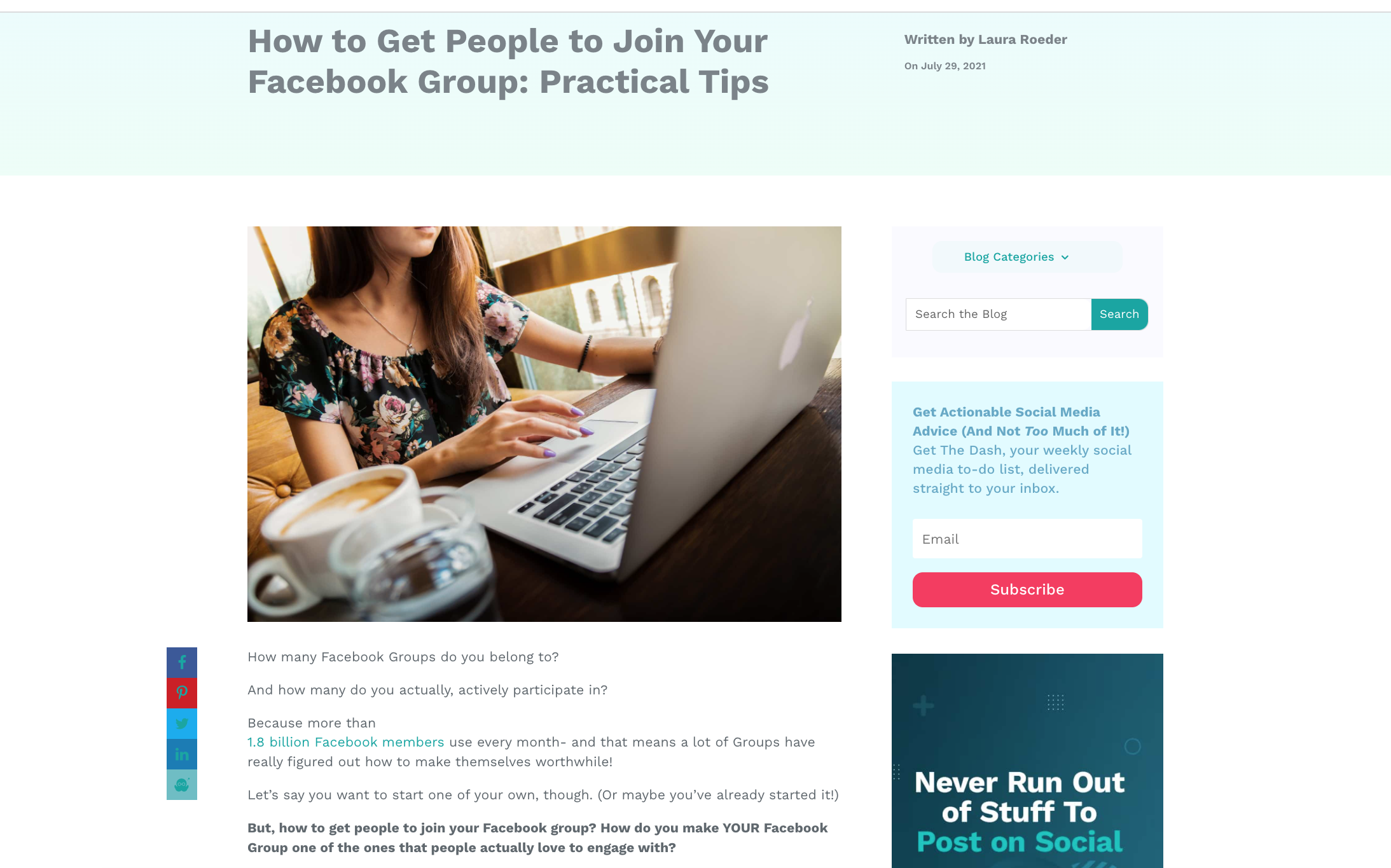
Regarding Facebook, I considered a group to enhance the discussion element of the brand’s goal. Roughly 1.8 billion people used Facebook last year (Figure 13) and as a result groups are still very admirable for allowing one to engage in further activity of a small brand, since the platform is built for communication purpose. I found that the best strategy for group promotion is to promote through other social media and network through messages as to what the group is about and why that person is relevant to joining the group. This method will work well as to how I will speak specifically to my audience as to how they matter in order to join the group, thus making Excavate a brand with appreciation for its support.
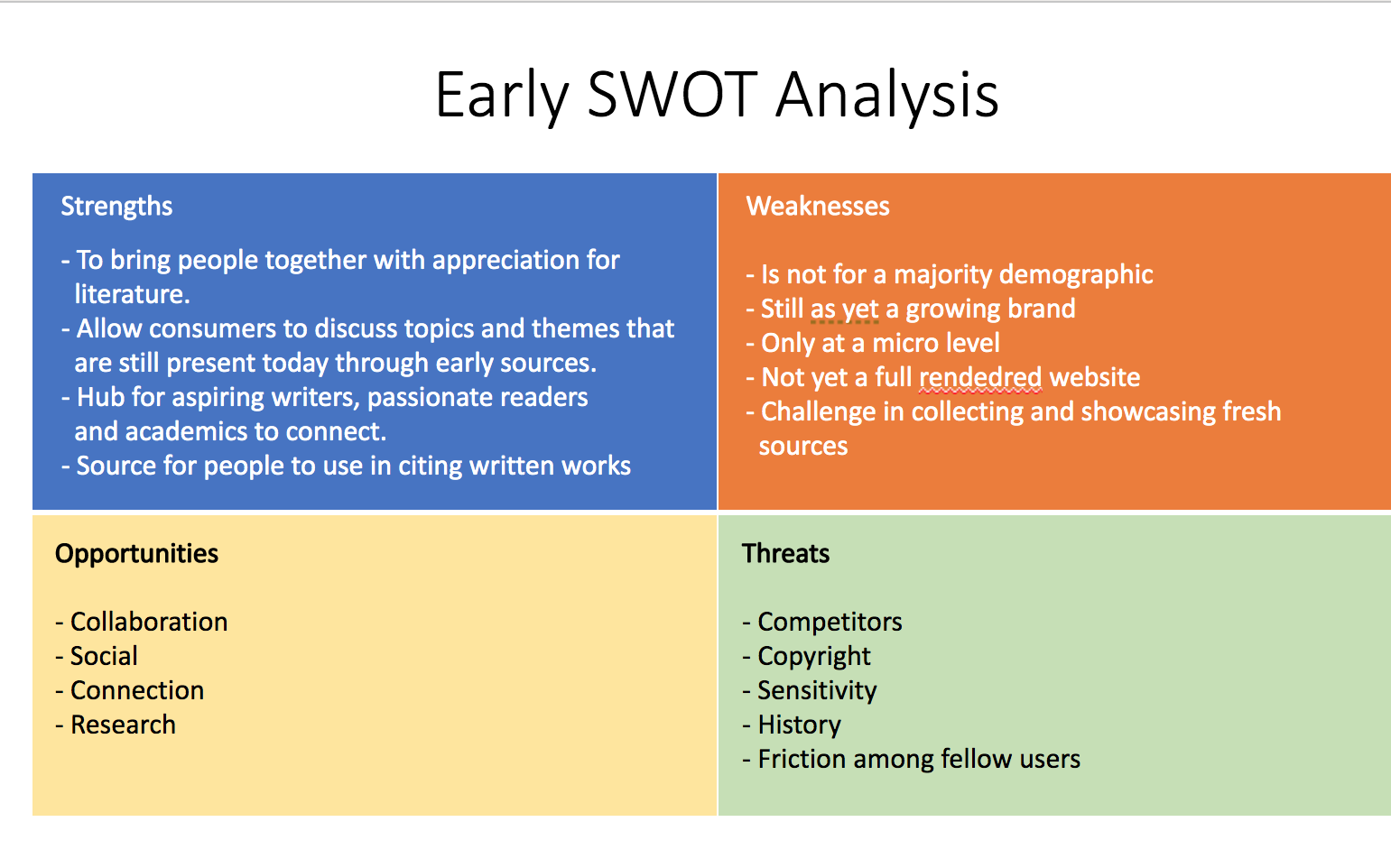
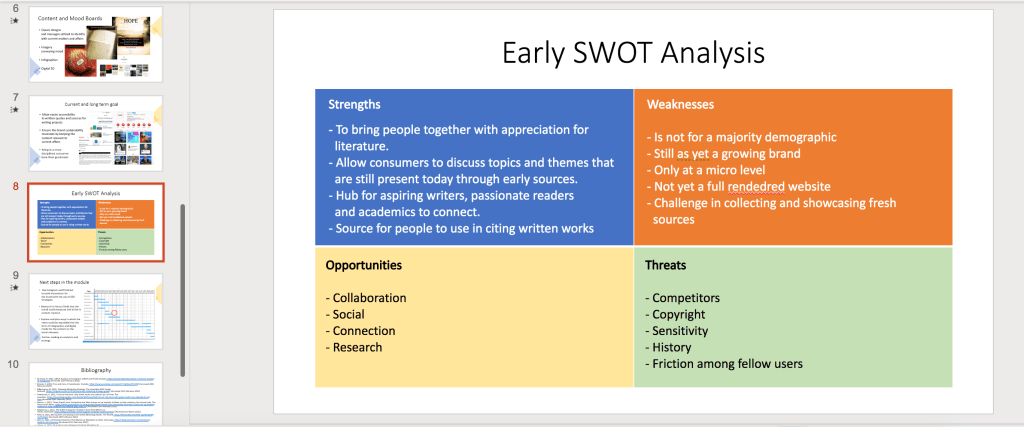
I formulated my Strengths, Weaknesses, Opportunities and Threats (SWOT) diagram to summarise what Excavate does for users, what makes it different from fellow websites hypothetically and why Social Media works to its advantage, such as building social circles and spawning opportunities for fellow readers to build discussion about vintage works made it an area of positivity.
Regarding threats, aside from the obvious social media competitors, there was the issue of whether copyright factors could work against the showcasing of an author’s work. While this would be resolved by ensuring that the works showcased were within the realm of public domain, there was still a threat that some spam or ‘troll’ could attempt to displace this onto brand without doing proper research.
Strategy and Competitors
Concerning the niche for Excavate, this brand is beneficial in supporting the Sustainable Development Goals (SDG), courtesy of the United Nations. The twelfth goal refers to the renewable efforts of maintaining materials to a substantial level of quantity, thus cutting back on productivity at the expense of environment. Excavate will ensure we can encourage readers to embrace older book editions, not just for the novelty, but to reduce physical editions being produced in mass, at the expense of the environment resources. In doing so, those who seek a more contemporary reading experience can be motivated to embrace digital reading more. Hypothetically, the brand will ensure that by 2030 forestry areas will be maintained increasingly for the benefit of wildlife habitation.

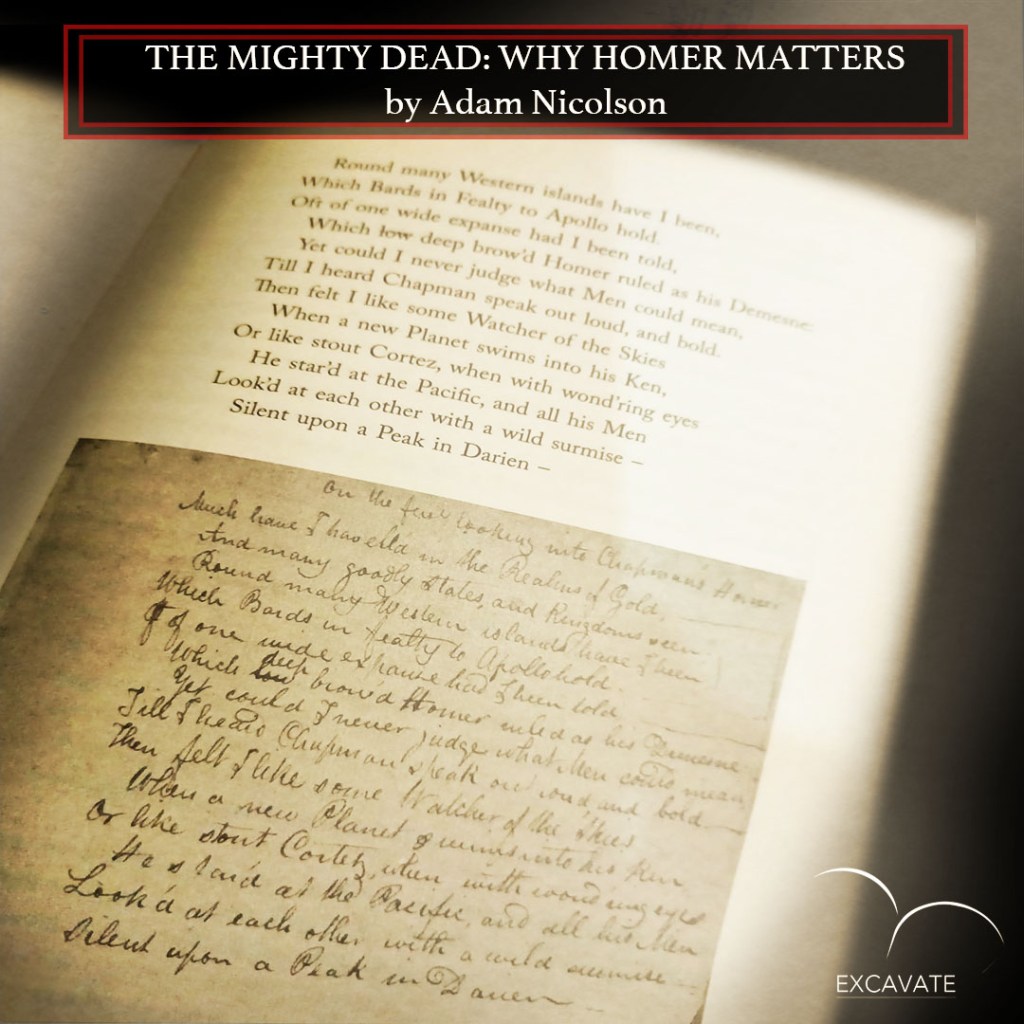
These conceptual designs were created to envision the brand’s aesthetic content, experimenting with vintage details collected from Pinterest Mood Boards and utilising the quotes from anecdotal research. Although not the deciding factors for how the content would finally appear, they did help shape the idea into how it should balance a more casual approach and realising that I should avoid using too much lighting filters since the content needed a simple layout to attract casual consumers, thus devoid of being perceived as old-fashioned.


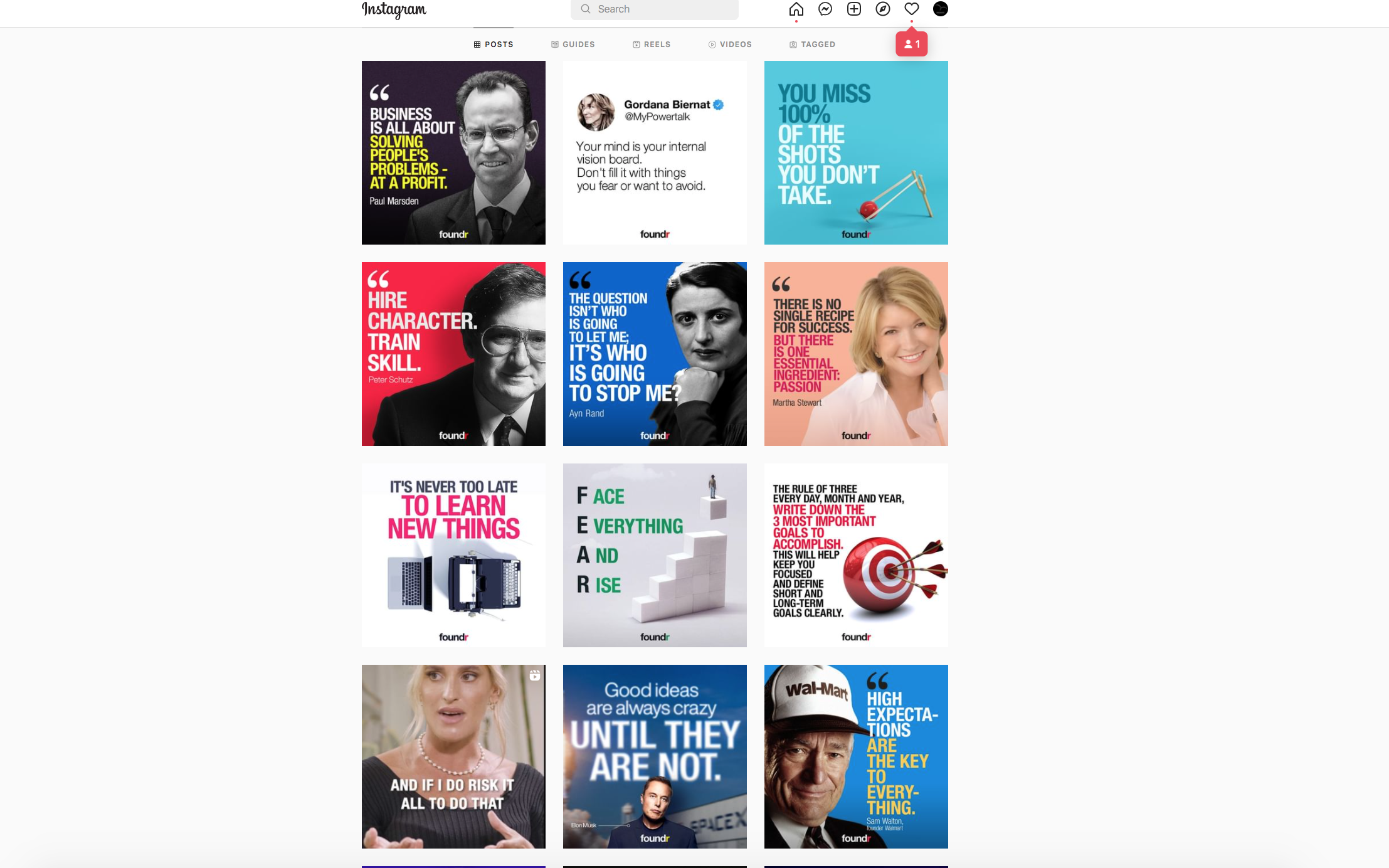
To better understand how one should present social media in an appealing context, an online tabloid called Foundr magazine had amassed a popular following and reputation by showcasing entrepreneurship. It uses social media to encourage determination through the use of metaphors and quotations from professional entrepreneurs (Figure 16). This example had areas that I felt could be applied casually to Excavate; the use of quotations that were written in a ‘sound-bite’ fashion and presented in bold typography were certainly effective methods to apply the brand’s message intent. I took inspiration from Foundr’s format and merged it with the ‘Online Authenticity’ strategy my client and myself had considered.
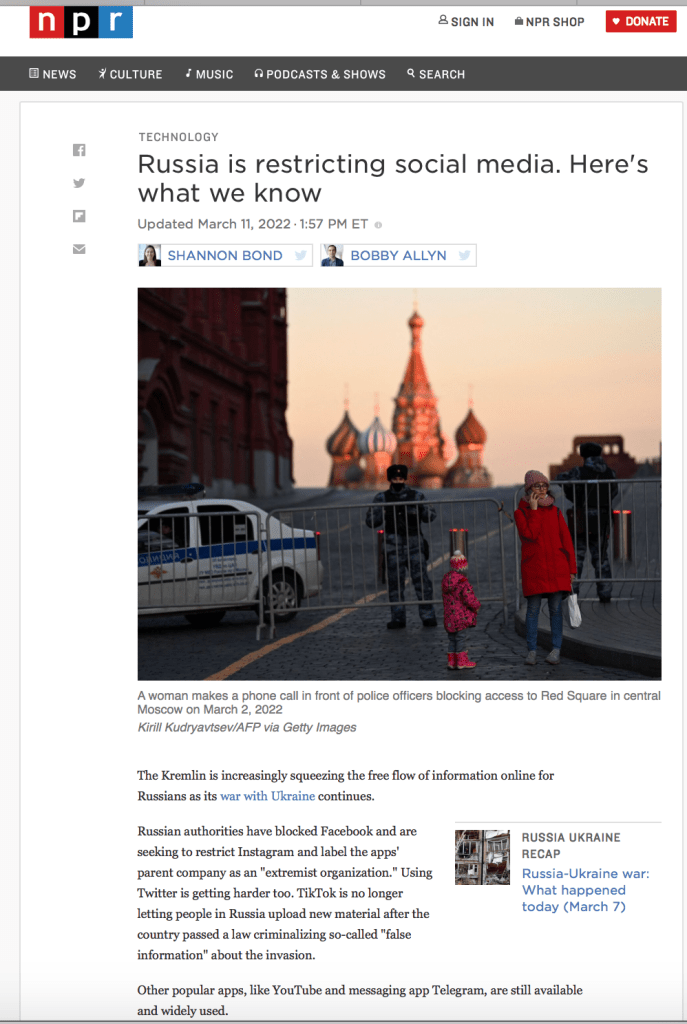
Around this period, the Russian invasion of Ukraine occurred, a move that would lead to a complicated struggle regarding my client’s plan and justifying one of the threats in the SWOT Analysis. Since photo filters of the Ukraine flag were trending around this period on Instagram, this made for a ‘shaky’ situation in encouraging Russian literary culture. We wanted to avoid drawing mixed responses by relating elements of a nation currently in controversy, in particular Meta restricted users in Russia from accessing western and mainstream accounts later down the line. This placed hindrance in attracting a following of that background, so my client and myself had to pause and re-configure how we would set about this matter.
I took time to look into a few particular Instagram accounts, based around literature, that utilised various strategies to connect with their target consumers. I had already analysed the account of my client’s visionary competitor, Goodreads, but since Excavate was a small-brand it made sense to target accounts of this nature in regards to how the strategy would perform.
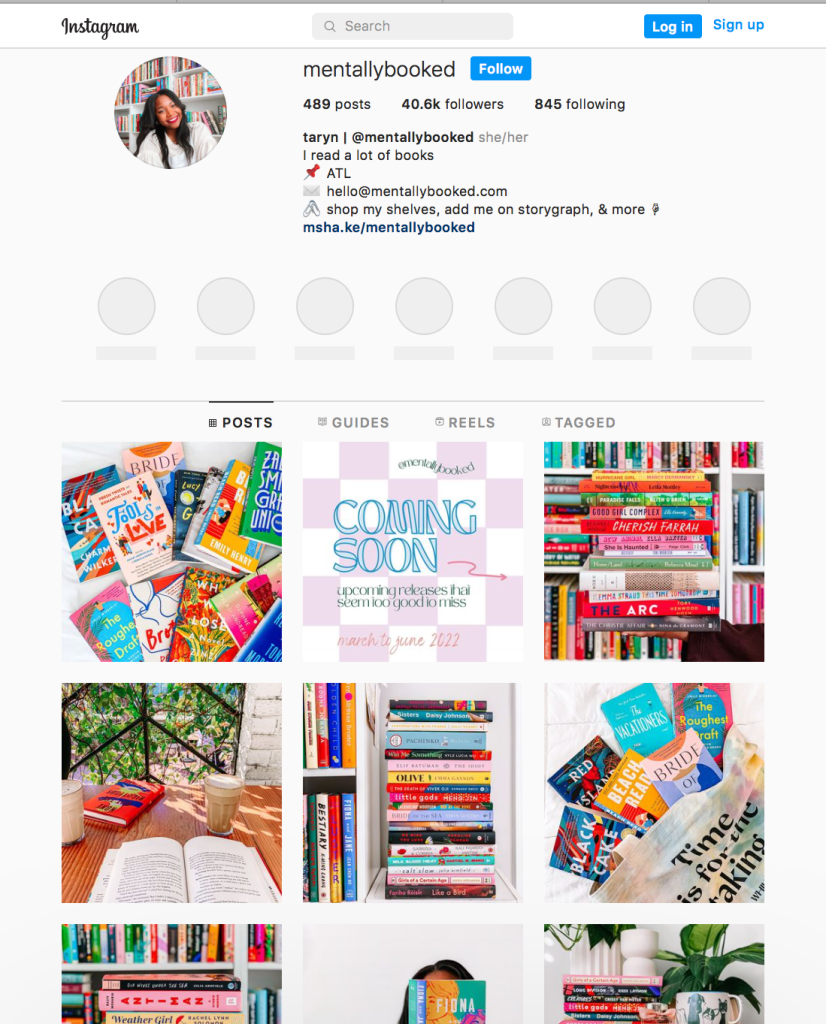
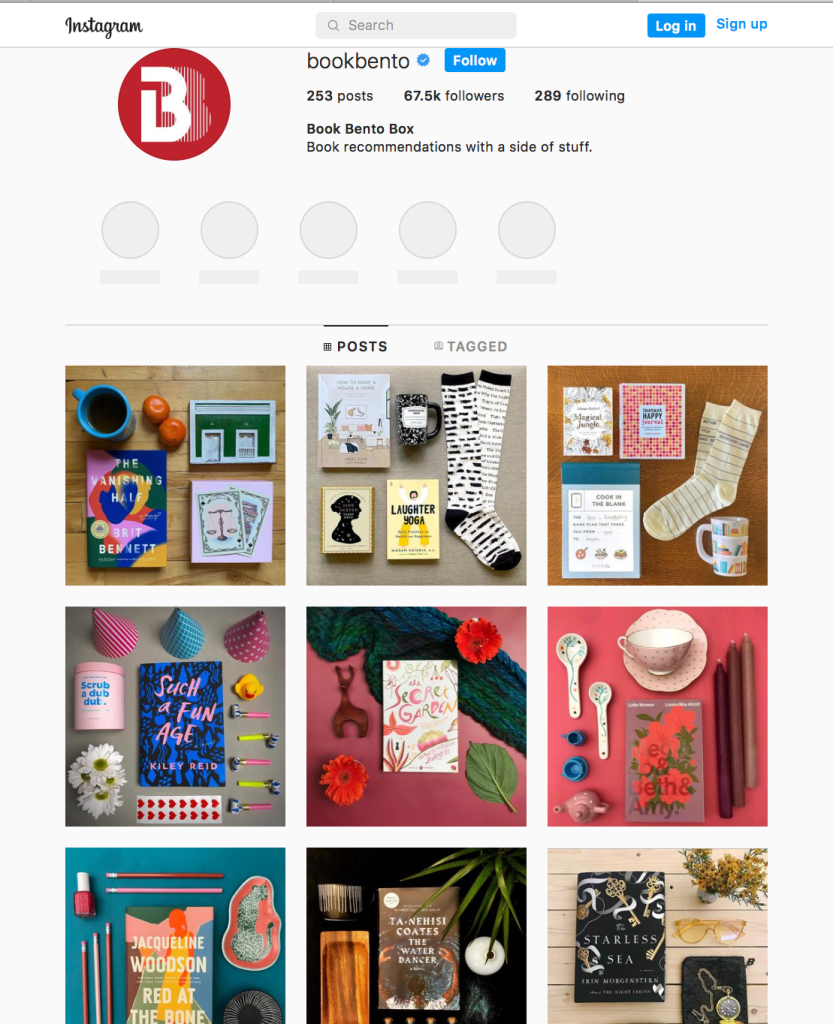
bookbento (2022) Book Bento Box Instagram Page. Available at: https://www.instagram.com/bookbento/?hl=en (Accessed 1st March 2022). mentallybooked (2022) Mentally Booked Instagram Page. Available at: https://www.instagram.com/mentallybooked/?hl=en (Accessed 1st March 2022).
I was drawn to the accounts: MentallyBooked and Bookbento, since these accounts utilise a personal approach to their content by showing reading in areas of comfort, such as a bedroom, or utilising props and accessories with the books that would be more relatable or associated with the mood of the work.
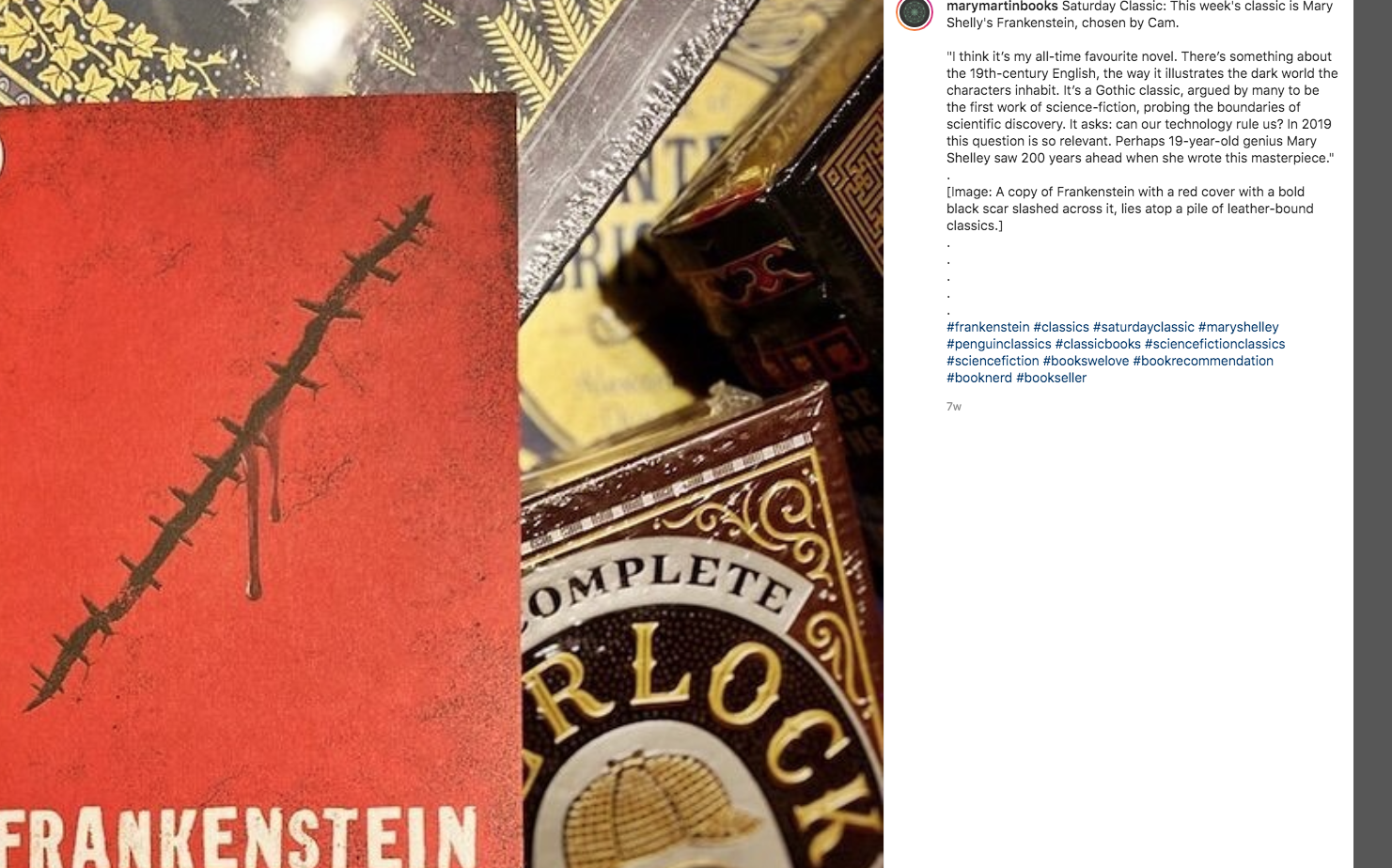
I analysed the SEO tags on these accounts, particularly in the early posts, to establish a sense of how these accounts managed to build popularity. A trending tag that they had all used: #bookstagram, seemed prevalent on many literary bloggers. It has been making the rounds on Instagram for a few years and as of the time of my discovery had accumulated a trend of 75 million tags. I figured it could help the content in getting recognised considering how these accounts had appeared to embrace the popular trend in their early stages, such as another account: marymartinbooks (Figure 19).

I suspected these accounts had posted years back and thus may have capitalised on the term when it was growing in popularity. In addition, these accounts had a following in the tens of thousands; I was not quite at a competing level with these account’s following, so I was intent on identifying accounts that were within the quantity of the hundreds to the low thousands. I searched tags that related to the themes of Excavate, such as #rarebooks, #bookandcandles, #cosyreading and #bookdiscoveries, upon which I found examples of further accounts that would appear to be more comparable.
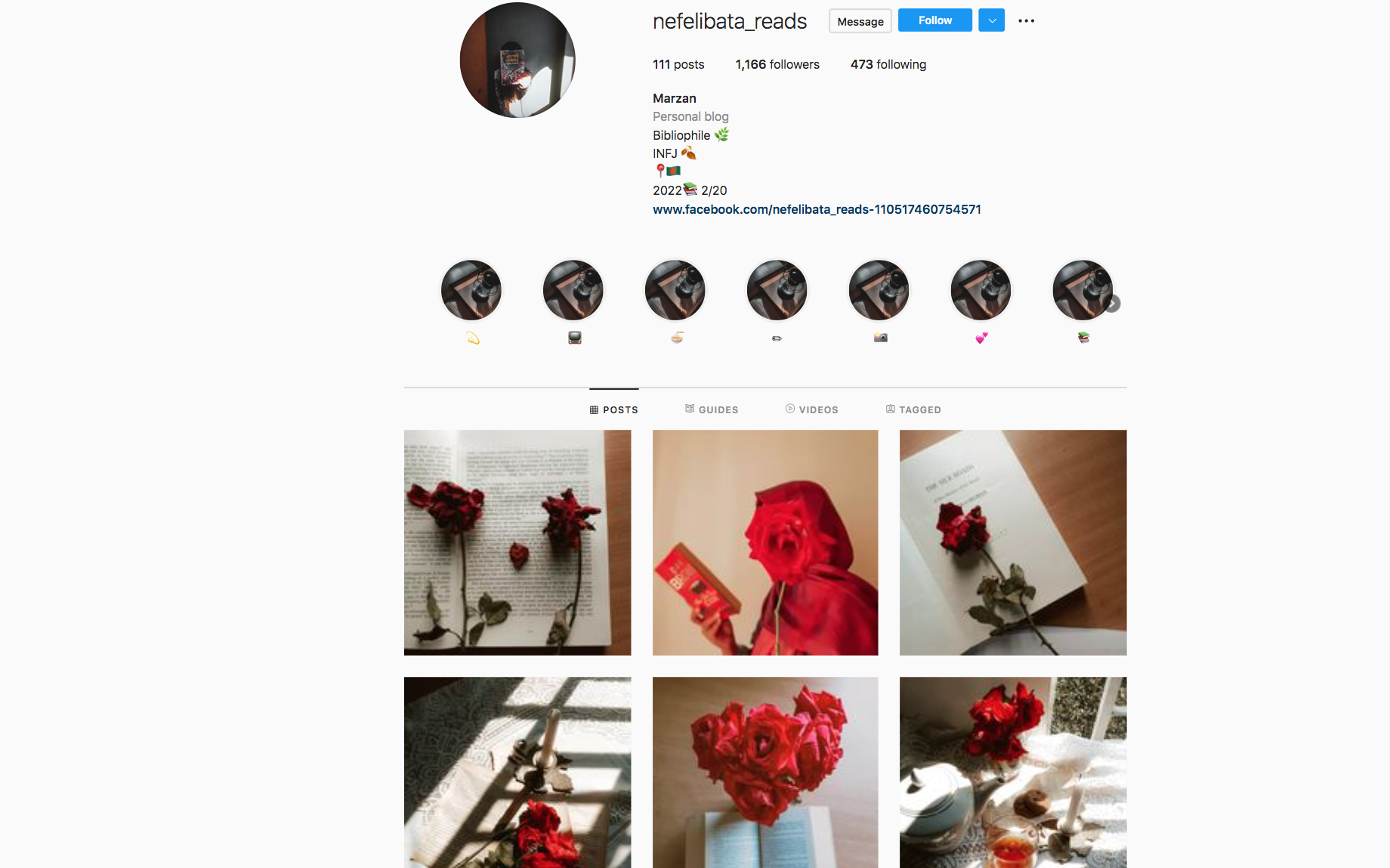
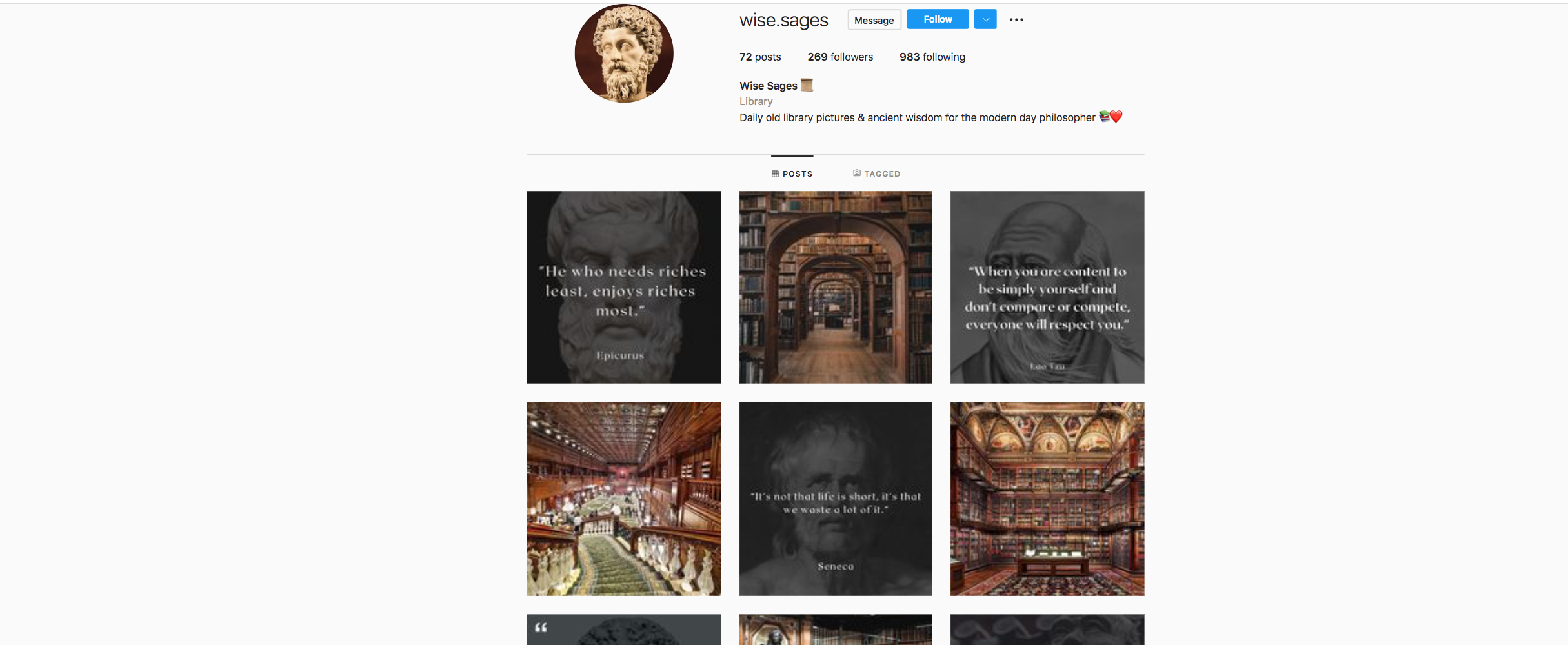
These accounts, nefelibata_reads and wise_sages focused on the direction and tone in which I intended to showcase in my content, specifically that of vintage books and classical appreciation.
Oral Presentation, Feedback and Metric Analytics
Concerning feedback given to me in my presentation, my peers informed me that I needed to be a little more clear regarding the target audience; they were unsure of how the brand could appeal to both genders and that academic individuals may not be effective in generating consumers. I also had to be mindful that the content needed to be clear and concise and not over-stylised.
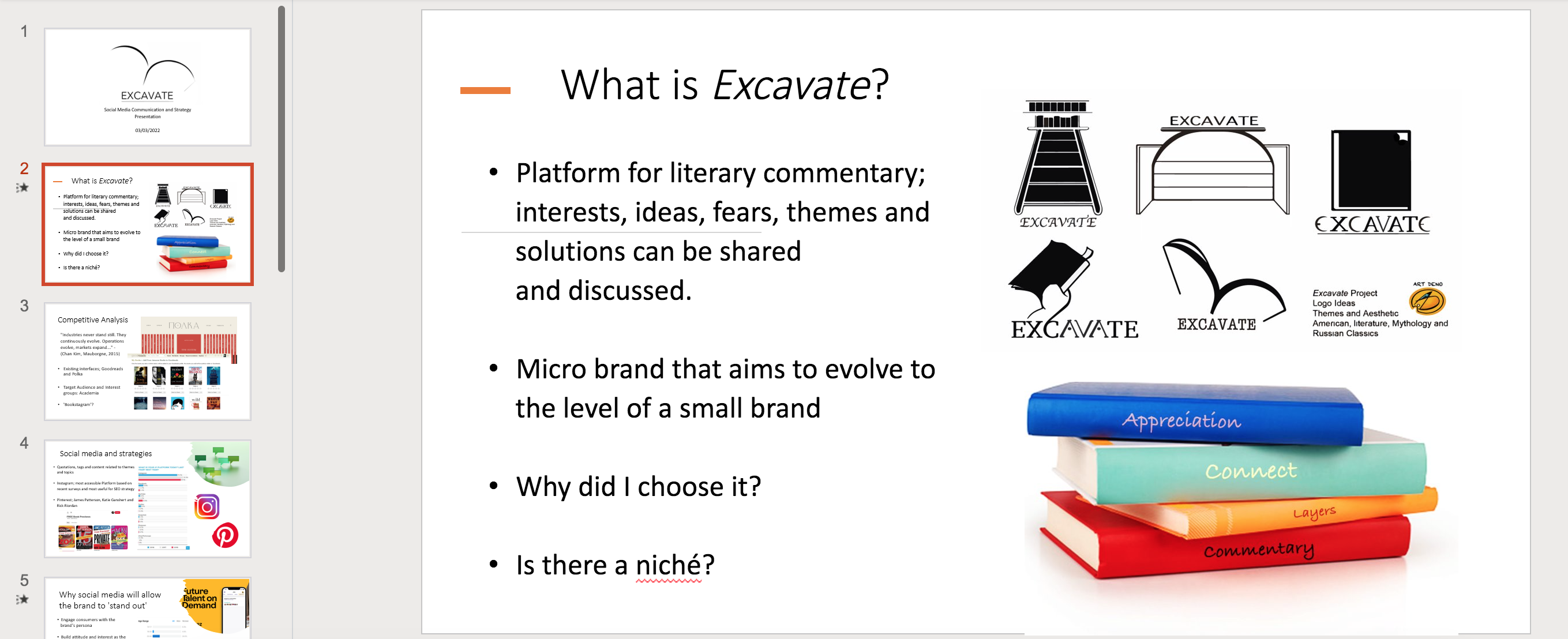
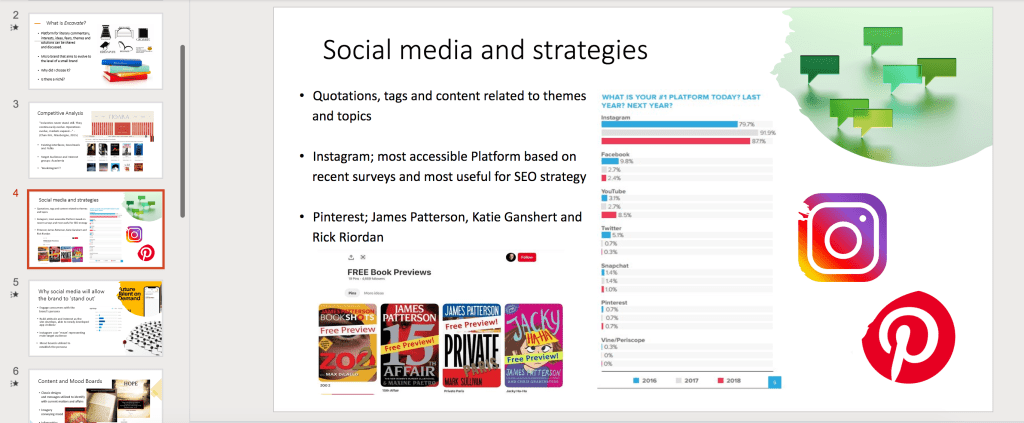
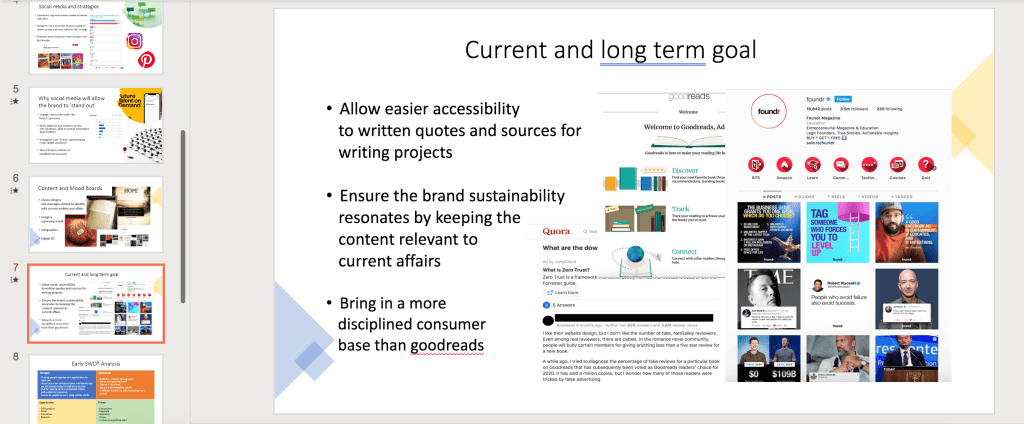
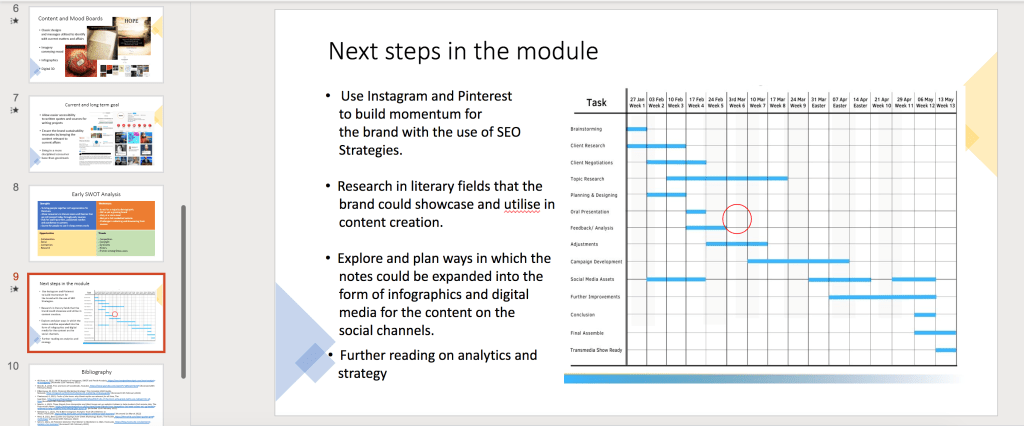
There also came into question about the Online Authenticity strategy, specifically the concern that books containing themes related to current affairs might cause sensitivity. The Russia situation in particular was brought into question, since the diverse audience would not embrace themes of war during this particular time.
(Accessed 5th March 2022)
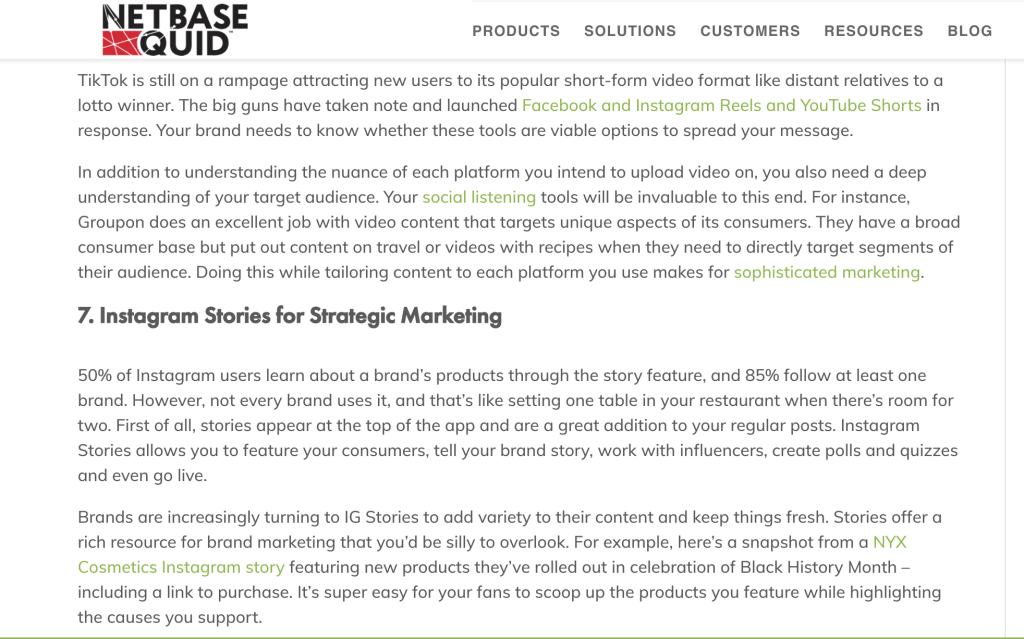
Netbase Quid (Figure 23) showed me how stories are current trends to hook audience which made me consider the possibility of Excavate creating weekly stories where it would ‘discover’ classic editions of mainstream books. This would appeal to my client’s desired target audience, yet widen it’s potential in attracting modest readers and cultural enthusiasts who may not understand full what the books are about.
Having the content be simply aimed at academic individuals could somewhat ‘alienate’ a share of consumers, who in actual fact would help drive the brand further with their casual taste of books. I put this to my client upon a fourth meeting and the client agreed on this solution and we also realised that this strategy would help balance the scales between the idealistic consumers and the realistic casual reputation of social media.
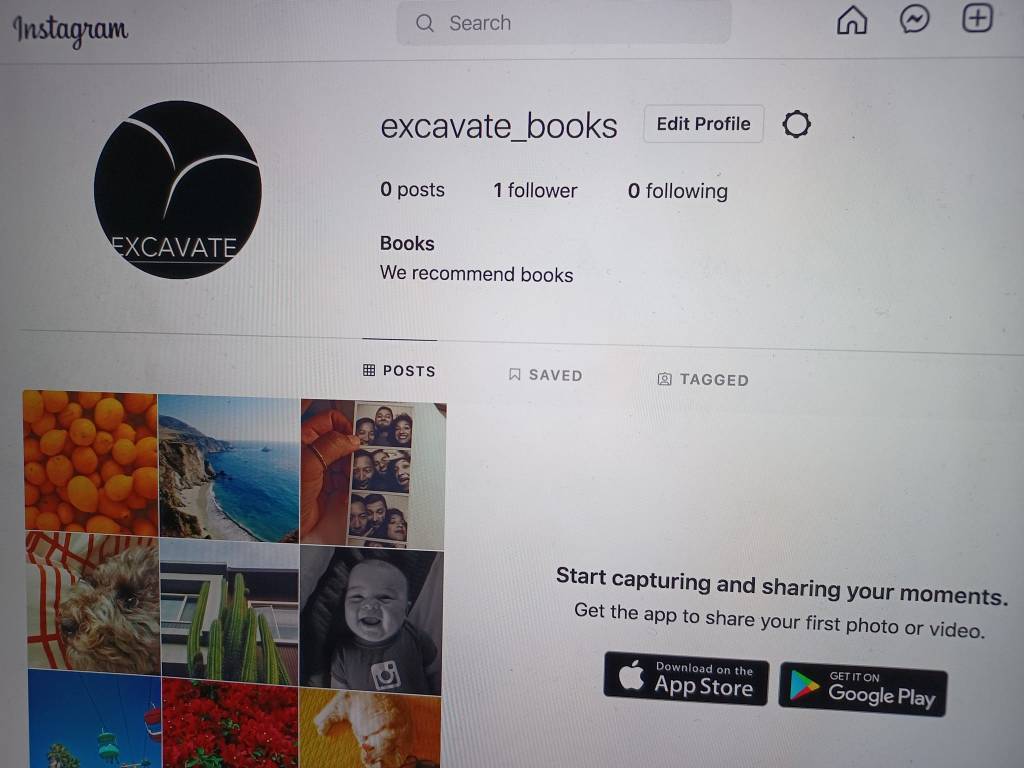
Upon launching our Instagram account, I took note, through my volunteering, of the ‘crib sheet’ for Hampshire History Trust; a document specifying their social media requirements. It stated dimensions have to be 1080 x 1080 pixels, content must use unique verbs in description and no punctuation for hashtags. Questions must also be applied for the consumers to feel ‘involved’, as well as tags utilising terms that are relevant to the subject matter, yet not ‘over-used’, thus leading content over-whelmed by competing accounts.

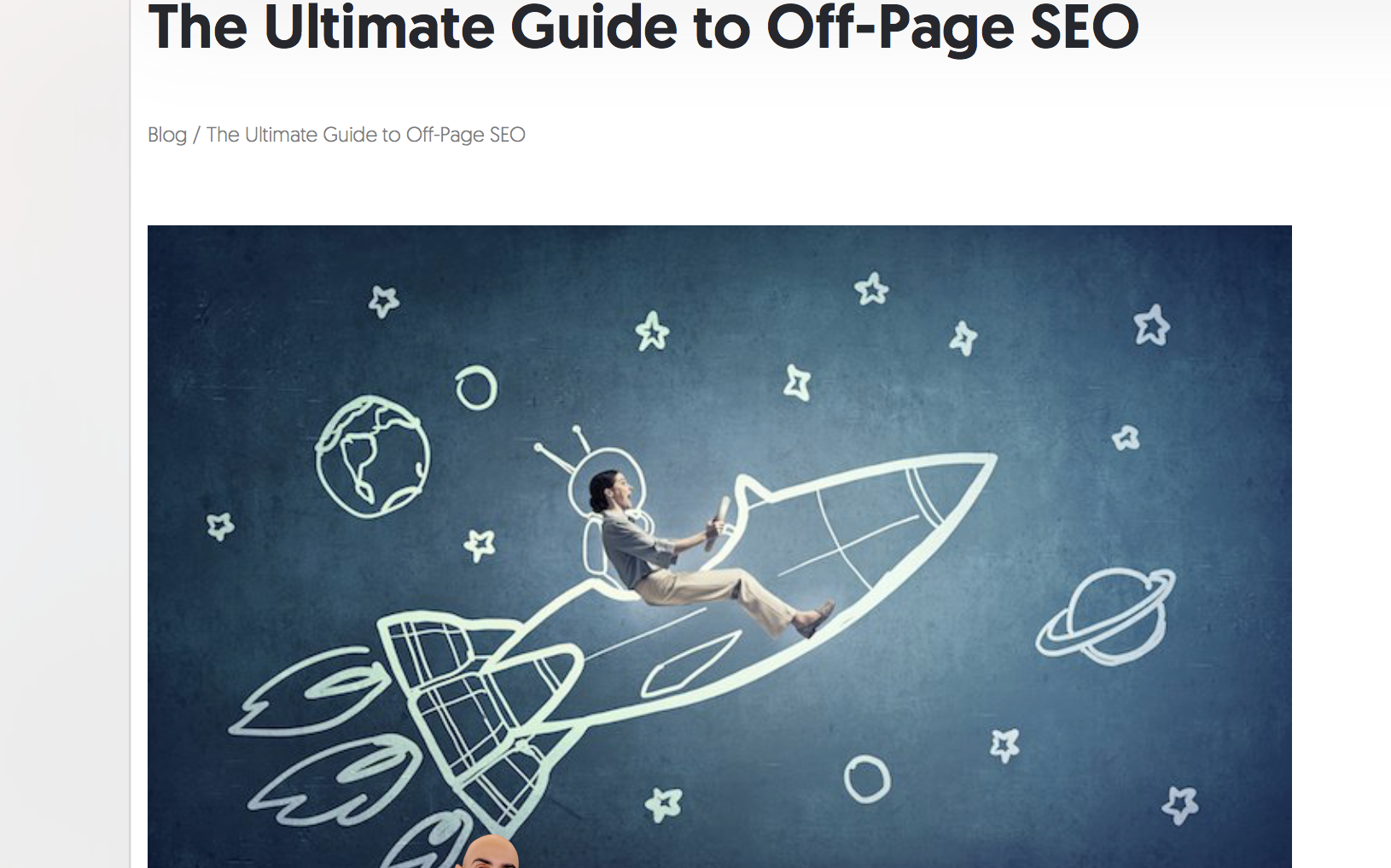
This aspect led me to the realisation that I should think hard about the approaches of SEO, ensuring an effective strategy to bring attention to the brand. The approach I would be taking with this strategy is known as ‘off-page SEO’ (Patel, 2021) referring to social media operating as an external ‘backbone’ before a service’s website is launched. Content marketing is vital to fulfil this purpose particularly through Instagram and Facebook, therefore I needed to provide the appropriate SEO tags to draw in relativity in Excavate’s goal, ensuring it would have a bedrock of followers who represented what the brand intends.
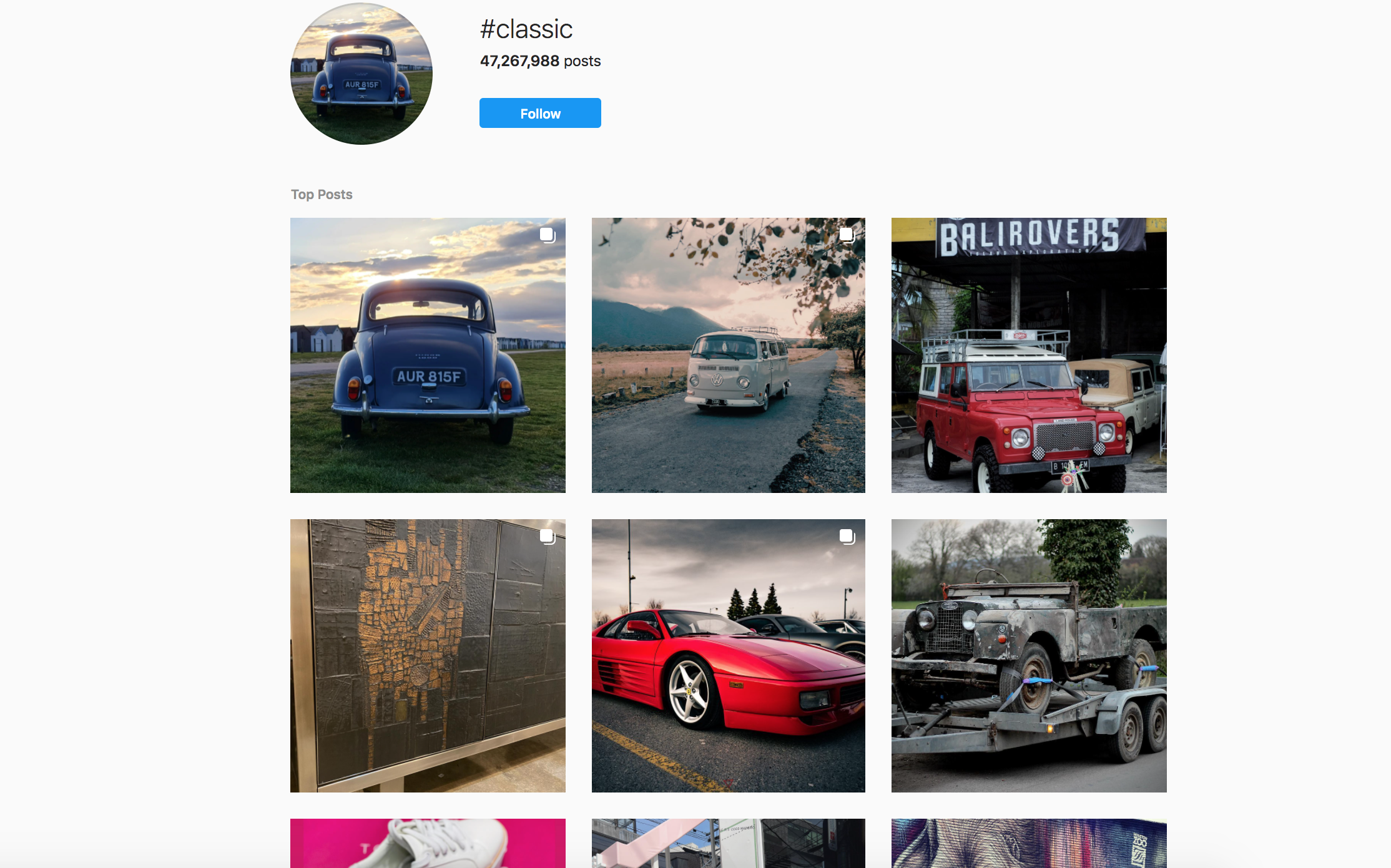
It is important to avoid being general with a tag; for example, Figure 27 shows how a user utilises #classic to promote their Frankenstein novel. However, when clicking on the tag, one realises that the word ‘classic’ can refer to any context since they are presented images unrelated to books, such as cars and quotations, compromising the account’s audience potential.
Taking inspiration from Foundr magazine’s inspiring quotations, I utilised statements from individuals of literature to broaden one’s view and outlook on life. For example, 8th March was International Woman’s Day which served as the opportunity to use an extract from a poet called Charlotte Perkins Gilman, a pioneering activist in women’s rights. A method such as this has the potential to also draw in appeal from those outside of literature, but who also share these particular views.
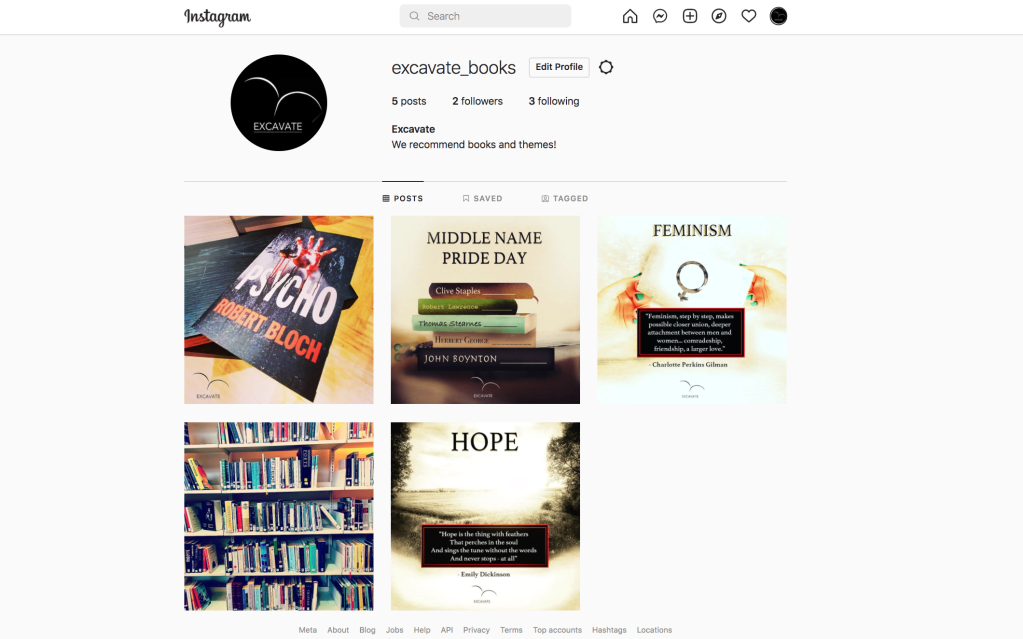
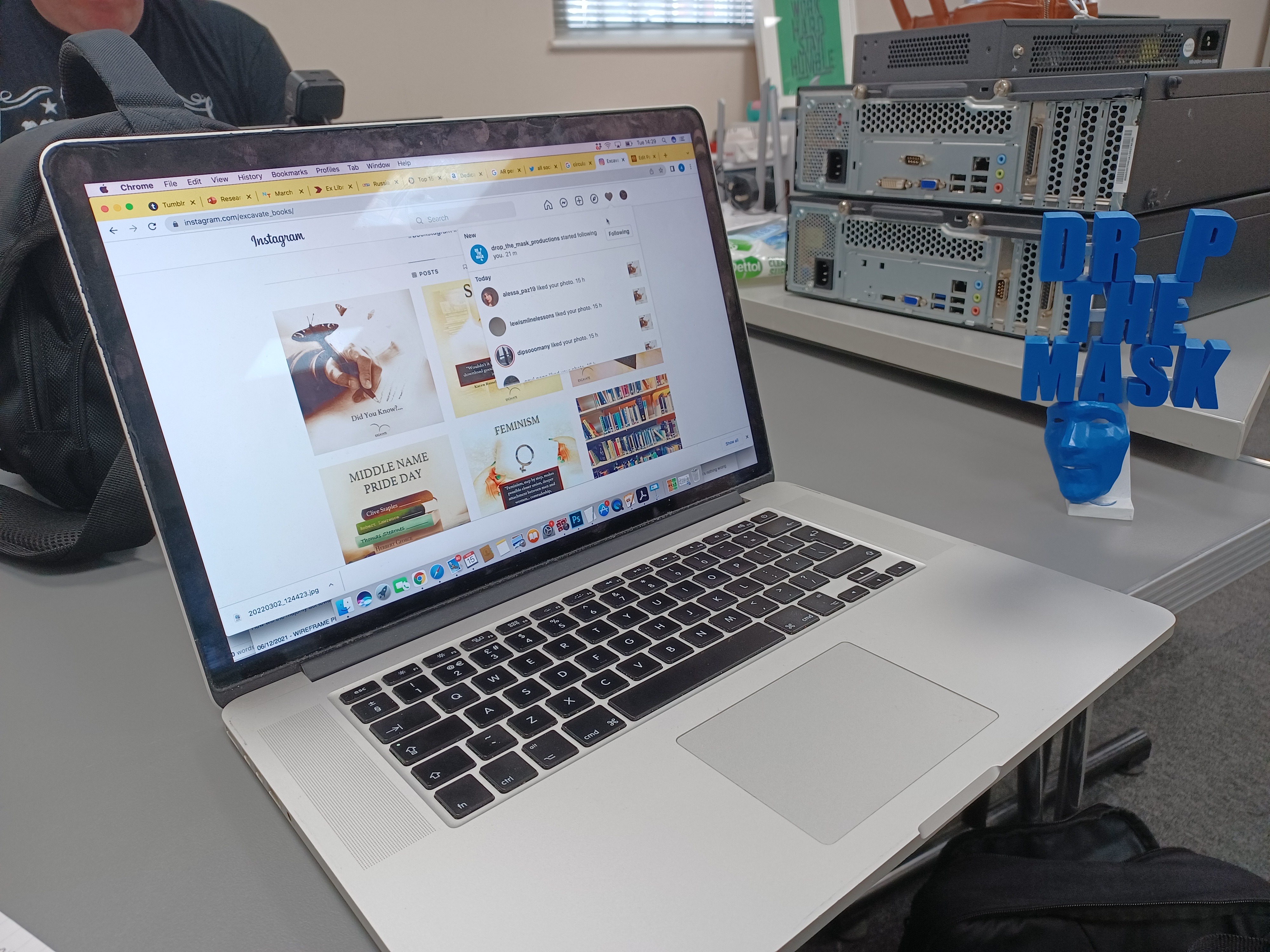
I spoke to a Social Media Communications Lead for Drop the Mask Productions, who was skilled at effective campaigns through Instagram and Twitter. They mentioned how I should choose to state how and why particular books are important to individuals, as well as what it is about the work that can strike a chord with the casual book enthusiast. One alteration made to the account’s page was the addition of mentioning the brand’s goal in the description box with accompanying book emojis to grab one’s attention as to what they can expect from the brand.
The account had 18 posts at this point, but the content appeared to deviate too much; the colours clashed and the showcased books switched from vintage hardback editions to contemporary paperbacks. I deemed the posts which utilised beige and brown colours as the perfect identity for Excavate, since they gave the consumer the impression of it’s warm persona.
Capturing a sense of a candle-lit environment, a relaxing location for book reading, this colour juxtaposition would be synonymous with the brand going forward. I had initially considered posting images that would show the discovery of books buried within a bookshelf, using ‘Amaro’ or ‘Nashville’ Instagram filters, which added old-film aesthetic. However, this appeared rather dull in conjunction with the warm tone; the colours emulated grey and reddish-brown which did not help in catching one’s eye.
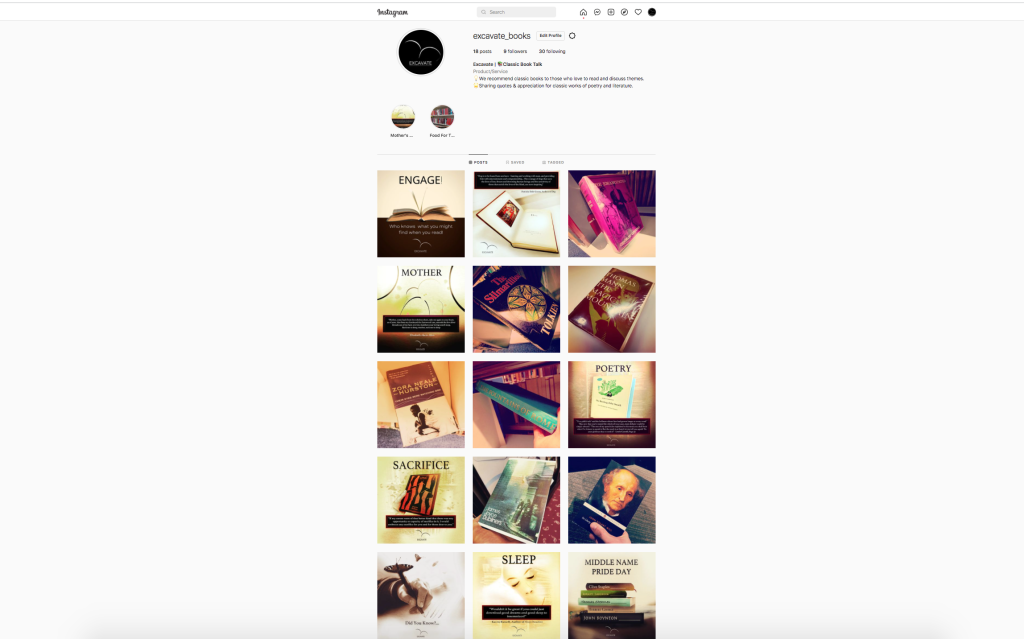
I showed the content thus far to a fellow peer of mine, who felt that some of the posts, particularly the content emphasising the words of Sleep and Sacrifice, utilised far too much light. Instead, a use of simple shapes representing books, seen in the Middle Name Pride Day post (Figure 30, bottom right), was a beautiful balance of detail and tone.
Content and Schedule
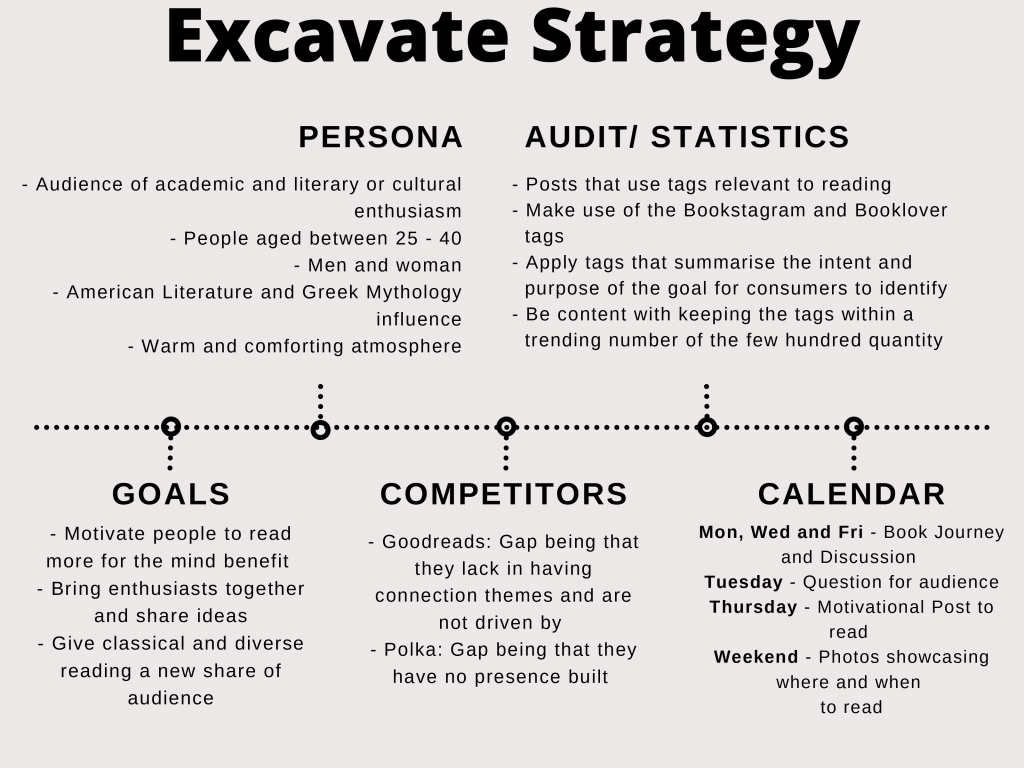
I used the Spring break to post frequently to the Instagram account and create the Facebook group as an extension for the established followers, where they can become involved further with activity. I was intent on building Excavate’s reputation rapidly by keeping a frequent and consistent output; I scheduled to post content every day of the week, in doing so there served an opportunity to draw in newer followers (Figure 32).
I began each Monday with a ‘book of the week’ strategy; Excavate would present the discovery of a classic book edition, thus serving the ‘discovery’ niche of the brand’s name. Through Monday, we would take the followers on a week journey and encourage them to share their thoughts on what they’ve felt reading the book. It would then be elaborated upon Wednesday; assessing what the book has covered in theming and message throughout the first half.
The last day of the week would wrap up the ‘journey’ and talk about impression of the book overall; inviting our followers to share their experience and thoughts too. This framework would serve as an adequate taster for the followers in what they can expect from the brand and in the process build an appreciation for how the website would be tailored to them in the future.
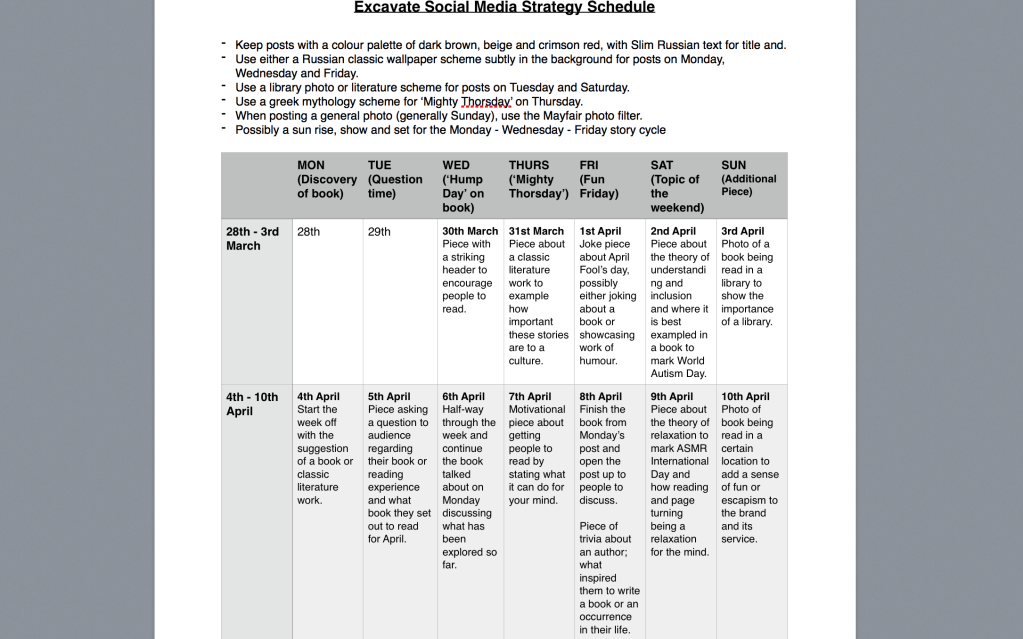
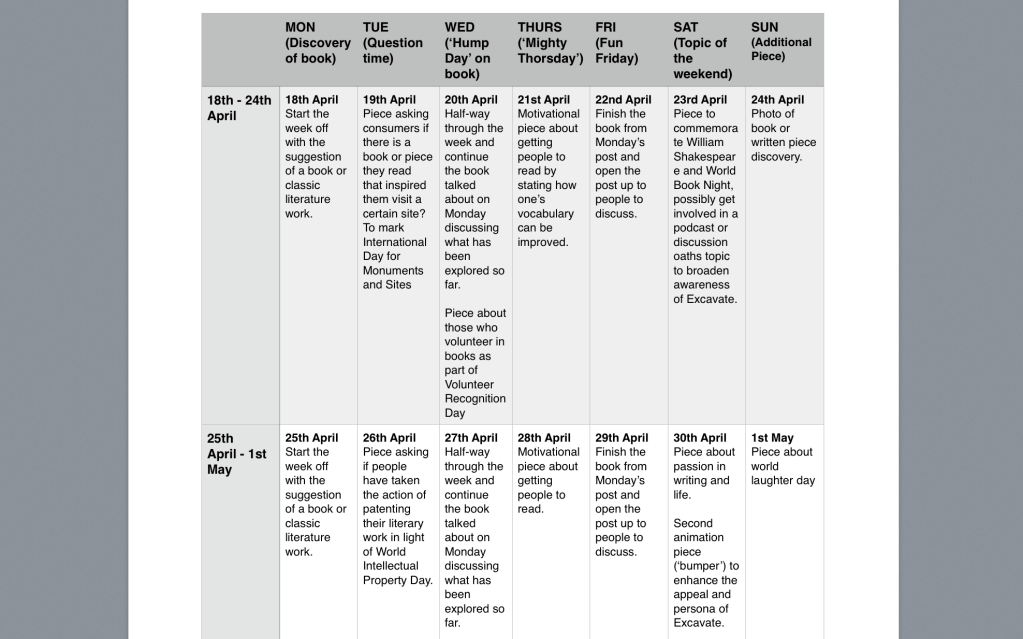
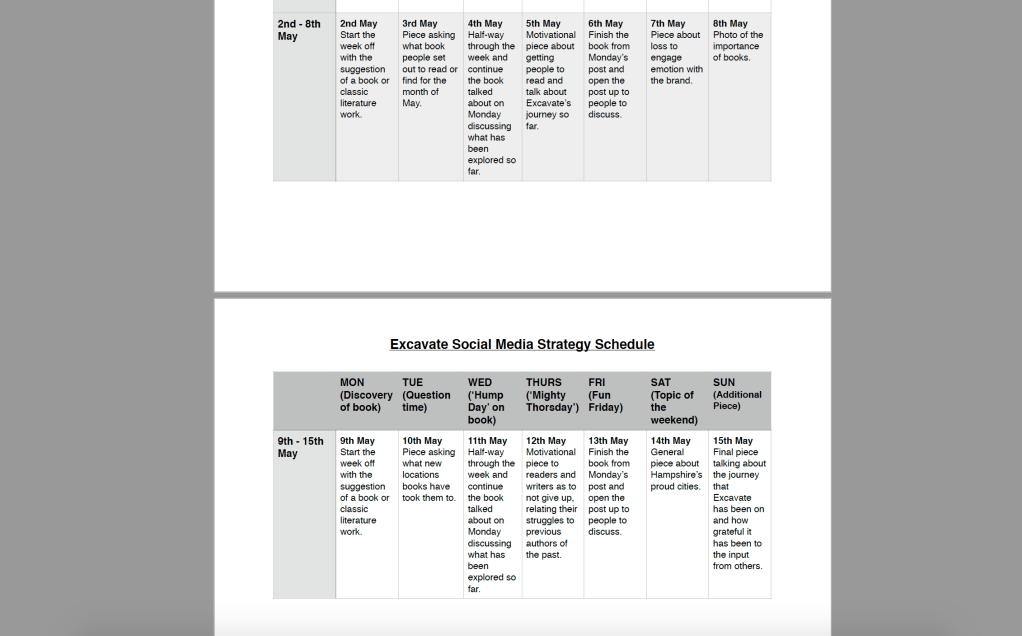
The weekend content would ‘bookend’ the journey by reminding people to enjoy a book in the ideal location, where it can enhance or comfort their mindset and welfare, such a train, beach or in their own sitting room.
The days of Tuesday and Thursday were utilised for asking followers questions and informing them of why they should consider reading. For example, the questions would revolve around what books they would take with them if they went on holiday, or what books inspired them to pursue a particular endeavour in life. The Thursday would provide either quotation or facts that would inspire people to read; I came up with the possibility of calling the day ‘Thors’-Day’ and using it to give facts of how reading can strengthen one’s mind, contrasting with a name associated with physical strength.
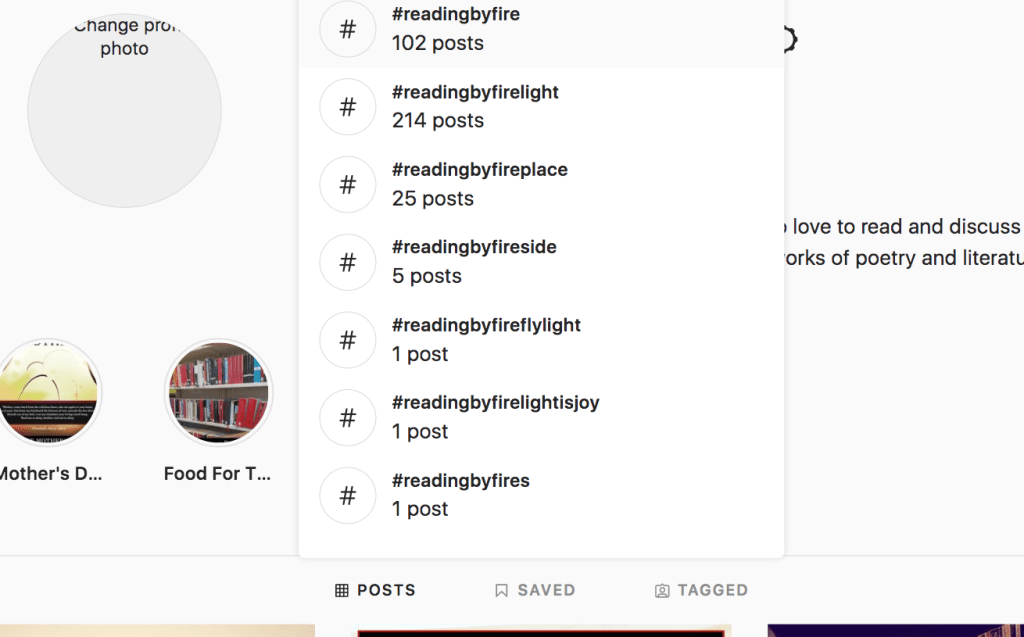
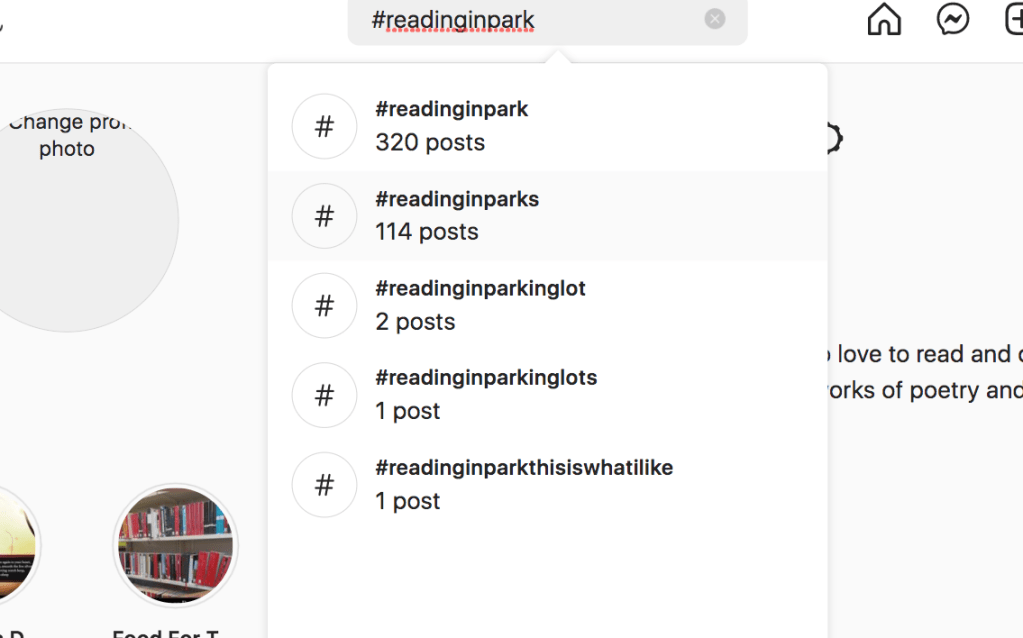
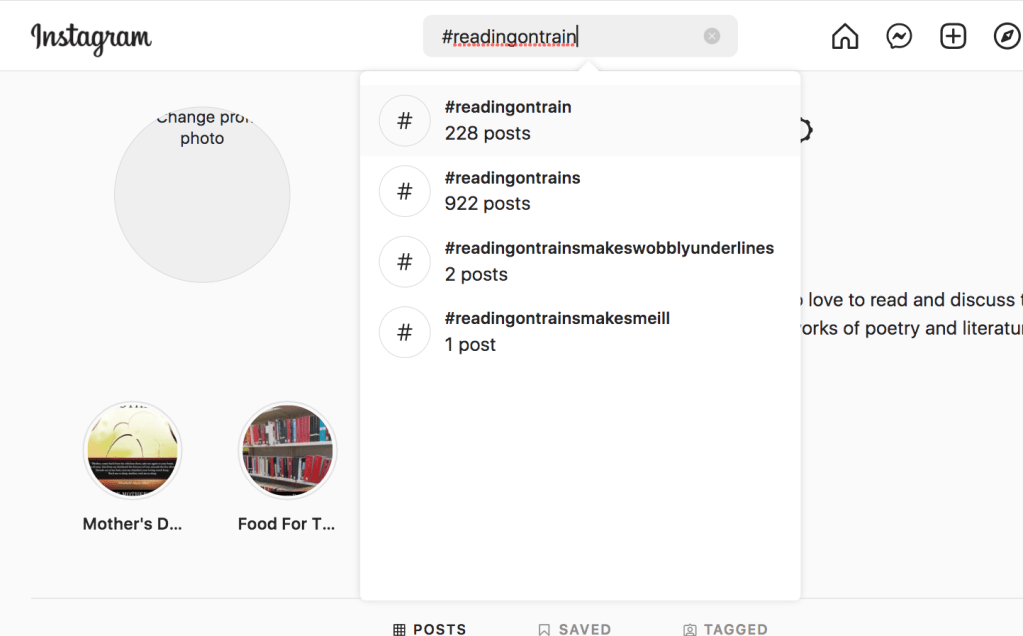
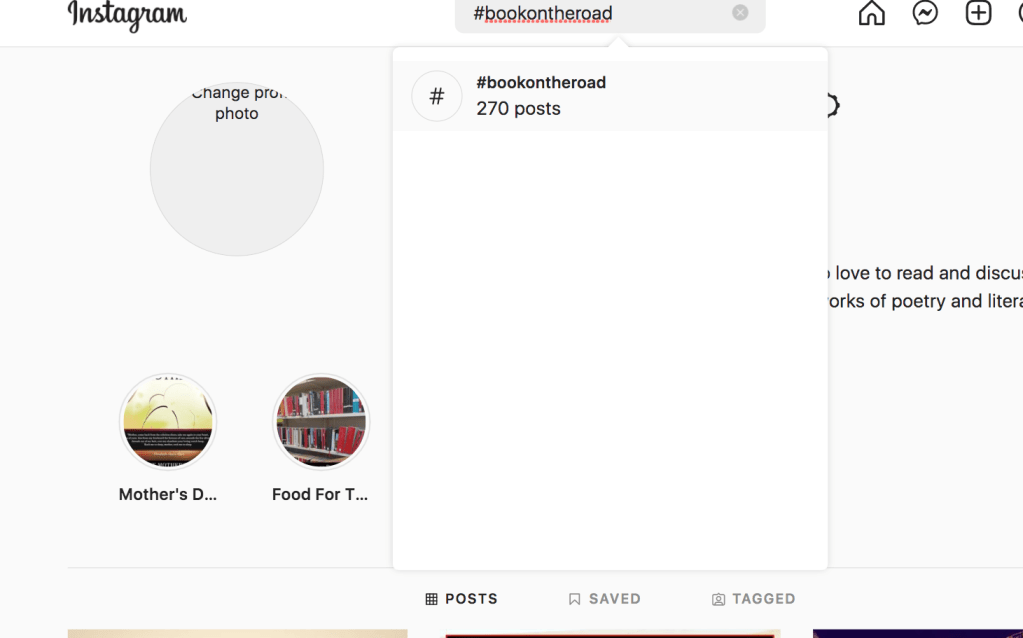
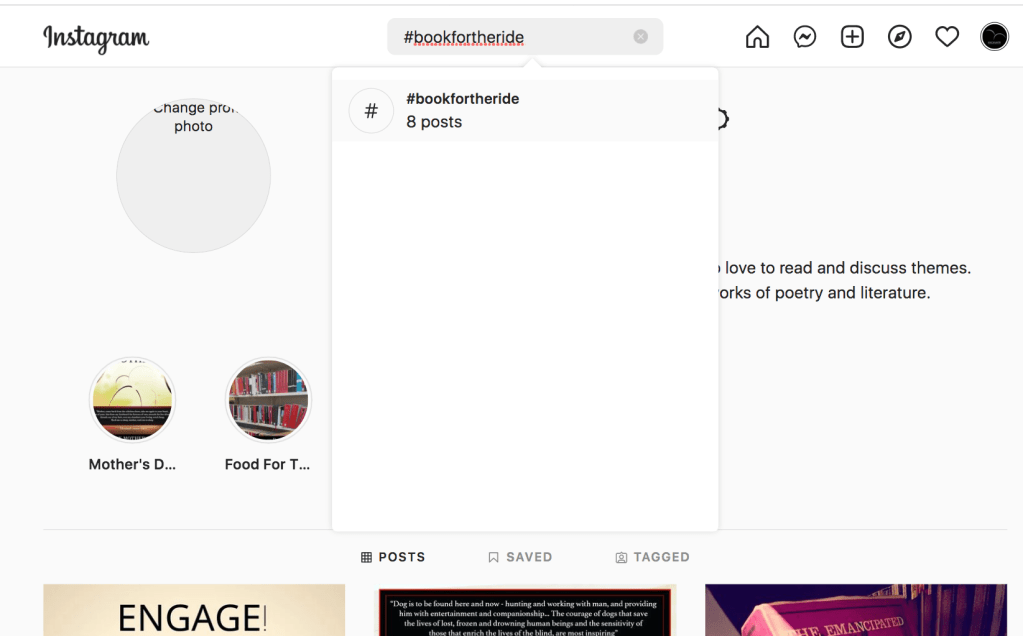

The idea of posting frequent reminders as to where one could endeavour in their literary experience, specifically location, would prove to be an effective decision; one can see that they are relatively low and sit within the mid 100s in tag quantity (Figure 33). Excavate would be able to capitalise and build attention through these tags, if used appropriately.
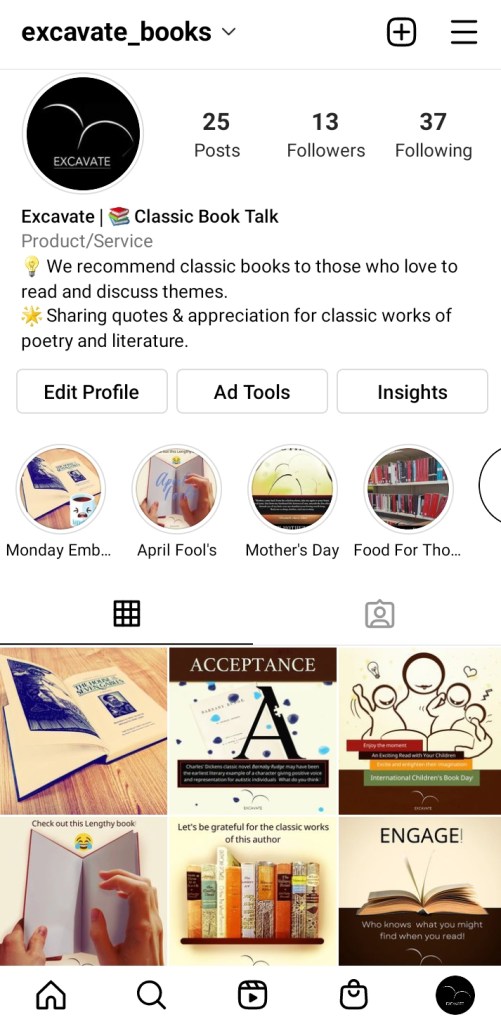
The use of tags: #bookstagram and #bookswelove, would certainly enable the content to become quickly recognised because of the popularity in these trends. However, it was finding the balance of using accompanying tags that were of a lower proportion to avoid the content becoming lost in over-saturation and abundance of competing accounts. In addition, people would be able to find out what the brand’s mission was by noting how the tags use more personal connotation, such as #comfortreading, #letsreadtogether, #readersdelight, #bookdiscussion and #literarythemes, which perfectly balanced the aims of the brand within a potential area of growth and recognition. I choose to utilise around seven or eight tags for the content, much in the same vein as the Hampshire History Trust example, keeping within a boundary that reached into Excavate’s bare essentials and to not overwhelm consumers.
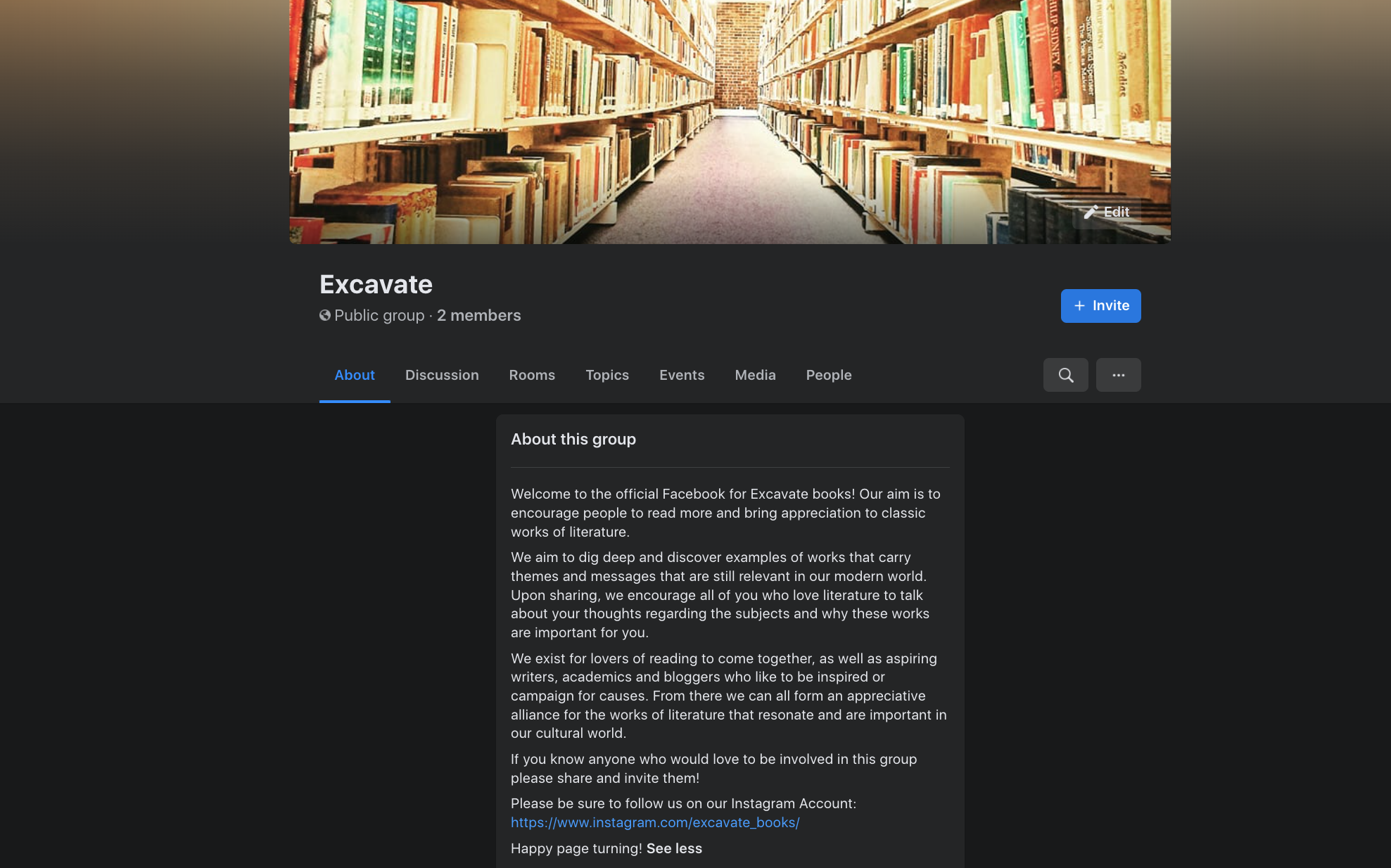
I launched the Facebook group; it would be an extension of the progress that Instagram had done in captivating the consumers and encourage the brand’s secondary aim of bringing readers together. The Facebook group, in other words, was a haven for supporters of Excavate to feel more connected in a community upon discovering it’s Instagram presence and becoming included in the activity.
To bring a sense of ‘fun’ for Excavate’s followers and those who could be attracted to the brand through character-driven content, I designed a character in the vein of a Greek classic figure, keeping with the client’s intent to showcase Greek Mythology. This character would convey a source of determination in proving that even figures of physicality can benefit from the mental strengthening in reading, which ‘Thors-day’, focused on.
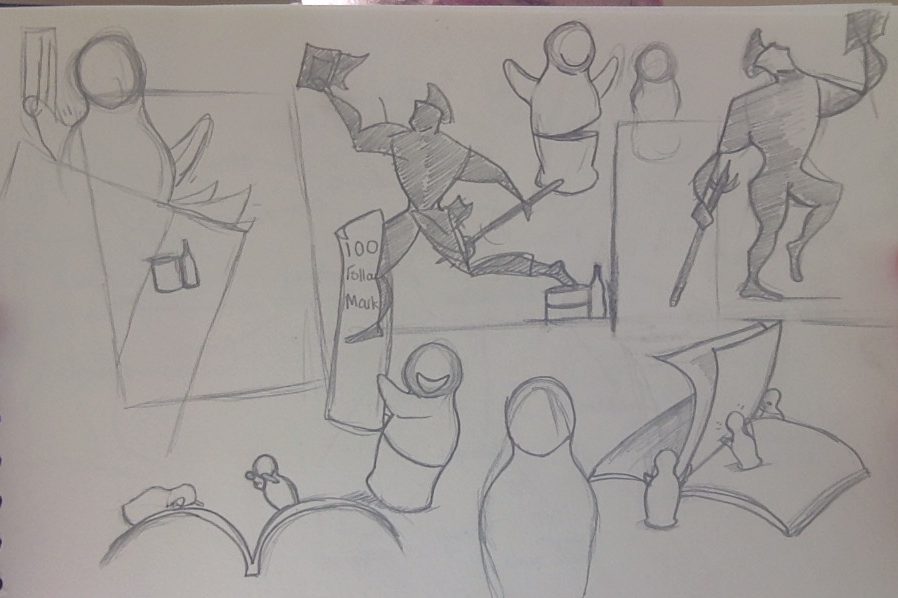
I also utilised a family of figurines initially to commemorate the International Children’s Book day. My client was enthusiastic with the idea and suggested to use them further, as they provide sustainability by attracting younger consumers, who would be intrigued as to what areas or titles the figurines would visit, thus acting as their ’emotional guide’ to Excavate.
Concerning reels, I realised how this would be a useful opportunity to play to my strengths in animation by producing short clips that utilised quirky movements, such as the flickering of pages to add more appeal and persona to Excavate.
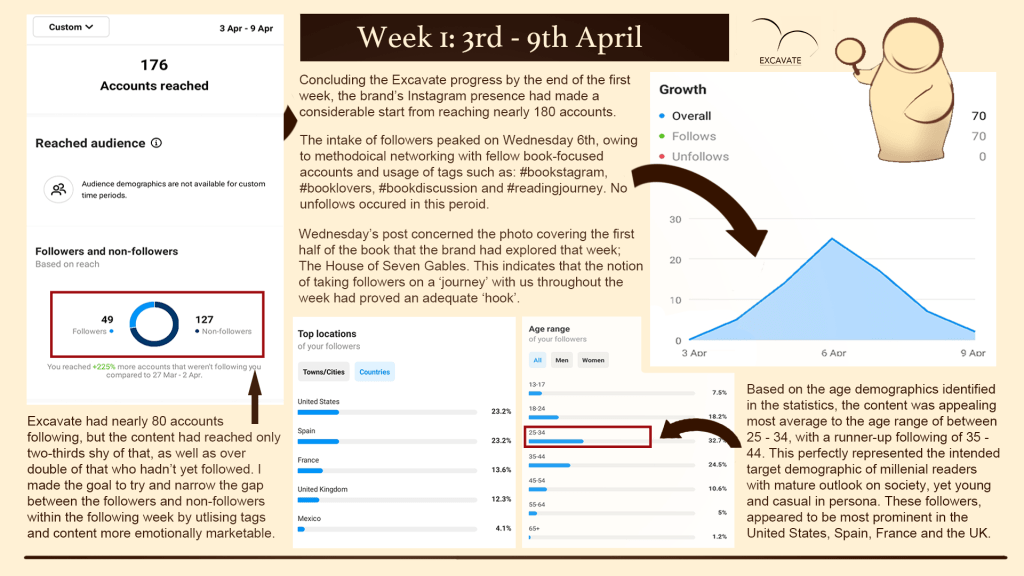
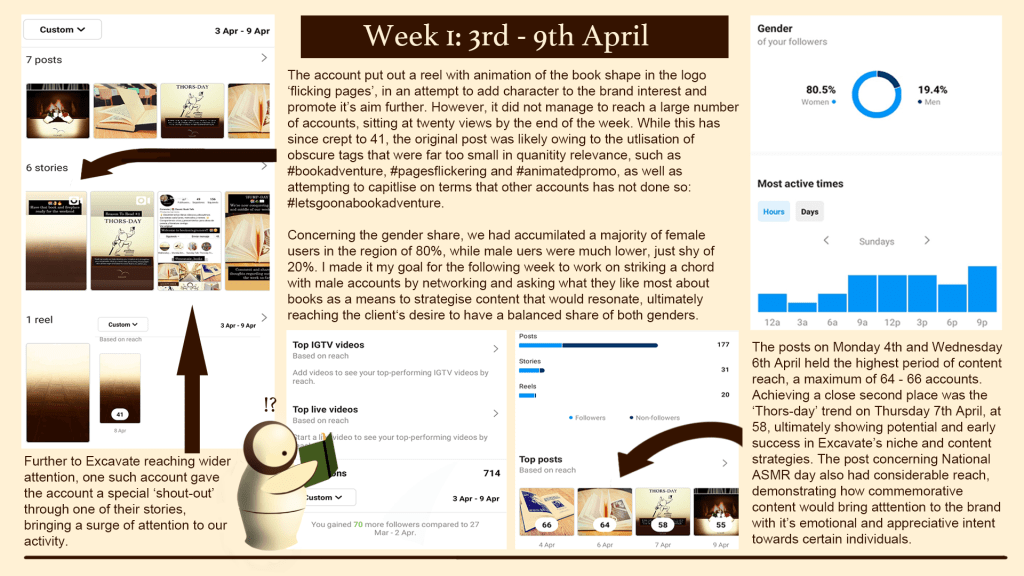
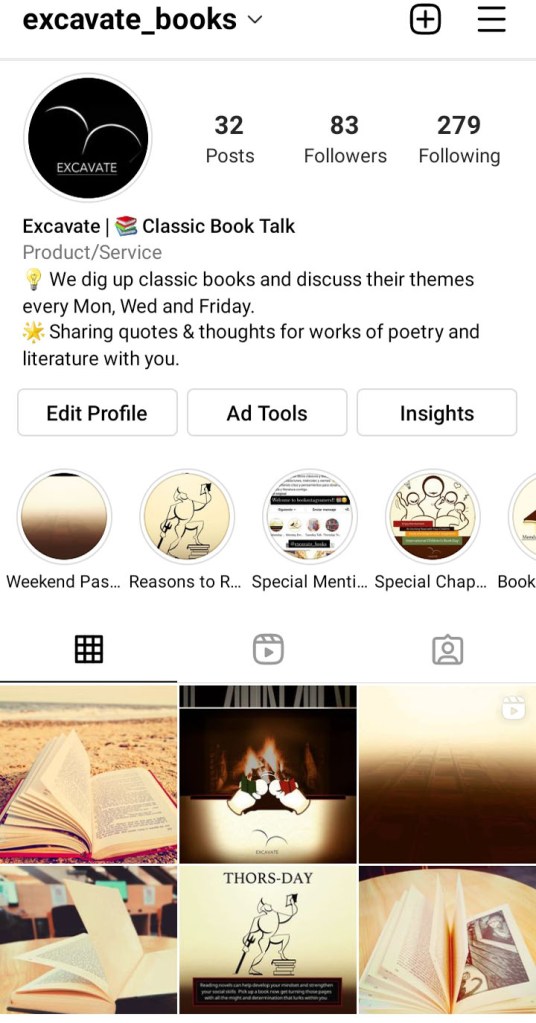
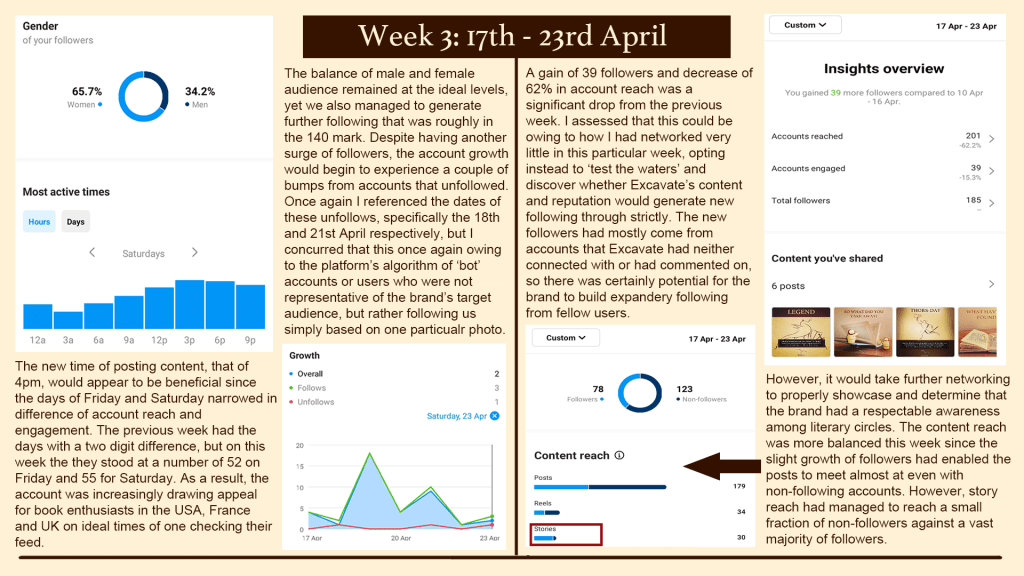
The Instagram account had been active for just over a month, through methodical networking and careful SEO strategy Excavate suddenly benefited from a surge of book enthusiasts in April. The approach of networking shows audience they matter and avoids the brand appearing to be all about what me and my client desire.
During the first week, followers peaked at a 25 intake between 5th – 7th April, when the ‘book of the week’ trend was in its midst covering the themes of the novel, The House of Seven Gables. This demonstrated how the weekly strategy proved popular with followers. Achieving a close second place in terms of views was the ‘Thors-day’ trend on 7th April, which stood at 52, ultimately showing potential and early success in Excavate’s reading-encouragement goal.
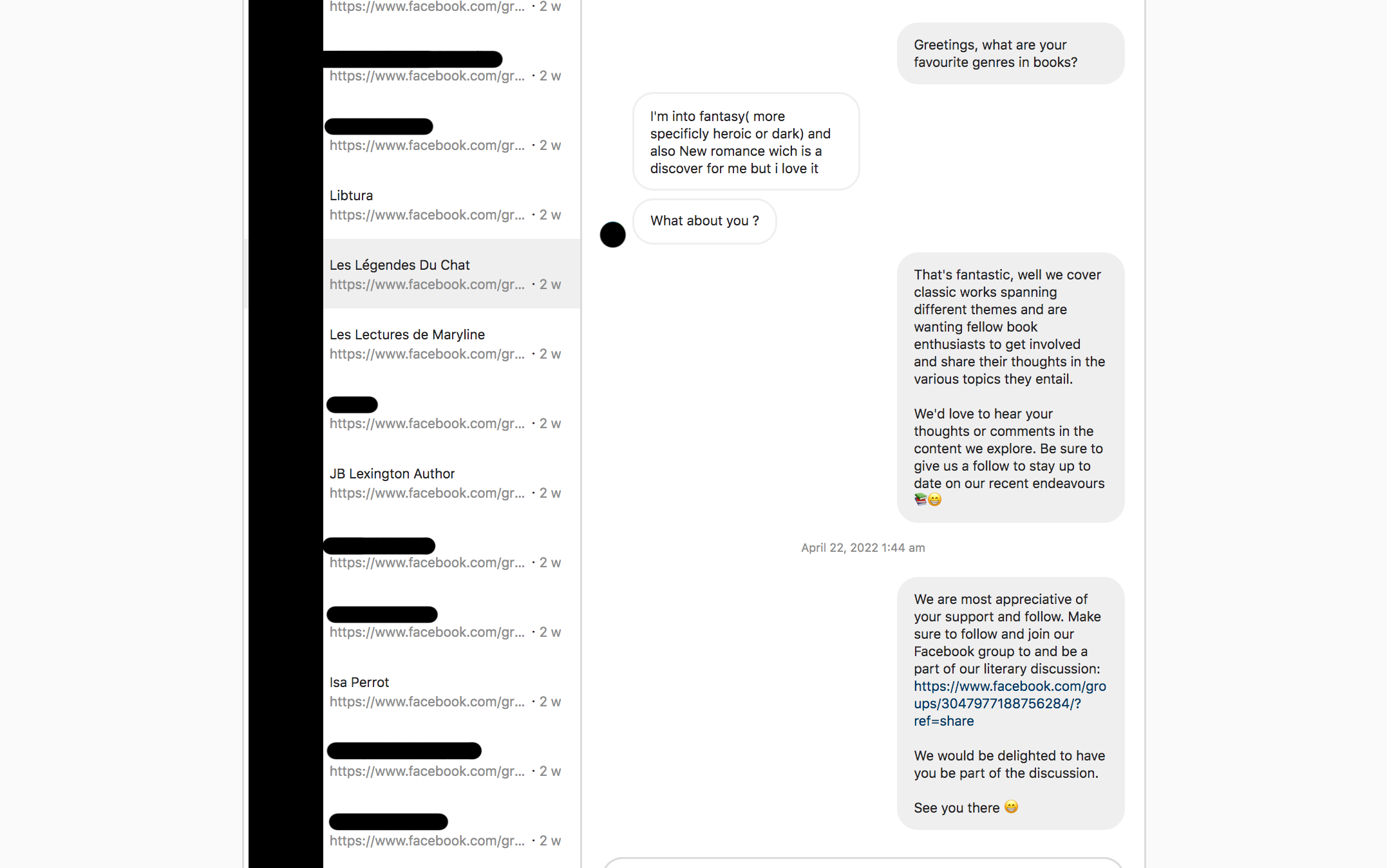
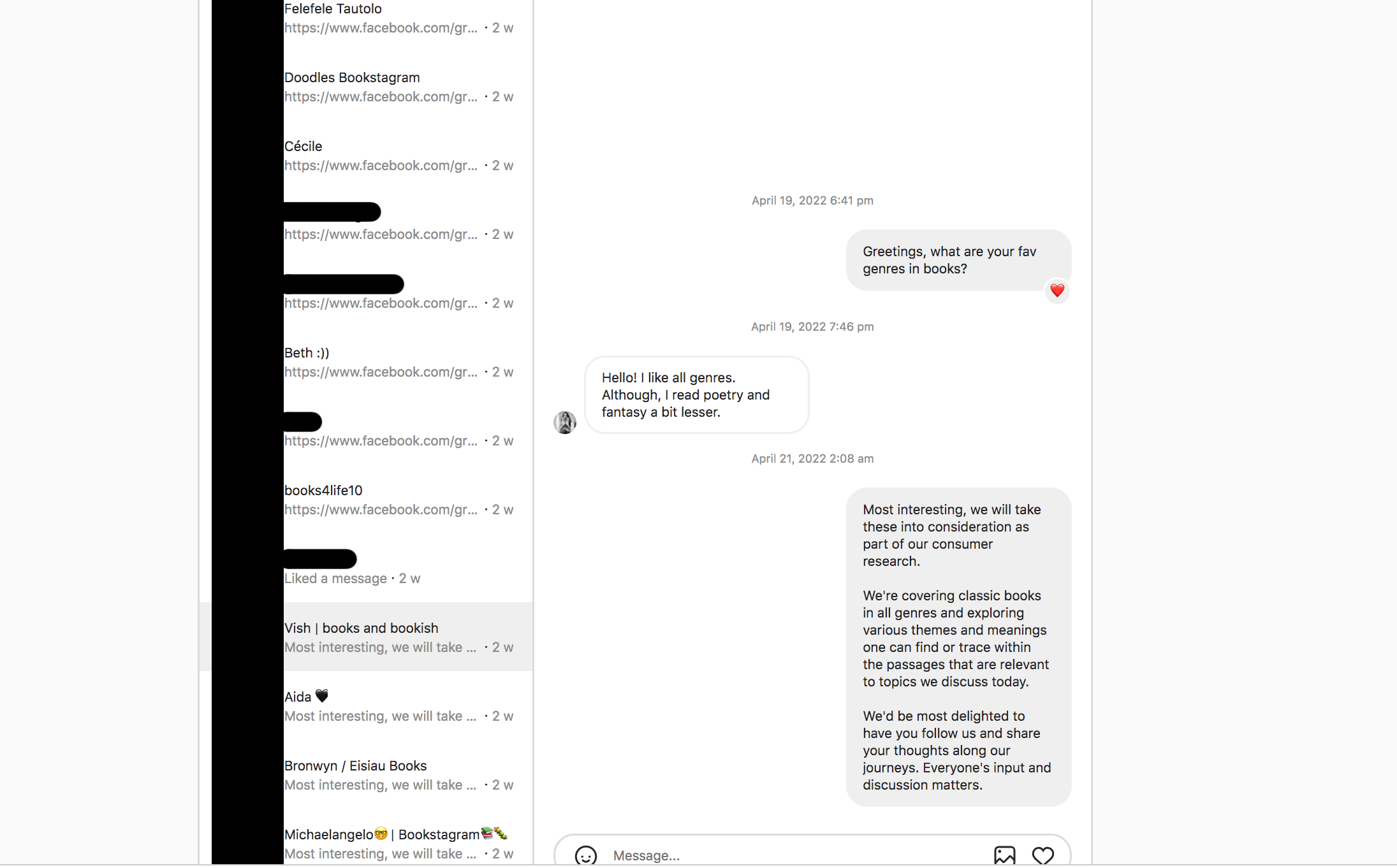
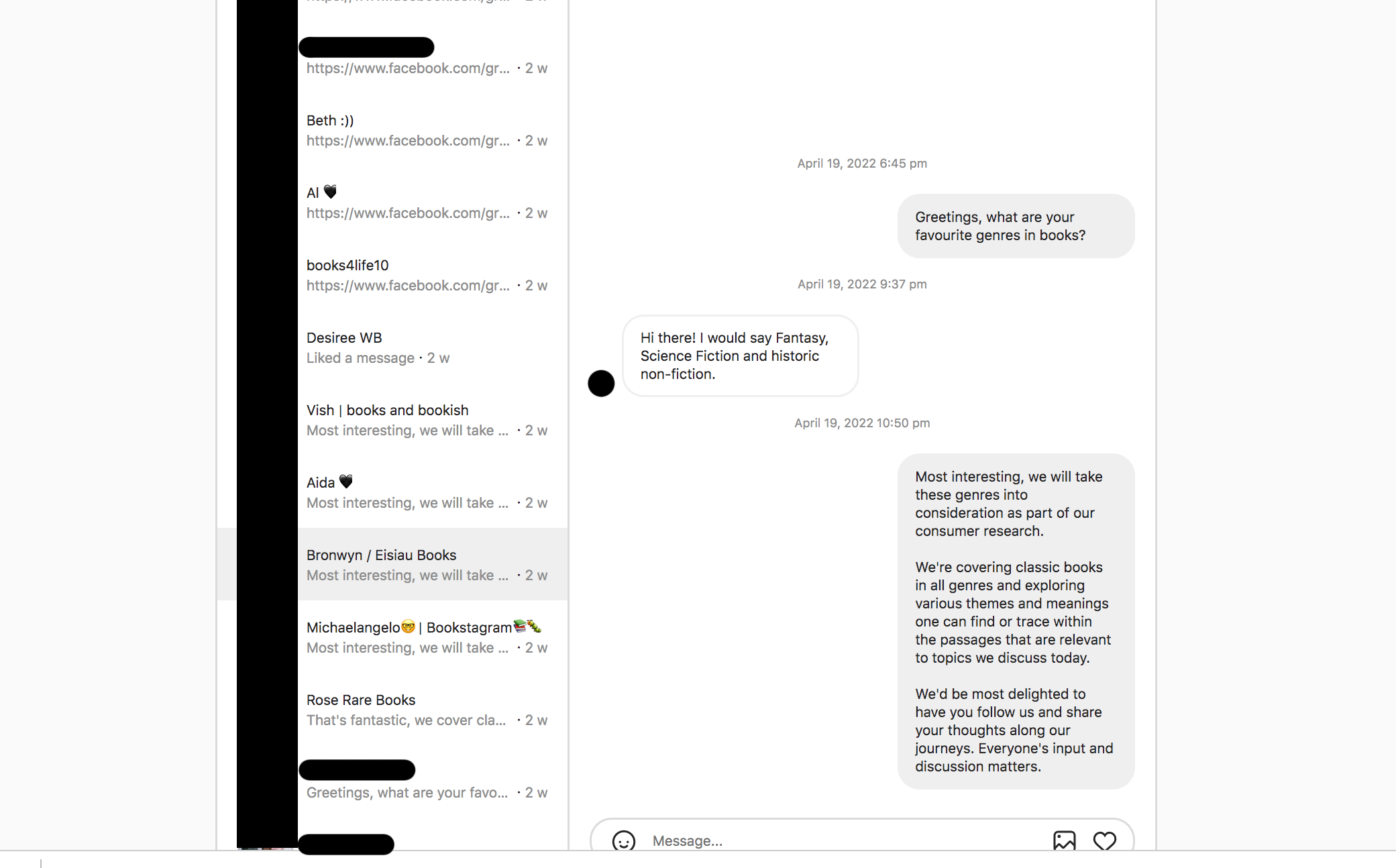
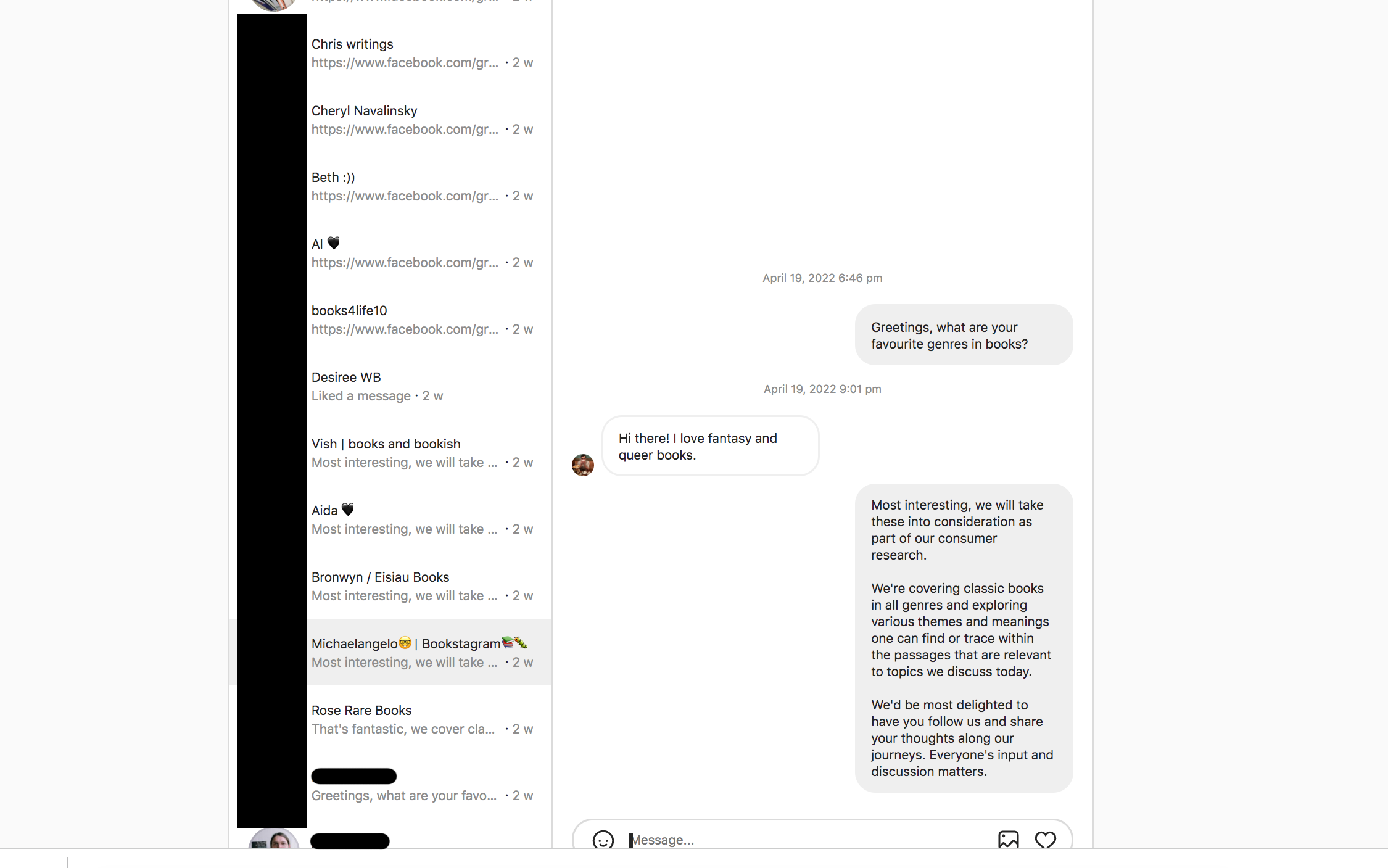
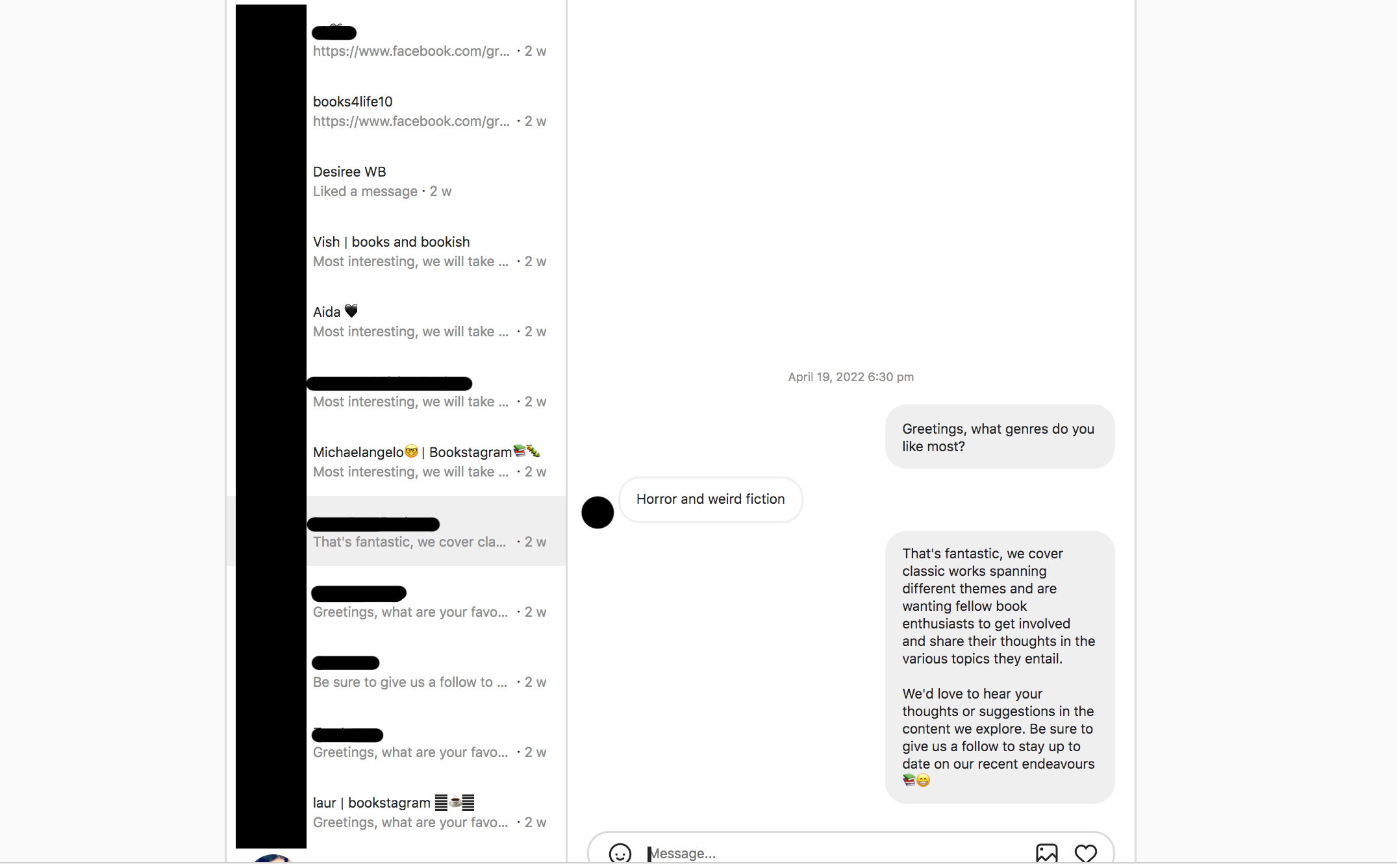
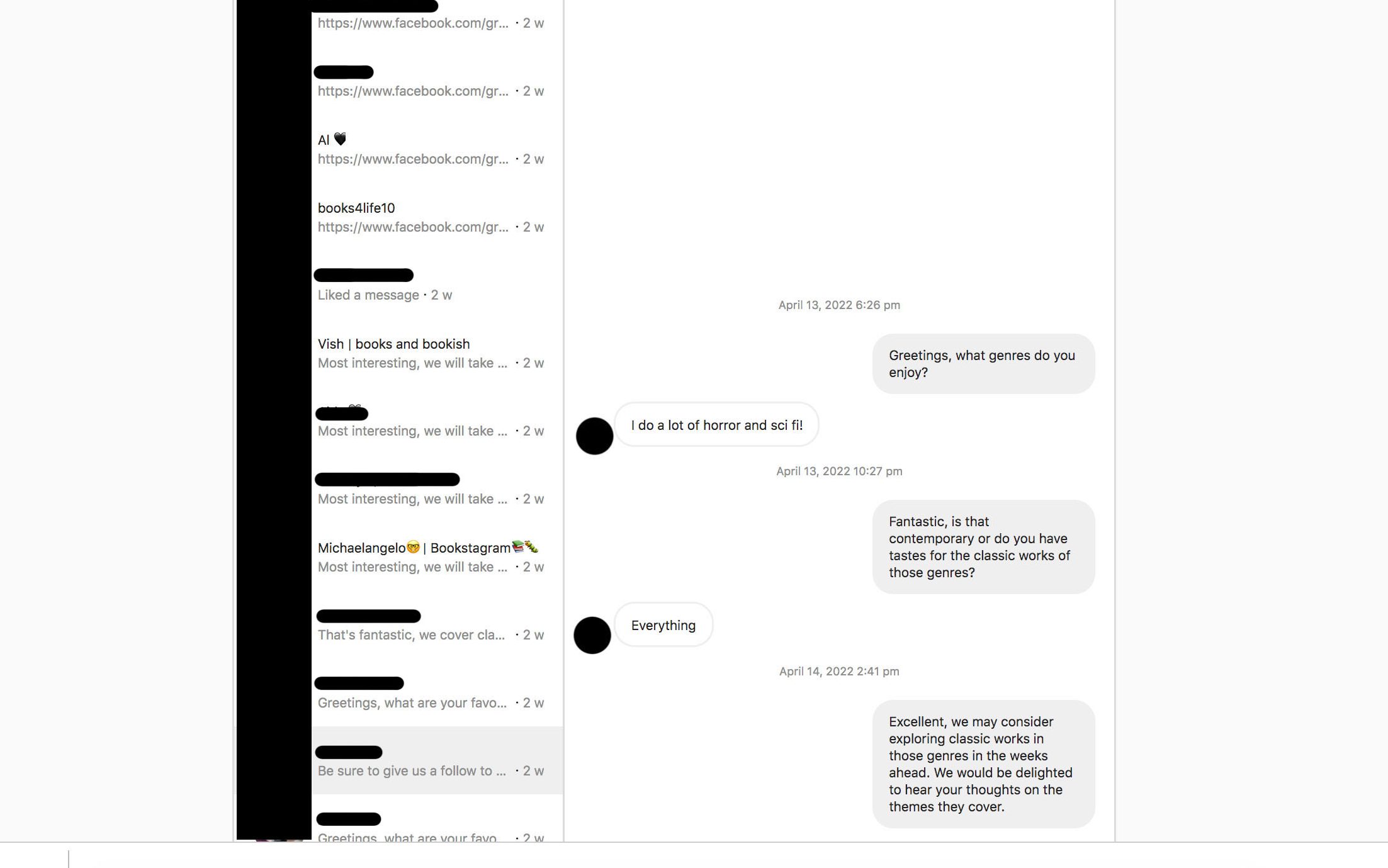
Understanding particular target consumers, questions were asked as to what genres they enjoyed or where they liked to read as a way of knowing what to share or cover in the form of content to resonate and connect emotionally with them: what they like about books, hearing about their favourite genres and encouraging their input, thus finding how our content would resonate with our core support (Figure 40).
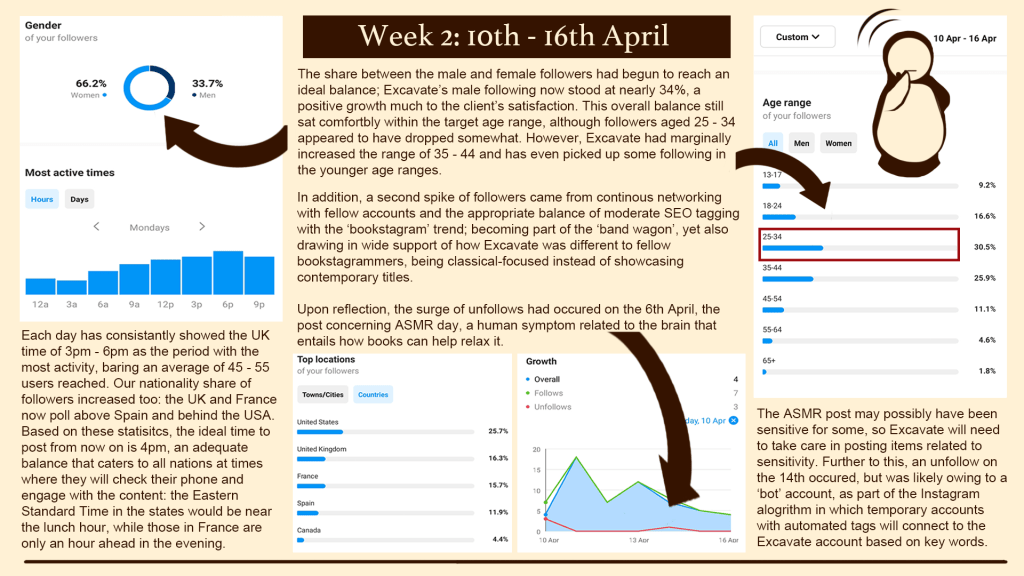
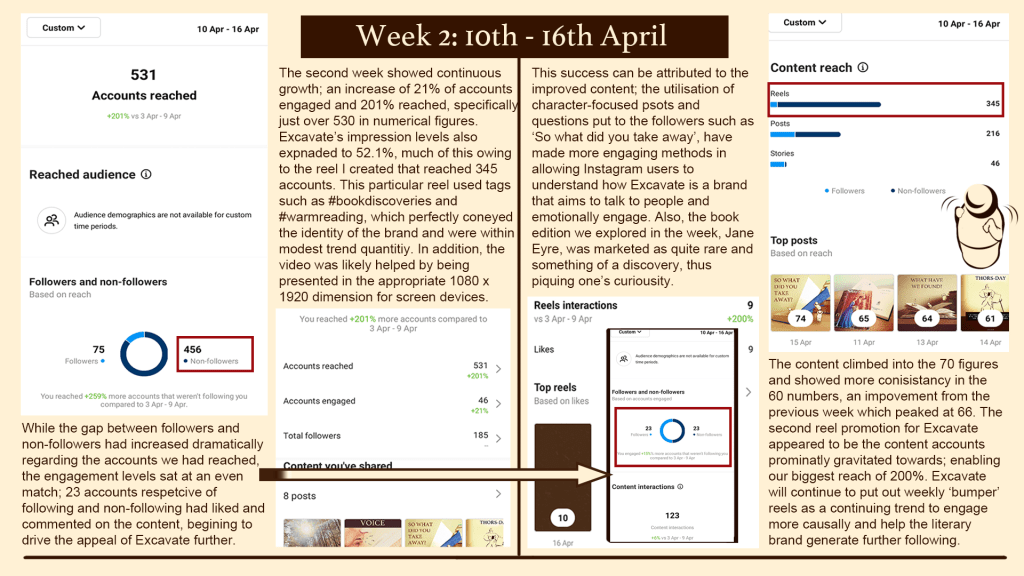
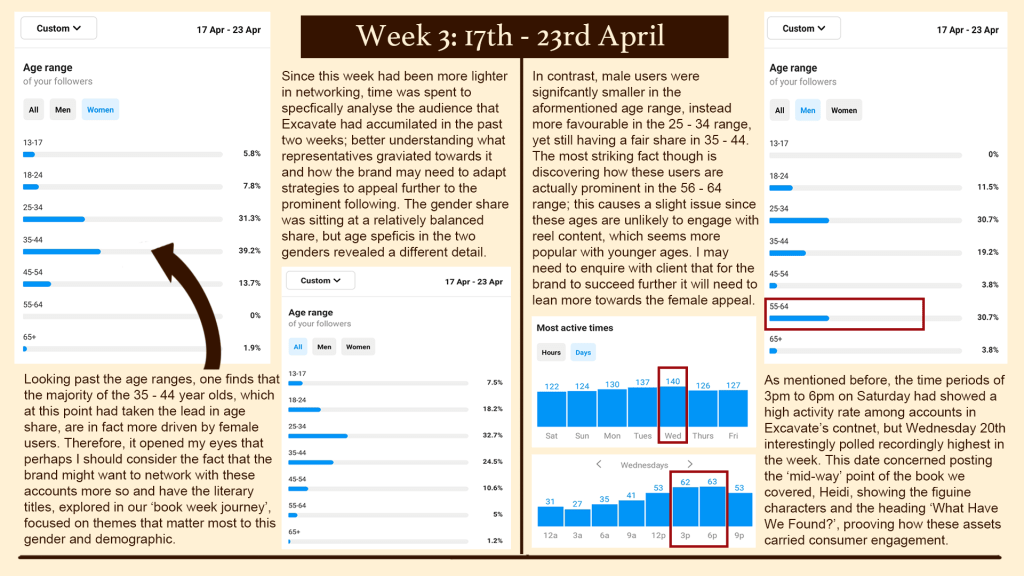
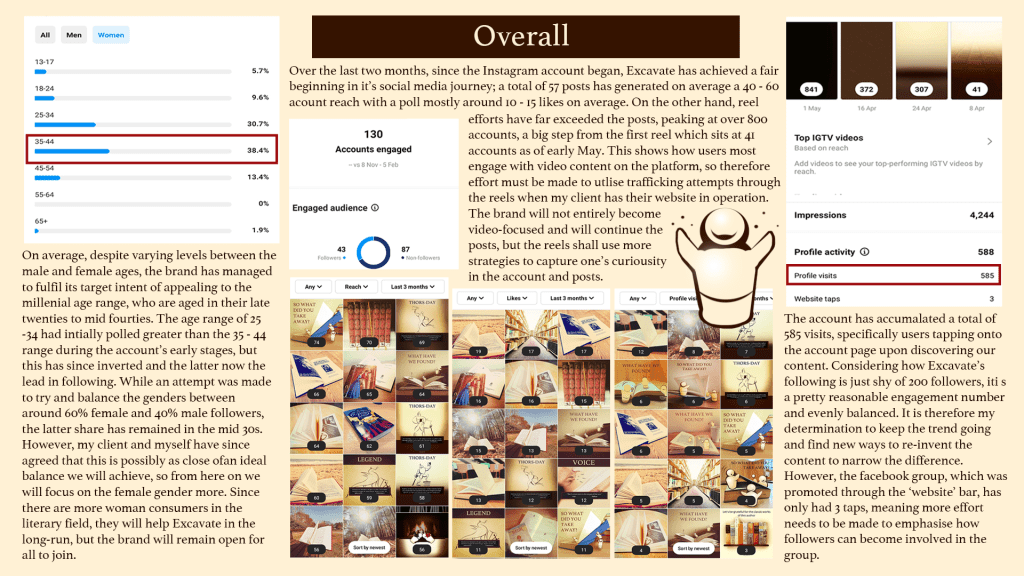
Regarding areas for improvement, the account attracted a greater proportion of female followers compared to males, in the following weeks. This worked against the client’s desire of an equal balance, so I made it my intent to improve the SEO strategy and content covered to reach out to a considerable share of male-led accounts within the span of a couple of weeks.
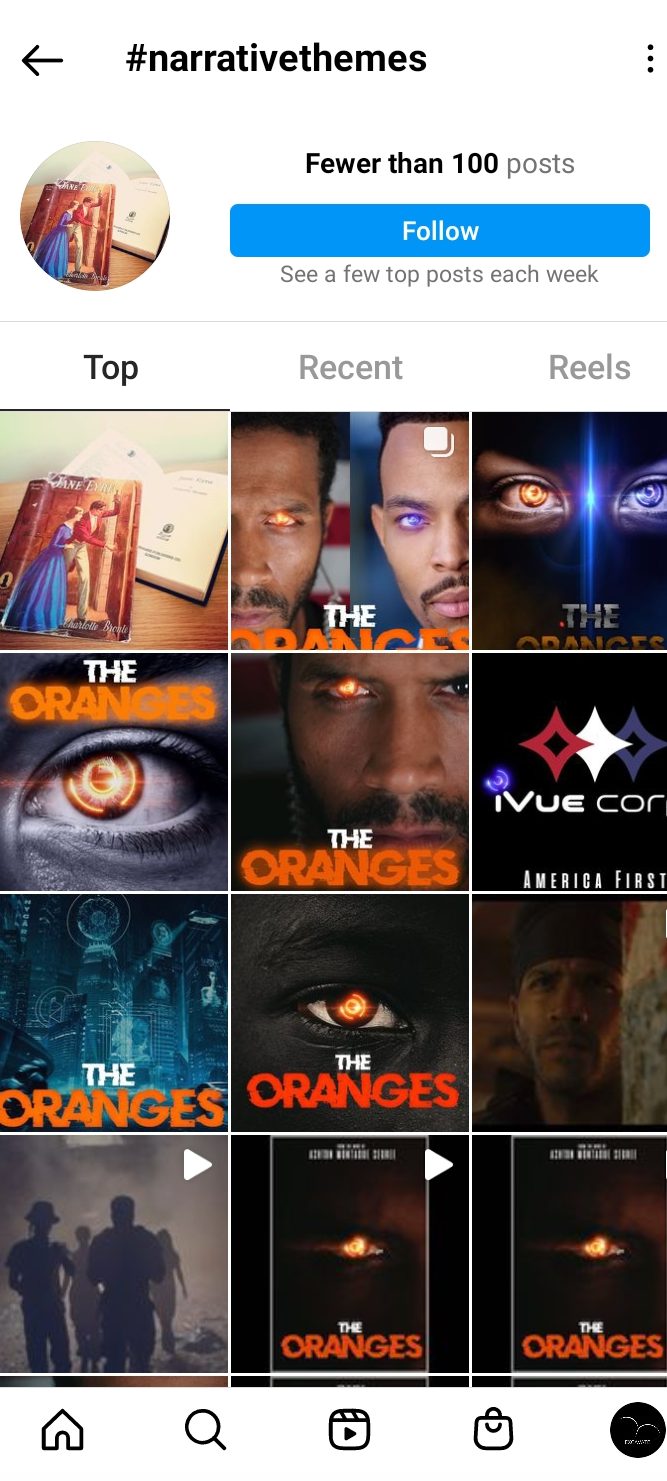
I continuously checked tags for my content to ensure consistency was maintained in reaching target audience. For example, upon looking at the choice of using: #narrativethemes, one can see that the posts of fellow accounts that use the tag, do not reflect the content, tone and persona that Excavate represents. I therefore changed the choice of SEO tagging for such an occurrence.
Concerning the occurrence of fresh followers, they generally tended to be casual book bloggers of contemporary reads, although we were beginning to get support from people of high professions, such as teaching or authorship, ensuring Excavate is building respect and being recognised for its aim.

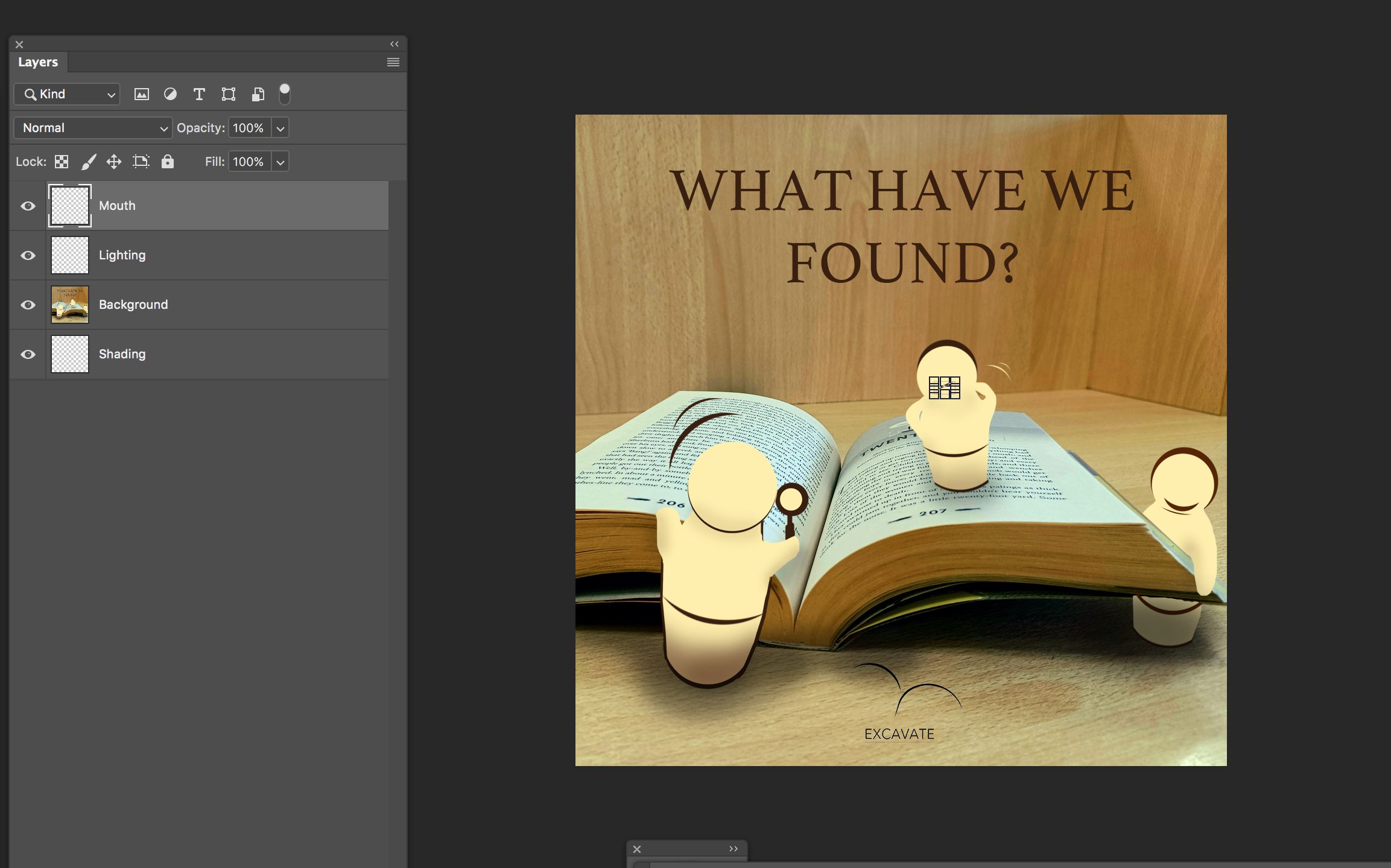
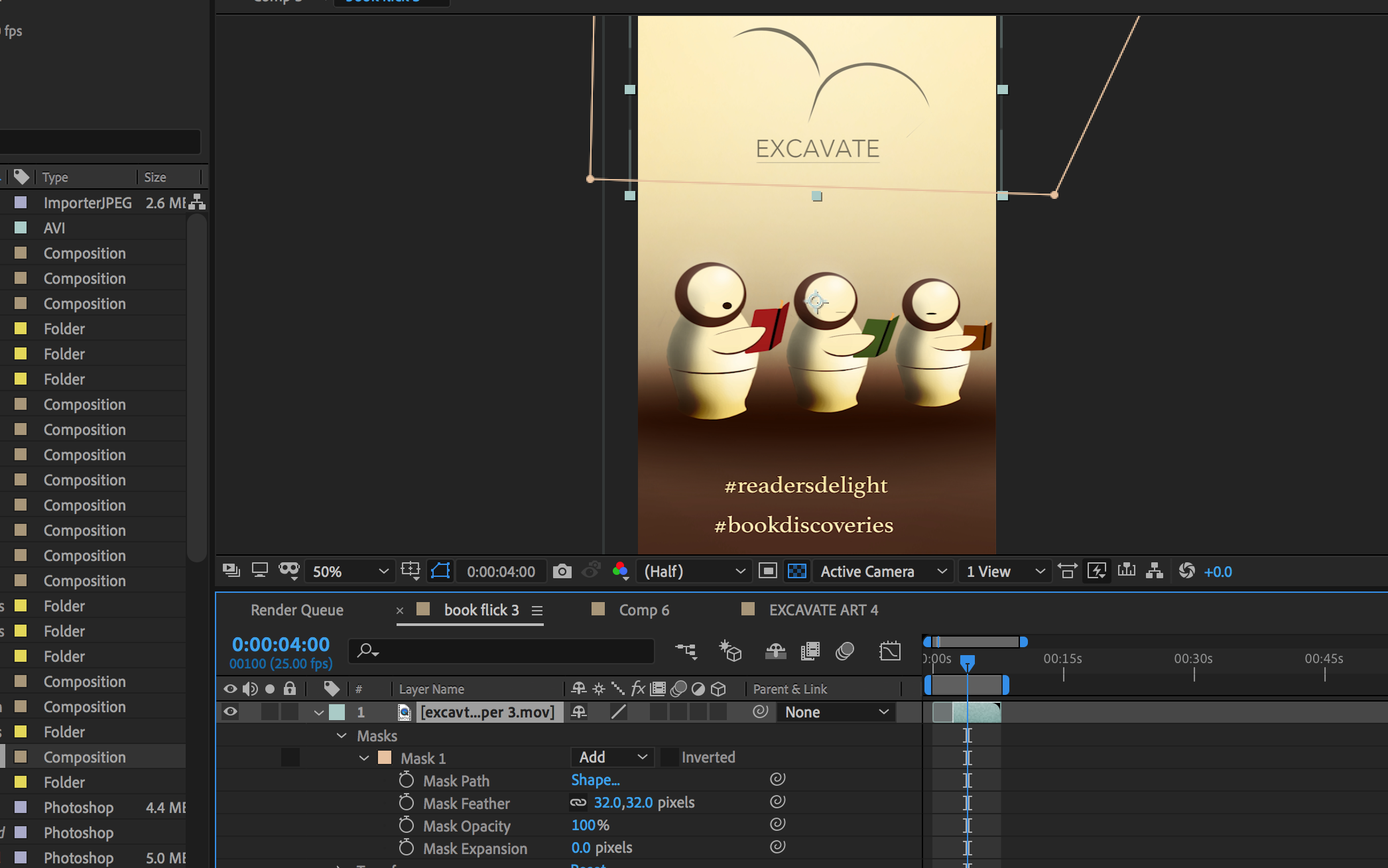
As far as platforms utilised to create content, I provided my skills with Adobe Photoshop, Illustrator and After Effects to design and animate the content or reels, with the former programme to utilise the Athelas font for the header text in posts.
I became aware of how Canva was becoming a popular platform for the creation of digital content, as well as the fact that it had exclusive text on there. While experimenting, I found that it had a Slim Russian font option which worked subtly into maintaining my client’s intent of diverse content.
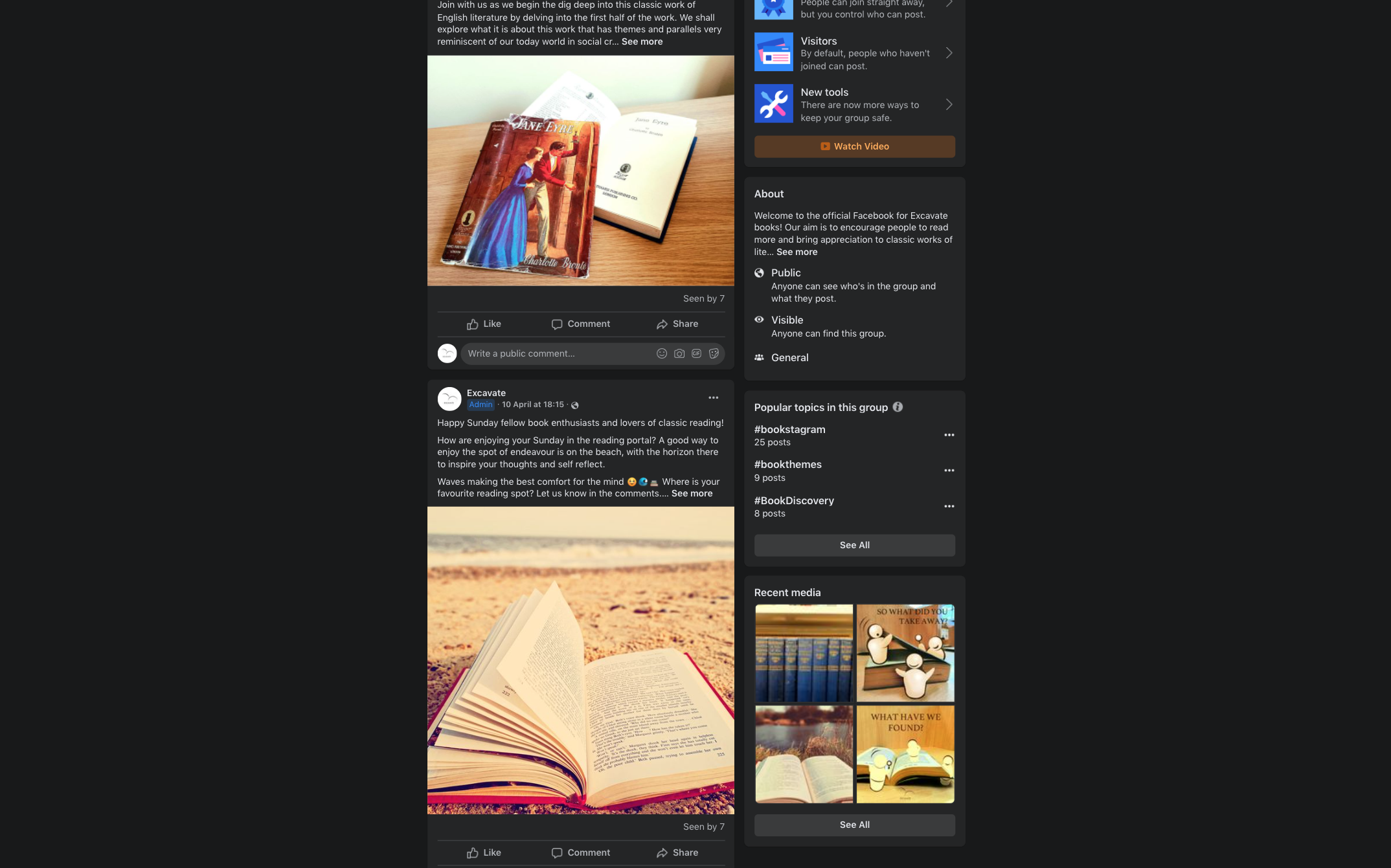
Concerning Facebook, I posted most of the same content from Instagram, but since it was a discussion-focused platform, the posts utilised more specific questions, such as the photo I posted about reading on the beach (Figure 45) in which more was asked regarding where people have spent their weekend reading. In addition, it was made as a public group in which anyone with reading intentions could share their thoughts or stories in book endeavours, something which Instagram lacked.

I operated the group a page profile which I called Excavate and shared the group through fellow literary blogs (Figure 46) as well as inviting personal contacts who had literary passion, the group generated roughly a dozen reaches for most posts.
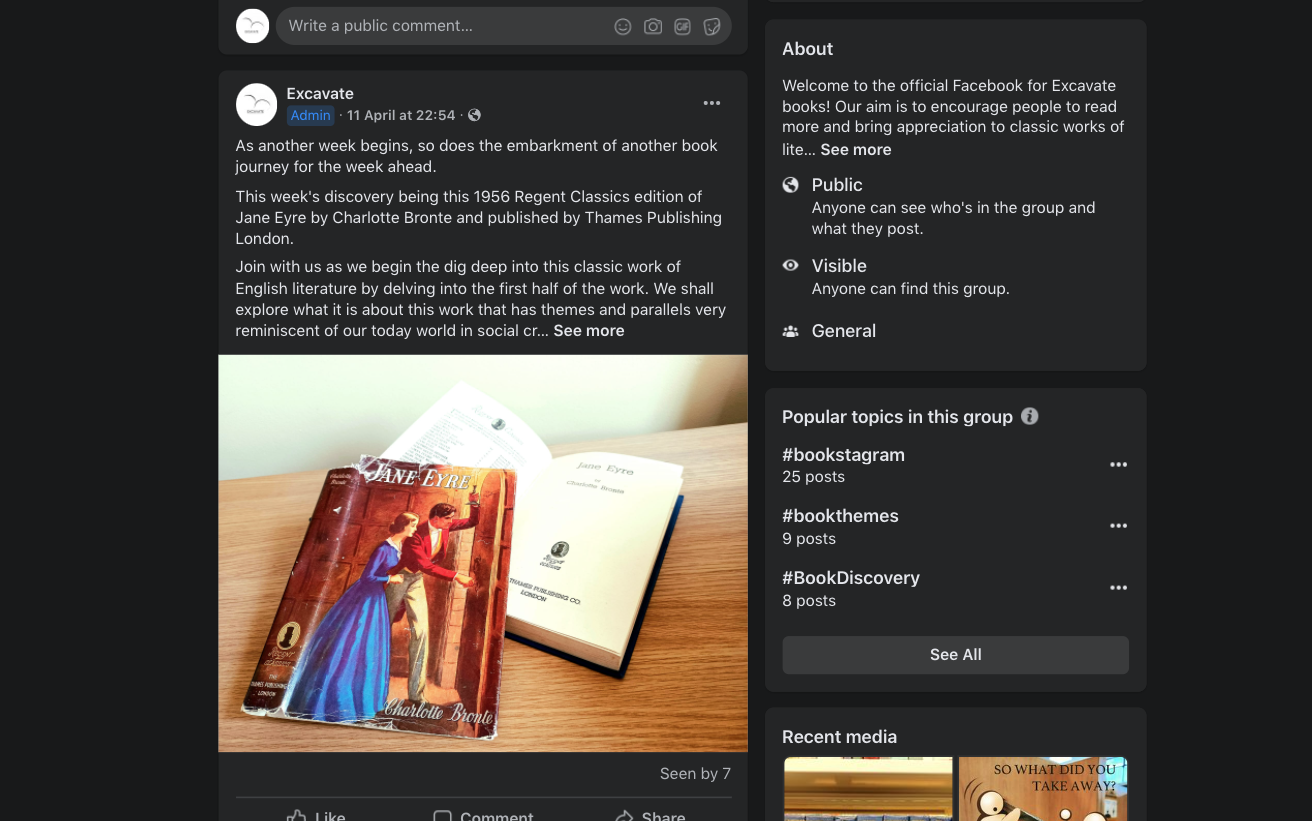
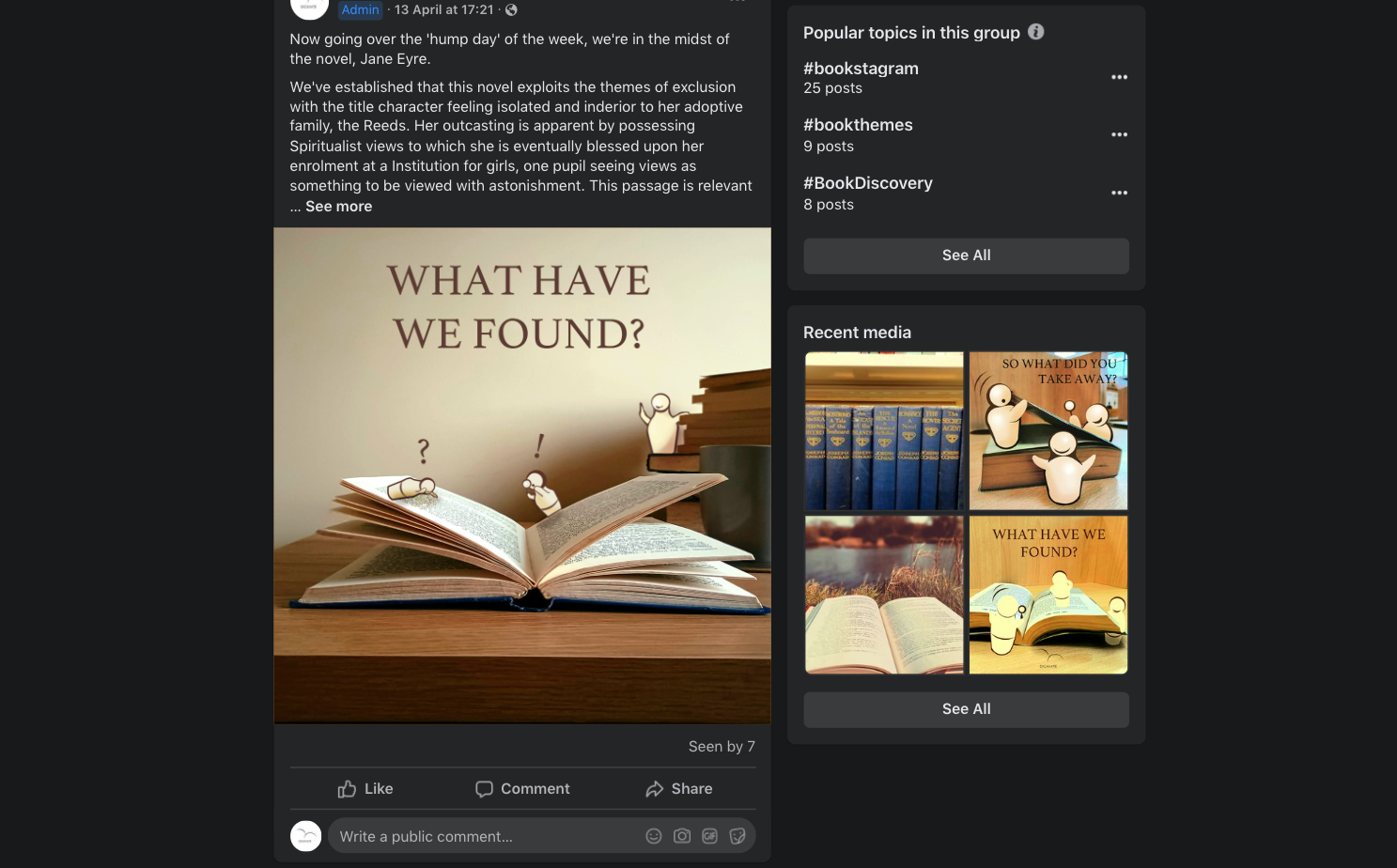


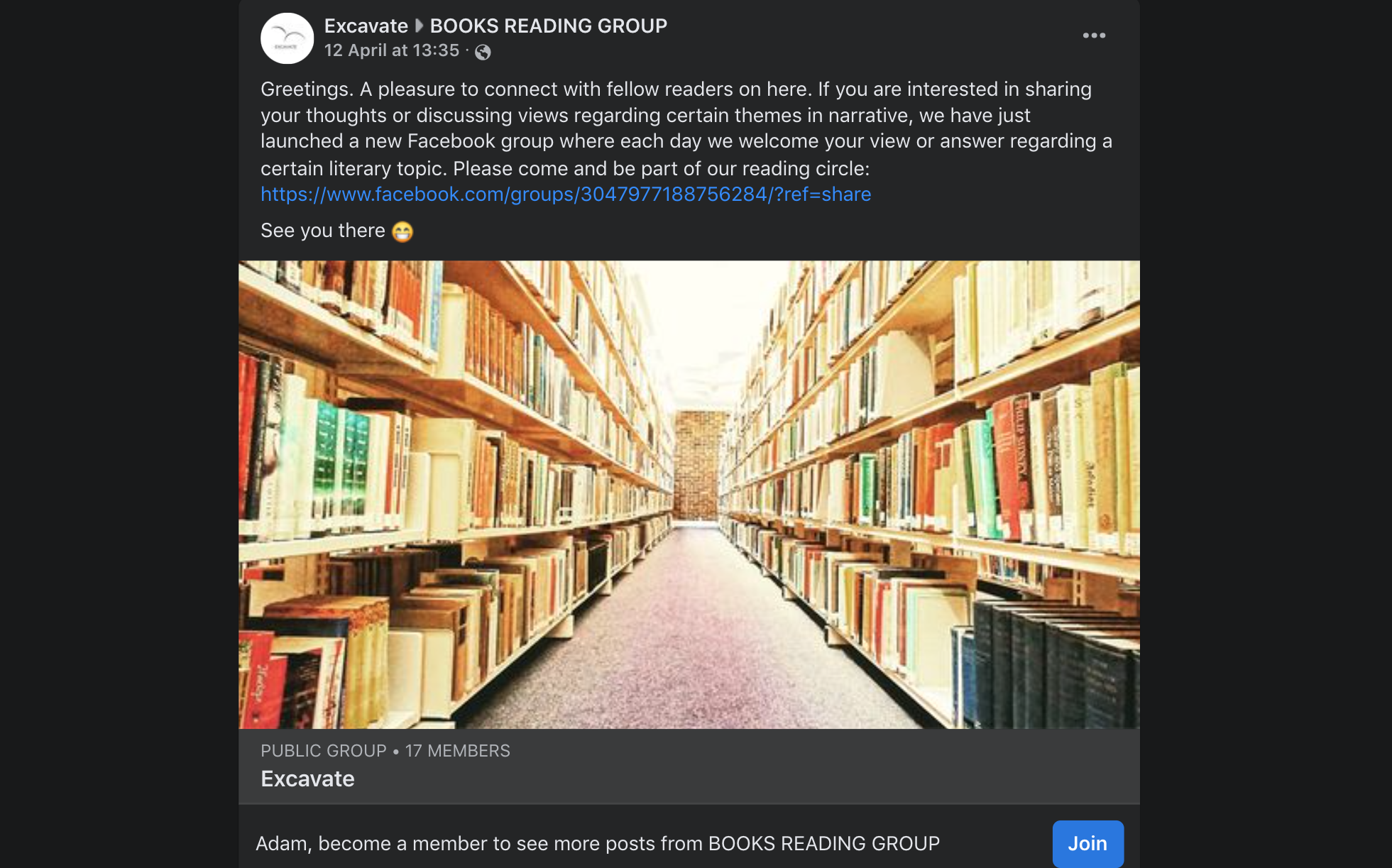
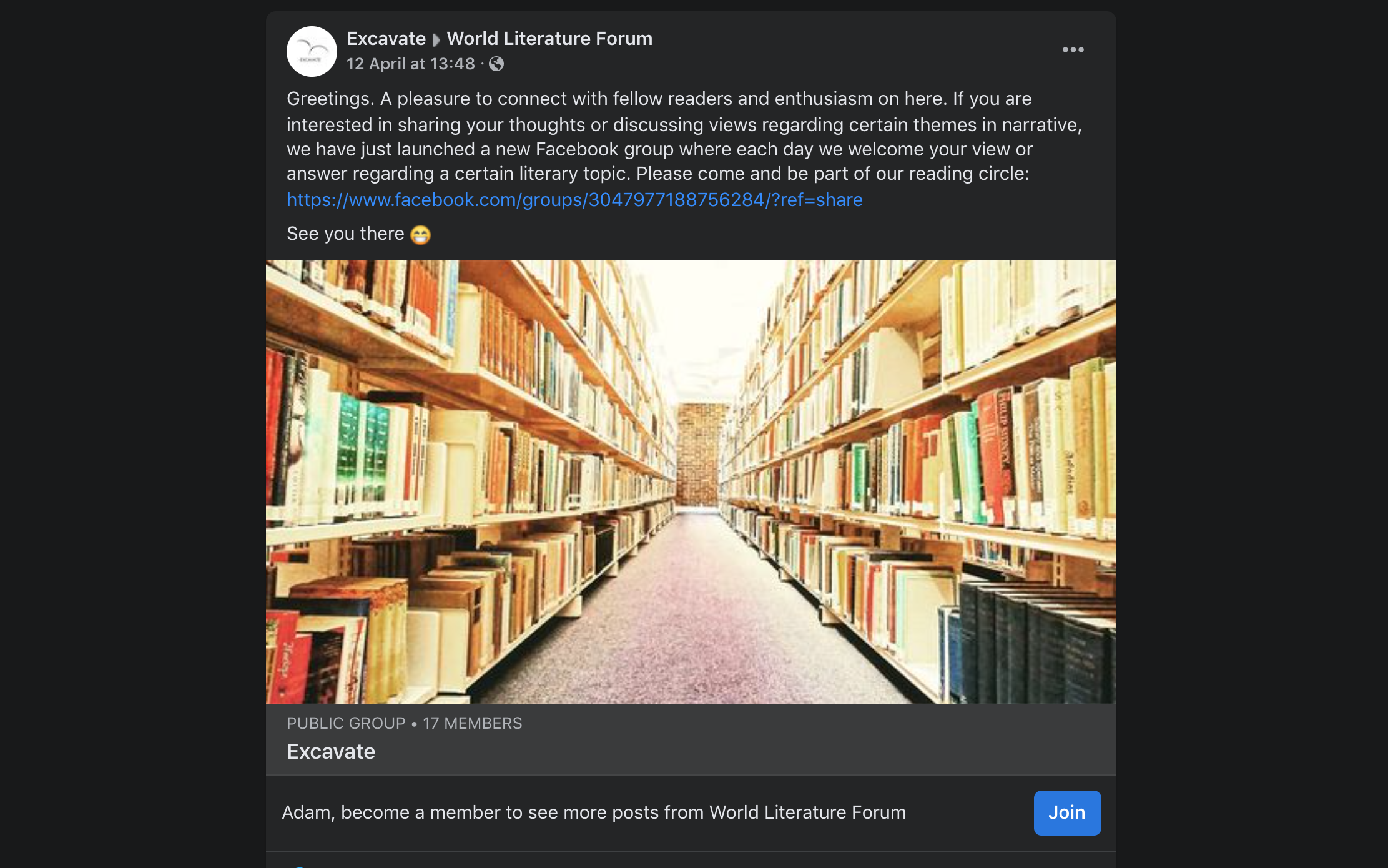
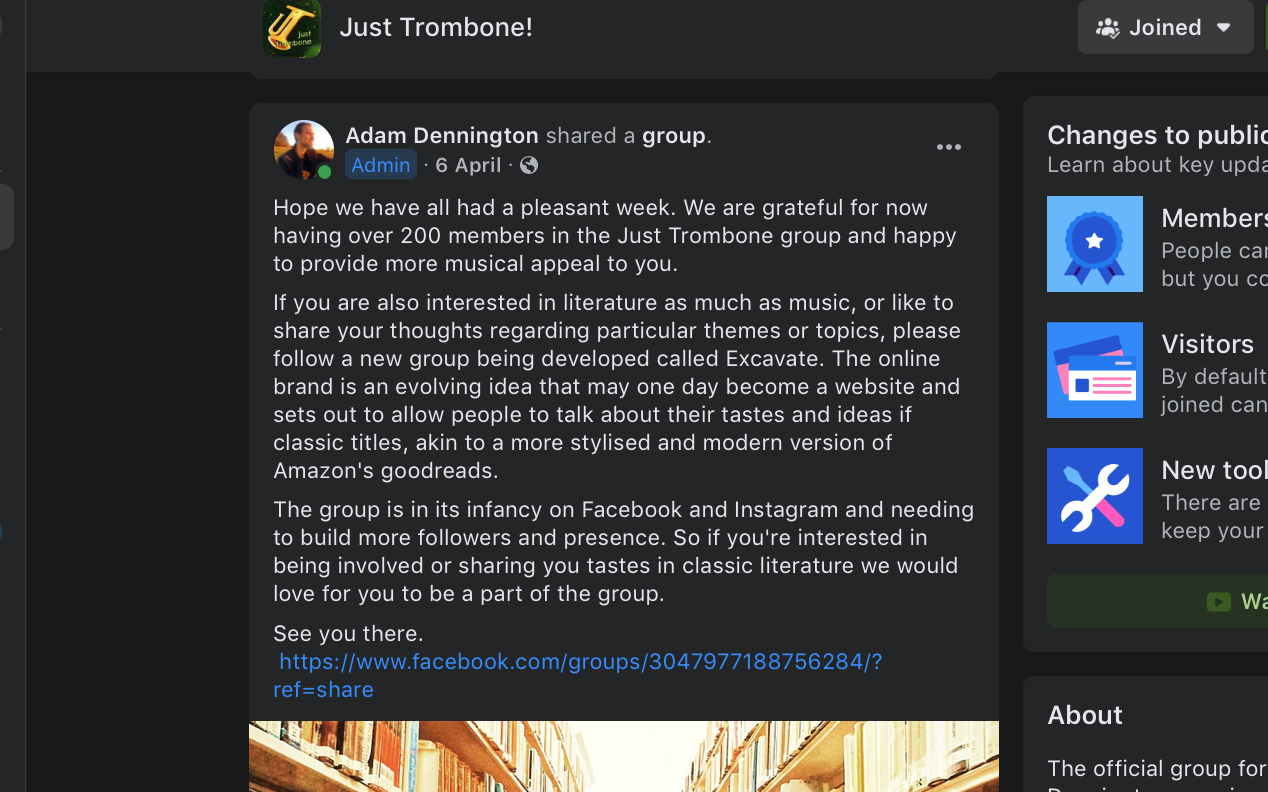
The group was further promoted through Instagram; I used the group link in place of the website as a means to inform our followers of how they can discover more of the brand and become further involved with our activity. In addition, networking helped in suggesting the group to users who became intrigued by our content, although sometimes occurrences would show that Facebook is not widely used as one may assume, such as these messages below (Figure 47).
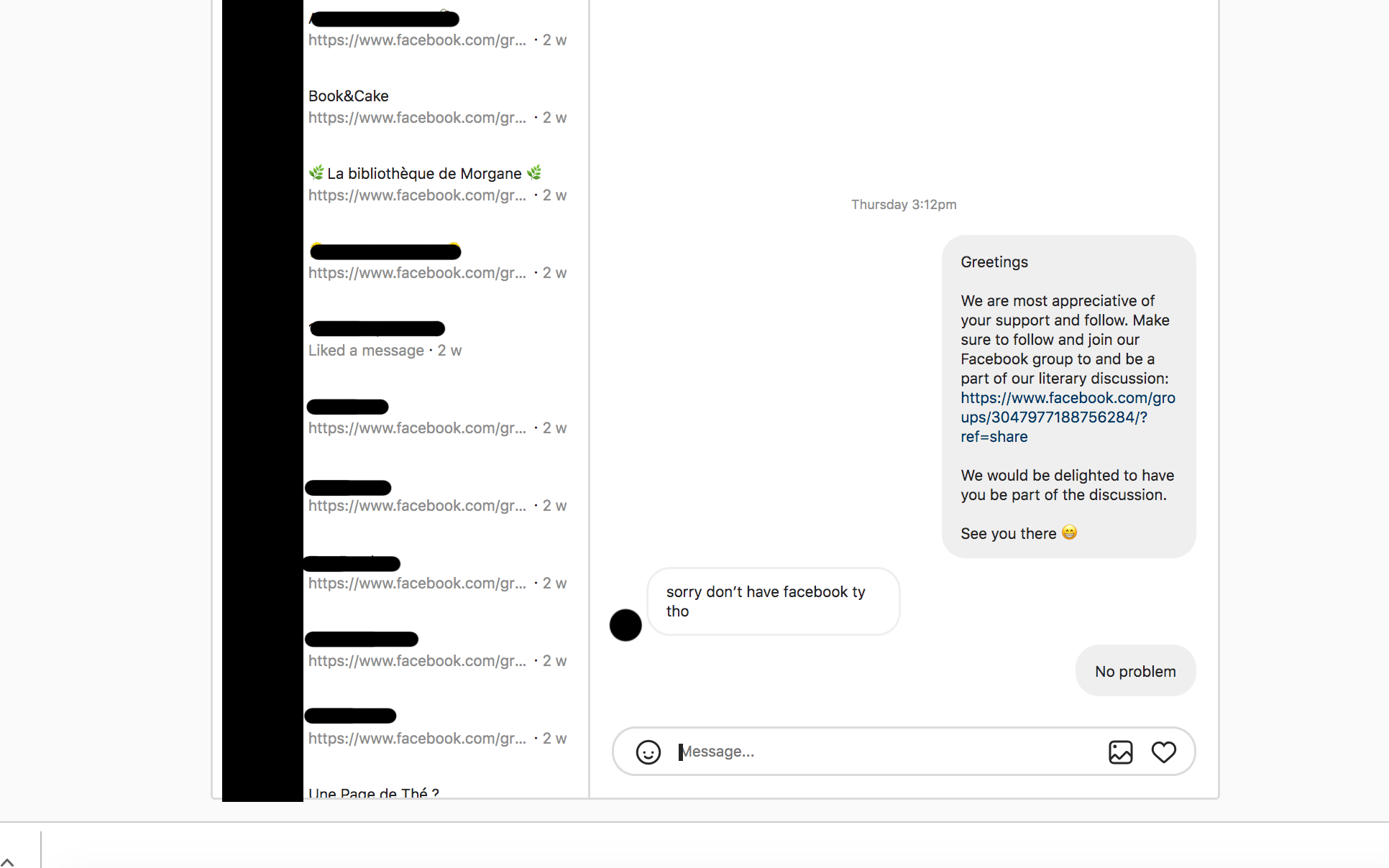
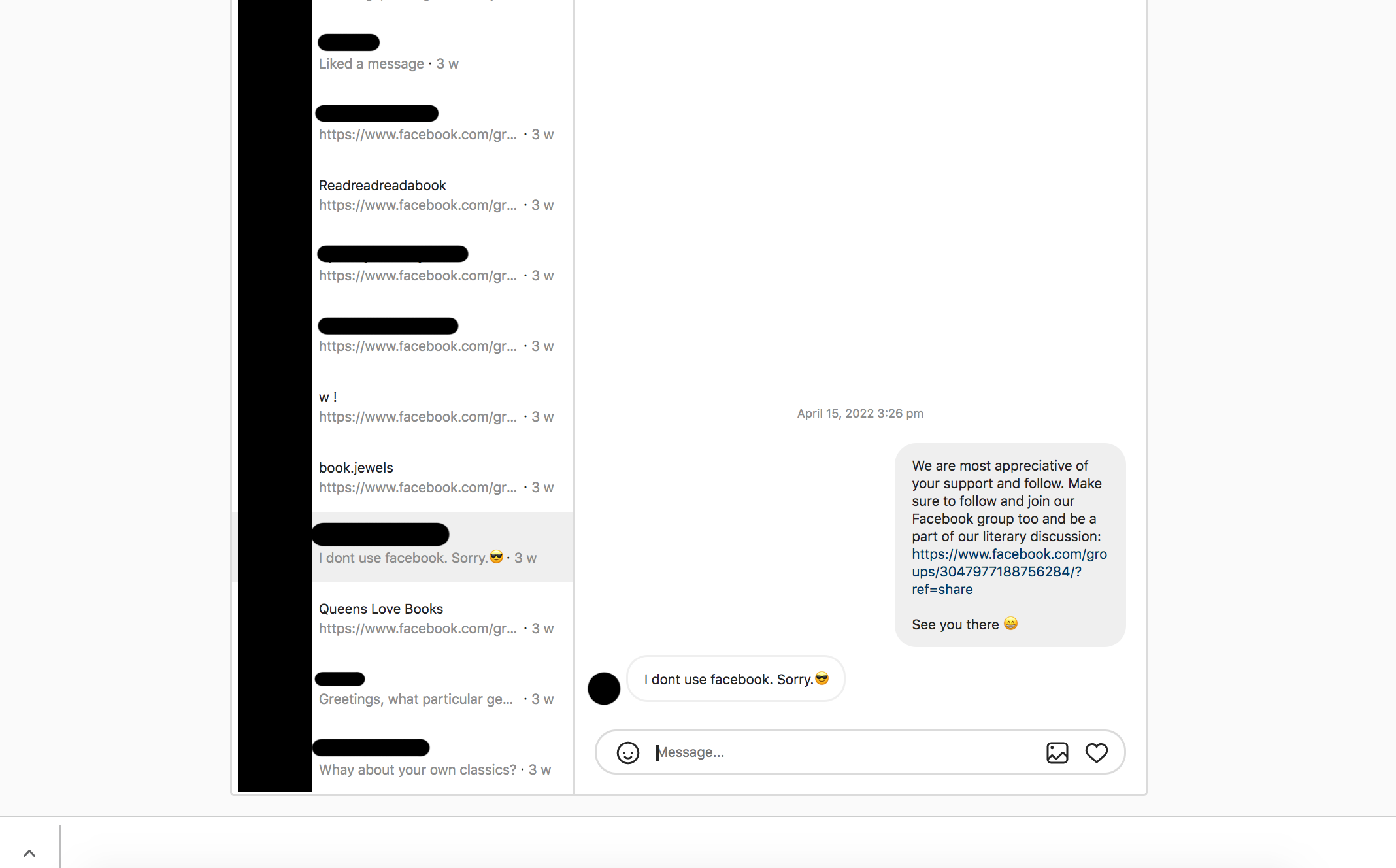
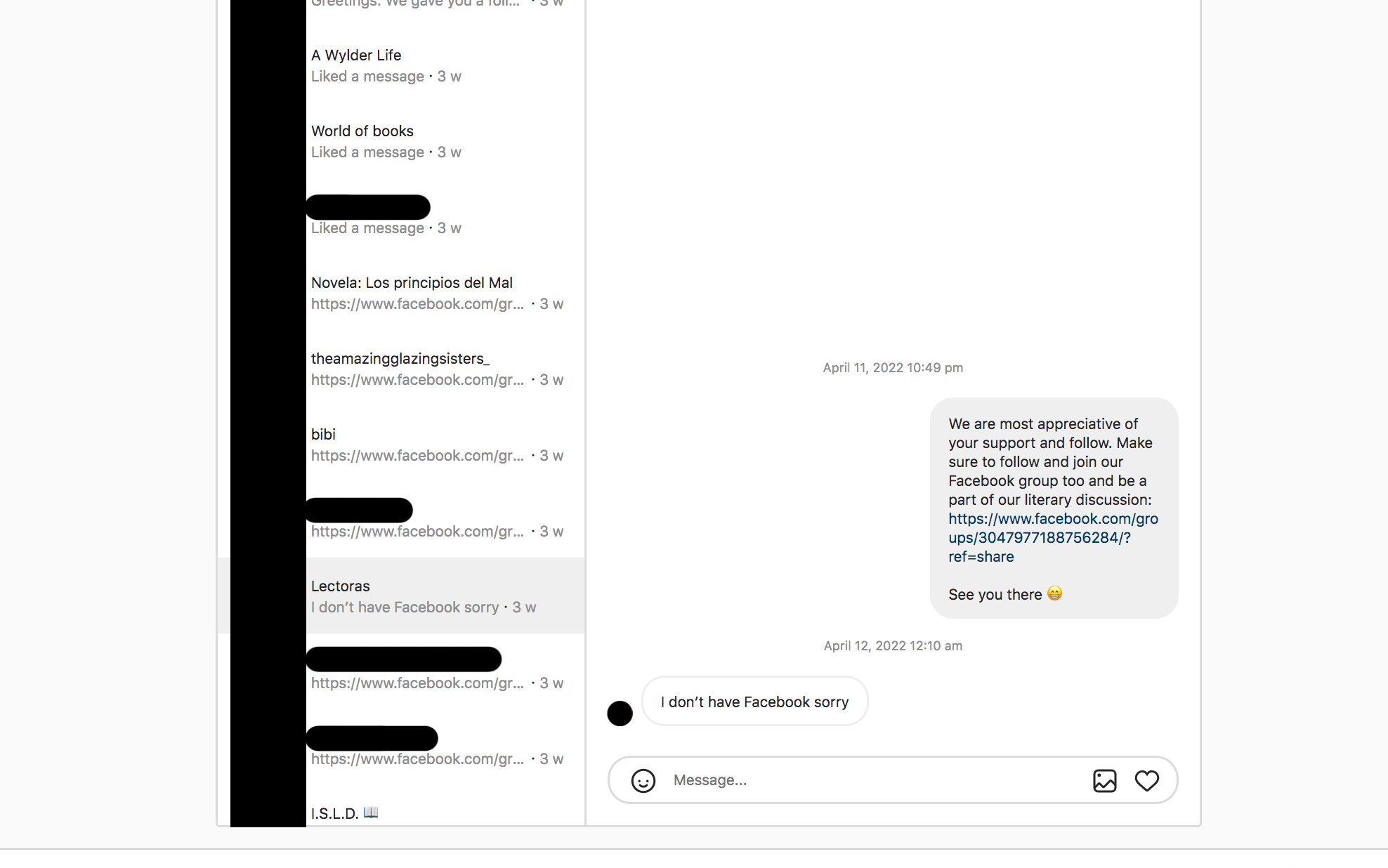

Now approaching the final stretch of the project, I created a SWOT analysis chart to better reflect the outcomes of Excavate based on how it has evolved in strategy, audience and social media throughout this module (Figure 49).
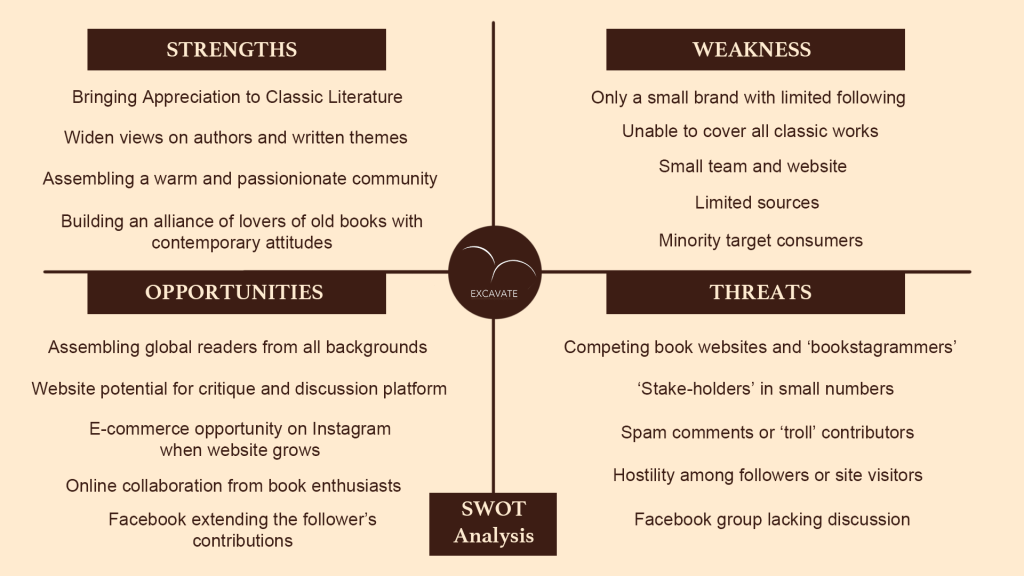
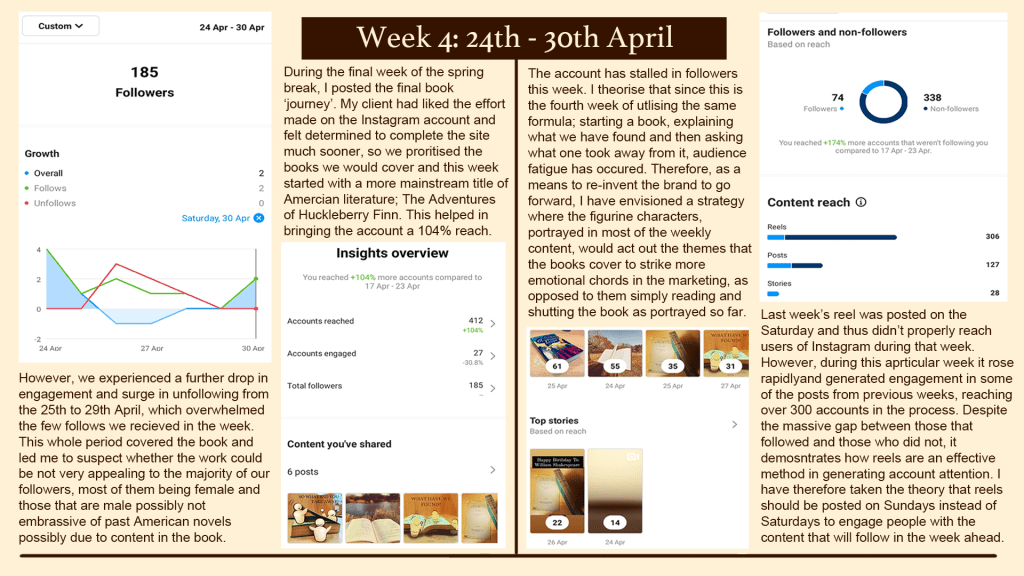
One can see that the brand has had its share of hits and misses based on statistical figures (Figures 50 and 51), but overall has had a steady and neutral flow considering it is still in early stages and was building promotion for a soon-to-be website. I have realised that possibly I should re-consider the Facebook option regarding the second platform, it would appear Facebook does not quite manage to engage book enthusiasts since many do not use it for that matter, whereas Pinterest is more effective in this subject (Gamble, 2021, online). My client compromised upon our final meeting of moving Excavate more towards the female demographic; I stated how it proved to be more beneficial in pulling the brand forward. They agreed and felt the current balance was acceptable enough for them to re-consider, but we would keep the male appeal relevant once we establish the website. As a result, a Pinterest will be explored in the brand’s next stage as the website unfolds, hopefully allowing the facebook to become more prominent in the long-run.

The client eagerly anticipates the following Excavate could amass, reaching its potential of the single thousand figure within its first year owing to the effort of my social media strategy. This project has sharpened my mind and given me the motivation and awareness of how to approach such a role in the future, as well as how to benefit a brand through the important considerations of SEO and the particular audience who gravitate towards the said platforms.
Conclusion
I am most satisfied with the accomplishments of Excavate; this has been an interesting module, setting out to produce a client-focused project and moving into uncharted territory is one that I will find myself within from an industry perspective; the task for any agency is about understanding the client and identifying the requirements for how a strategy can be developed to meet their fulfilment.
Excavate has a passion, one that seeks to offer an alternative in the world of reading and has a relevant purpose that sits well with the twelfth Sustainable Development Goal of the UN. The notion of earlier books being prolonged and not lost to time, thus holding back the destruction of land to generate new copies, is a valid point. The content specifically showcases a characterised persona that conveys the appreciation of the classic literary works, yet in a contemporary and casual context, something which GoodReads fails at.
I was initially apprehensive of the fact that the client was targeting academic consumers and that they were adamant about showcasing classical works from diverse nations. However, being the digital communications strategist, cooler head prevailed; I offered a solution to widen the client’s vision and how one could balance the ideal novelty with the casual practice of social media, thus adding a broader sense of practicality and appeal to the brand.
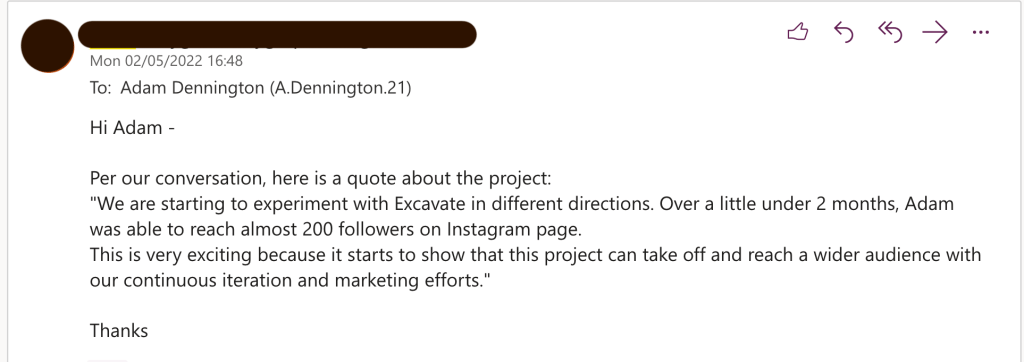
Having secured its place in a platform that appeals to the millennial generation and balances the mature perspective and youthful engagement, Excavate certainly has support as much as Polka’s efforts, which only targets those over 40 through Twitter activity. My client has made it clear they are pleased with the path it has set out on, spanning shy of two months and is proud of the following we have achieved, thus putting us in a position to launch the website very soon (Figure 52).
These icons will take you to the Instagram and Facebook accounts respectively.
Anecdotal References
Gamble, T, 2021, How Book Lovers Can Use Pinterest To Grow Their Reading List, TravellingBookJunkie, https://www.travellingbookjunkie.com/how-book-lovers-can-use-pinterest-to-grow-their-reading-list/ (Accessed May 5th 2022)
Gibson, P, 2016, Social (Media) by Design: A social media how-to guide that teaches the simple steps to a successful social presence, Gibson, Major, Saari, Sullivan and Weycker
Greenberg, K, 2018, The Case for Classics: Why They Are Relevant in a High School Curriculum, Knowledge Quest.org. Available at: https://knowledgequest.aasl.org/the-case-for-classics-why-they-are-relevant-in-a-high-school-curriculum/ (Accessed 9th February 2022)
Shields, A, 2021, How Mystery Can Engage Your Customer, The Cult Branding Company. Available at: https://cultbranding.com/ceo/how-mystery-can-engage-your-customer/ (Accessed 12th February 2022)
 ART DENO | Official Site of Adam Dennington